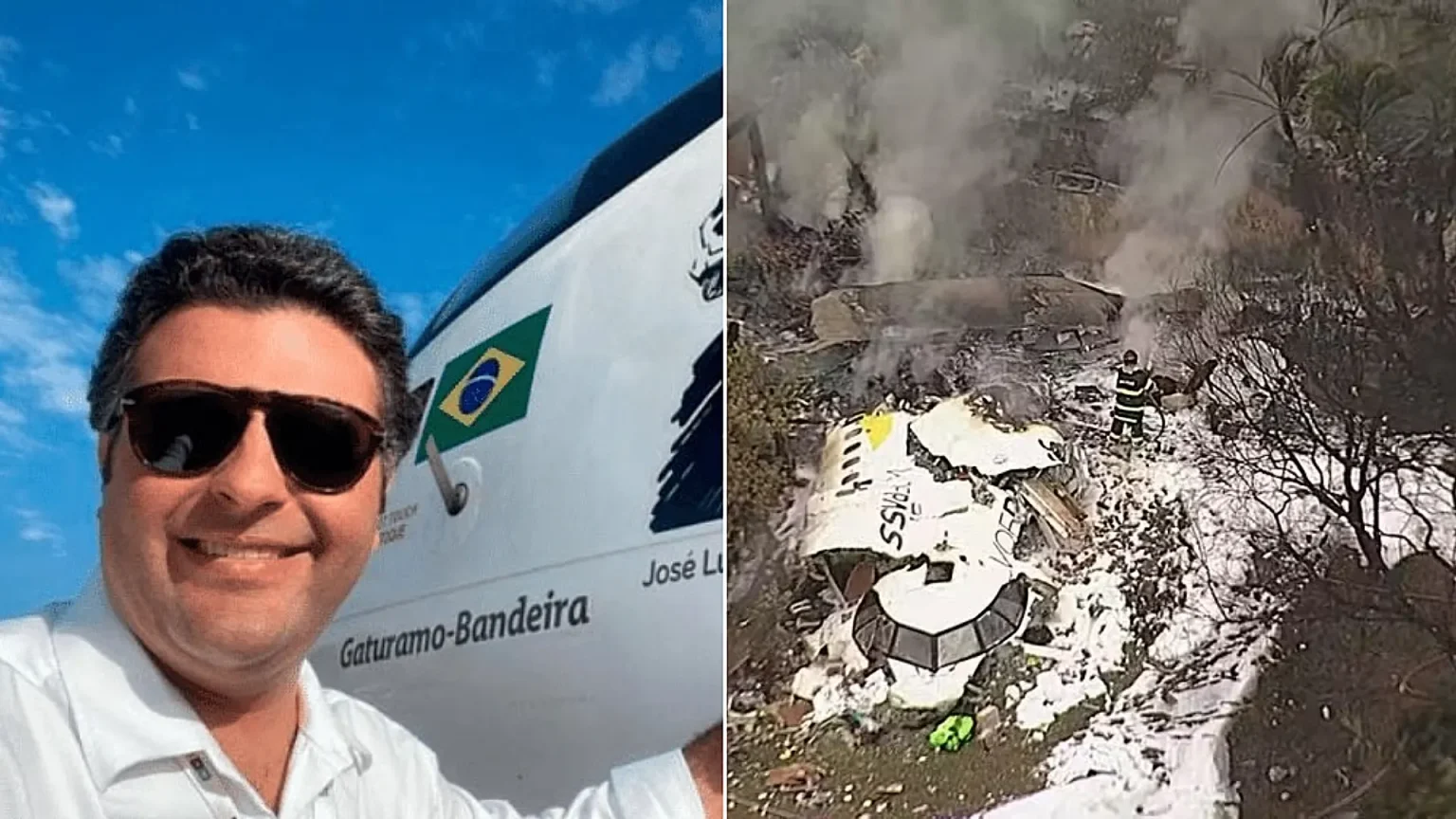

The captain of a doomed passenger plane said its systems failed more than an hour before it spun out and killed all 62 people on board.
Brazilian police have now formally accused the airline’s owner and 15 current and former employees, following a two-year criminal investigation into the disaster.
Investigators identified alleged malpractice, omissions and negligence involving the operation and maintenance of the Voepass aircraft.
READ MORE: Bungling airport workers crash baggage conveyor belt into plane
Voepass owner and president José Luiz Felício Filho is among the 16 people named in the probe, as reported by Need To Know.
The group has been formally accused of allegedly endangering air-transport safety resulting in death.
Some have also been implicated in the alleged omission of technical failures from aircraft logbooks.
However, being formally implicated does not amount to a criminal charge or conviction under Brazilian law.
The Federal Public Prosecutor’s Office will now consider the findings and decide whether charges should be brought.
The police development follows the publication of the final technical report by Brazil’s aviation accident investigation agency, CENIPA.
The official report found that the same Airframe De-Icing fault detected during the fatal flight had also been recorded electronically on the aircraft’s three preceding flights.
The earliest of those flights took place on the night before the crash, while the remaining two were operated on the day of the accident.
CENIPA found no corresponding record of the de-icing malfunction in the aircraft’s technical logbook.
It concluded that a wider culture of failing to officially record faults had prevented the company’s technical and operational departments from carrying out corrective maintenance.

The report also found that the aircraft’s Airframe De-Icing system was inoperative when it was dispatched, and that the required operating restrictions had not been recorded.
Weather conditions forecast at the planned altitude were conducive to severe icing and below the required minimum conditions for conducting the flight, according to CENIPA.
Selected cockpit voice recordings summarised in the report show that the pilots were aware of the de-icing problem.
At 3.15pm UTC – 12.15pm local time – the captain was noted as saying that the Airframe De-Icing system had failed and indicated that it was already inoperative.
Twenty-five seconds later, the co-pilot said the malfunction had not been recorded in the aircraft’s technical logbook, and that he would need to fly at 11,000ft to avoid the treacherous conditions outside, the report states.
The official report adds that no response from the captain was recorded.
The aircraft was subsequently cleared to climb to FL170, or 17,000ft, where it remained during the cruise.
No request to descend to FL110 was made to air traffic control.
Later in the flight, the co-pilot said he had forgotten to activate the Airframe De-Icing system, with the captain responding that all the de-icing systems could be activated before concluding that he had already switched them on, according to the report.
The pilots then resumed a personal conversation.
As the aircraft approached São Paulo, its performance began to deteriorate.
At 4.20pm UTC – 1.20pm local time – the co-pilot reportedly commented on significant icing and said he would activate the Airframe De-Icing system.
The captain remarked that it was not functioning.
Fifty-five seconds later, buffeting sounds were recorded inside the cockpit.
At 4.21pm UTC, the co-pilot again stated that there was icing, the report states.
Just two seconds later, the aircraft’s stall-warning alarm sounded, followed shortly afterwards by an alert indicating that the autopilot had disconnected.
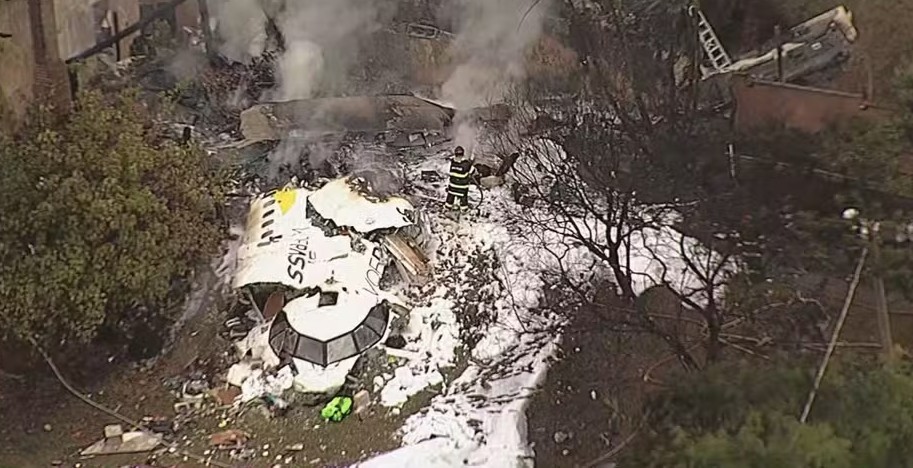
The aircraft lost control and fell into a flat spin before crashing into a residential area of Vinhedo, near São Paulo, on 9 August 2024.
CENIPA found that it completed five left-hand rotations over 68 seconds while descending at approximately 14,000ft per minute.
All 58 passengers and four crew members were killed.
Flight 2283 had departed Cascavel in southern Brazil and was travelling to Guarulhos International Airport when control was lost.
CENIPA concluded that excessive ice accumulated on critical aircraft surfaces, increasing aerodynamic drag, significantly reducing its airspeed and eventually causing it to stall.
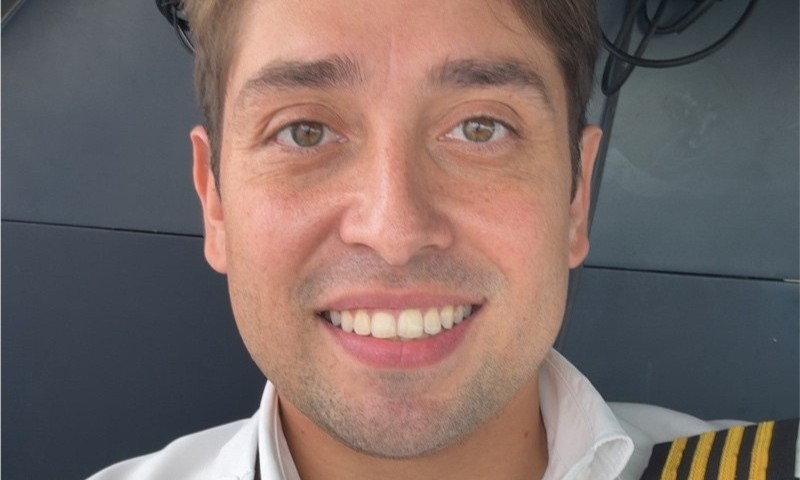
Its final report identified contributing factors involving aircraft handling, attention, decision-making, severe weather, cockpit coordination, maintenance, flight planning, company culture, management and regulatory oversight.
CENIPA’s investigation was conducted for aviation-safety purposes and did not seek to establish criminal responsibility.
The separate Federal Police inquiry alleges that omissions, improper maintenance practices and organisational failures contributed to the aircraft being dispatched into dangerous weather conditions.
Responding to the CENIPA report in July, Voepass said its operations had always followed international safety standards and that it was cooperating with the authorities.
None of the 16 people formally accused had commented publicly on the police findings when they were announced.
READ MORE: Stricken passengers swim ashore after plane ditches in sea during emergency landing