
A group of teens was held at gunpoint after an AI system allegedly mistook their bag of Doritos for a gun.
Now, the students are taking legal action against the AI company whose gun-detection system set the whole thing in motion, along with their school district and local police.
The four current and former pupils at Kenwood High School in Baltimore County, Maryland, say they were left traumatised after the system flagged one of them as carrying a firearm.
READ MORE: Rugby coach loses job after brutal attack on doctor he accused of staring at partner
The ‘weapon’ turned out to be a bag of Cool Ranch Doritos.
The lawsuit, filed in Baltimore County Circuit Court on 17 November, names Omnilert, the company behind the technology, as well as Baltimore County Public Schools, Baltimore County Police Department, the school principal and individual officers.
The Black teens claim their constitutional rights were violated and that they were unlawfully detained and searched.
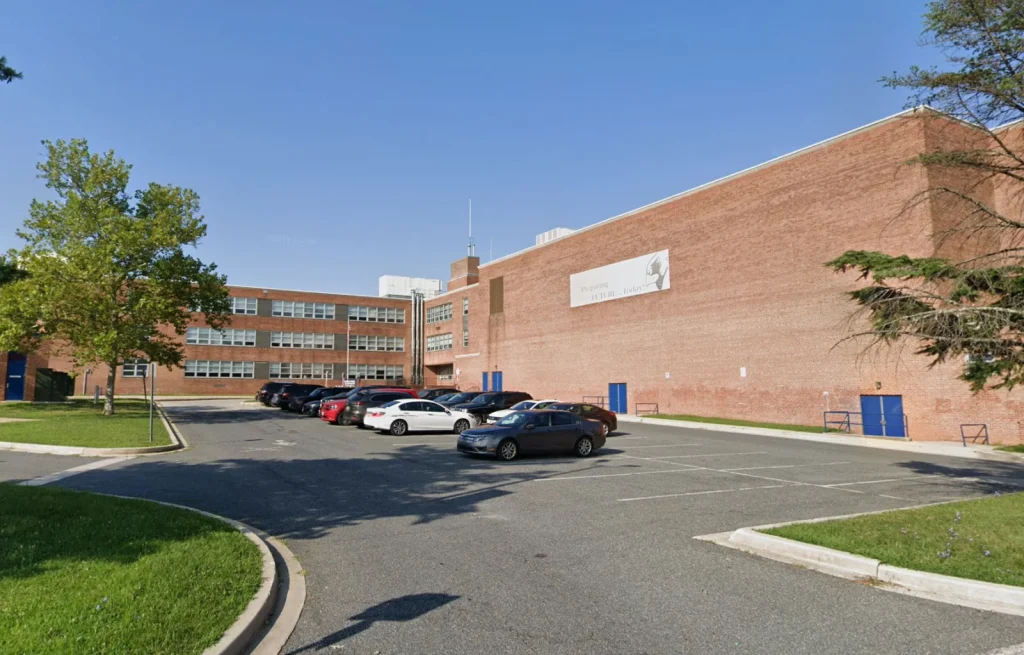
The incident happened on 20 October 2025, when the boys had just finished football practice.
According to the complaint, their coach handed out bags of Doritos to the team, and plaintiff Taki Allen, then a junior, was waiting near the picnic tables with friends for a lift home.
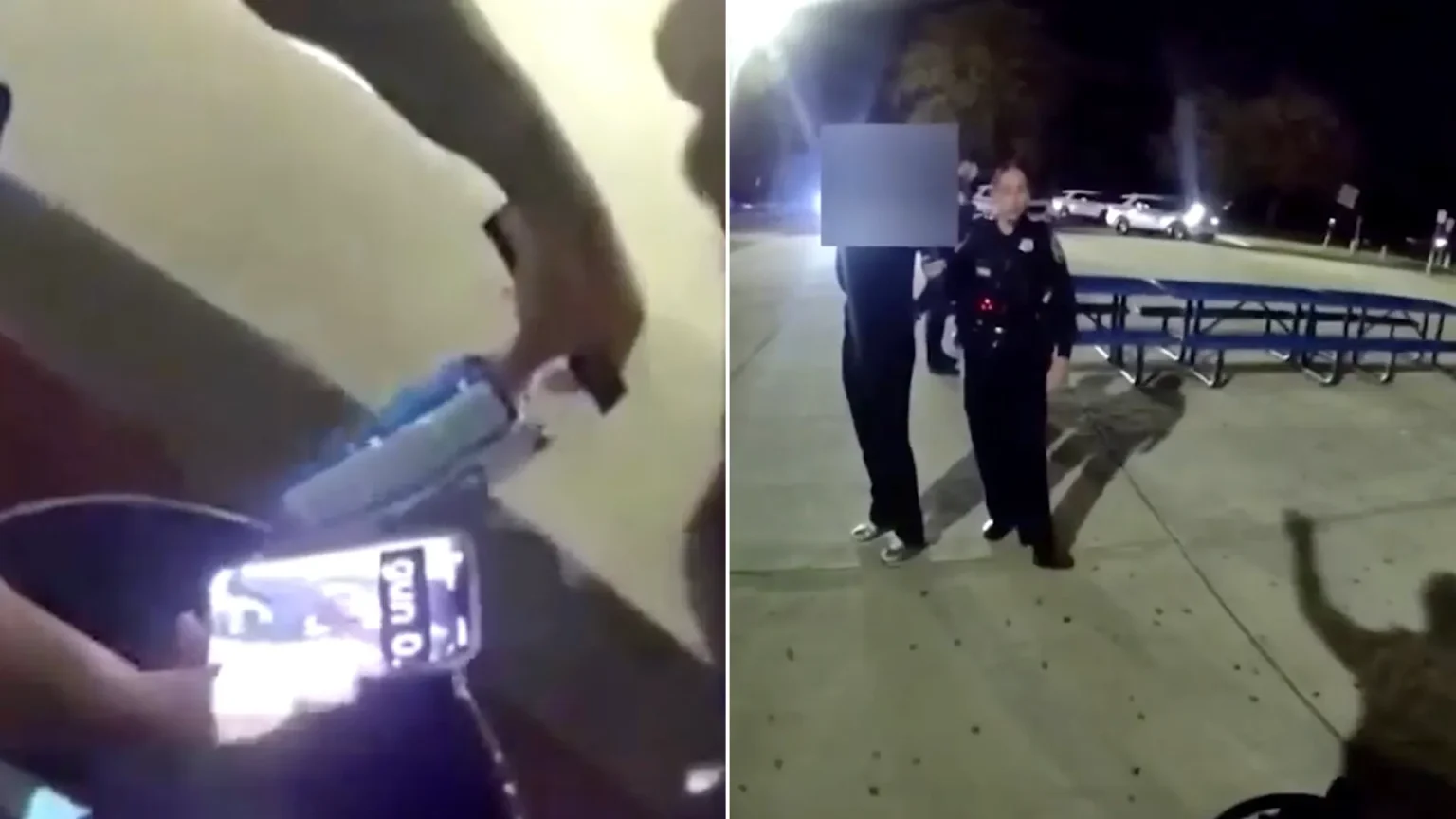
Moments later, six police cruisers allegedly pulled up with lights flashing, and several officers drew their weapons.
The students raised their hands and were then ordered to kneel on the concrete, handcuffed and searched, the lawsuit states.
“The first thing I thought about was, ‘Am I about to die?’ because they had a gun pointed at me,” Taki told NBC.
Bodycam footage shows the boys complying with officers throughout.
The item that triggered the alert was in Taki’s pocket.
On closer inspection, one officer can be heard saying: “Oh, it looks like a bag or something.”
“I mean there’s bags of chips and s**t,” an official is heard saying. “That’s what it looks like right here.”
According to the complaint, the AI system had flagged the image with 90% confidence that a gun was present.
The lawsuit alleges that, as one officer left the scene, he told the boys: “Hey, thanks for not running away, that would have been a real problem.”
The same officer allegedly said “f***ing Omnilerts” and “stupid AI cameras” as he began to leave.
The boys say they suffered pain from tight handcuffs and ongoing emotional distress.
Taki claims he no longer feels safe waiting around at school after hours, and often pays for rides home rather than wait to be collected.
Freida Winfield, whose son Keith is one of the plaintiffs, was on her way to pick the boys up when they were detained.
“The police told my son this could have been a real problem. No child in Baltimore County should face this kind of danger while waiting outside his own school for a ride home from his mother,” she said in a statement.
The case is being brought by the Lawyers’ Committee for Civil Rights Under Law, alongside law firms Willkie Farr & Gallagher and Engel Law Group.
“These students were failed not only by a technology that is prone to false alerts, but also by the very adults meant to keep them safe when we send them to school,” said Damon Hewitt, the group’s president and executive director.
“Instead of this protection, they were met with guns and traumatized. And it could have been even worse.”
He added: “Overreliance on artificial intelligence technology mixed with inept communication and coordination among key officials is a toxic mix. We need a reckoning on how AI is being used, especially concerning public safety and kids.”
The group is pushing for schools and police to be required to verify AI alerts before an armed response is sent, as well as better training, oversight and transparency around the technology.
The lawsuit cites a finding from Maryland’s Office of the Inspector General for Education (OIGE) that more than 99% of Omnilert alerts in Baltimore County schools were false positives that needed no police response.
But the OIGE’s own investigation into the incident, published in November 2025, reportedly largely pinned the blame on people rather than the software.
It found that school staff and a police representative reviewed the alert soon after it came in, judged it not to be a credible threat, and sent out a cancellation notice by text.
However, a school employee reportedly missed the cancellation and passed a screenshot to a police officer, which led to officers being sent to the scene.
The report concluded that “human error and training gaps” were behind the incident, and said it could not substantiate claims that the system was ineffective or biased.
It also found the system had not specifically identified the Doritos bag as a gun, as reported by Need To Know.
Instead, the alert was allegedly triggered by the student’s hand position and movement, along with the reflective surface of an object in the image.
Omnilert told USA Today it was “truly sorry for the fear” the teens and their families went through.
The company said its system is built to flag anything that could be a firearm for human checks, because “missing a real gun is the worst possible outcome”.
It said the alert was cancelled within around two minutes and that everyone who received it was notified, adding that the case shows “why human review matters, and why a canceled alert must stay canceled”.
“We are reviewing the complaint and will respond in court,” said Blake Mitchell, the company’s vice president of marketing.
“Every student deserves to be safe at school and treated with dignity there, and we work every day toward both.”
Baltimore County Police Department said it could not comment on pending litigation.
READ MORE: Teenager survives horror 100ft plunge down ravine on motorbike