
A mum feared her body was “slowly failing” after battling terrifying symptoms for two years – only to discover the real cause after a near-fatal ordeal.
Danielle Bryce suffered night sweats, dizziness and breathlessness following the birth of her youngest child – but says doctors repeatedly brushed it off as hormones.
The 44-year-old was only diagnosed with severe anaemia after being rushed to hospital when she began haemorrhaging from her uterus.
READ MORE: Woman becomes ‘first’ to undergo state-of-the-art amputation for future bionic leg
“I think it’s so easy as women, especially when you get male GP’s that don’t understand how this feels, just to be dismissed,” Danielle, an author, law student and content creator from Doncaster, told Need To Know.
“I ended up back in hospital with pain a couple of weeks ago because my body’s just really struggling at the moment and I just felt very dismissed.
“‘Do you want some antidepressants?’ No, I don’t.
“They treat you like you’re losing your mind but actually this is very real and this could have been avoided.”
Danielle’s nightmare began after she gave birth to her youngest child, now two, via C-section which involved heavy blood loss.
She said she went to the GP “multiple times” with worrying symptoms – including extreme fatigue, breathlessness, dizziness, night sweats and anxiety.

But she claims she was repeatedly told it was perimenopause or a hormonal imbalance.
Things took a terrifying turn in February 2026.
Danielle said she suddenly felt “very unwell” while meeting her eldest daughter for lunch before collapsing at home due to a uterine haemorrhage.
She said: “My partner ran in panicking, there was just blood everywhere, clots the size of my head.
“I was rushed to hospital and the bleeding wouldn’t stop.
“I was bleeding through the pads they gave me, it was constant, like a tap.”
Doctors initially tried to manage the bleeding and booked her in for surgery the following week – but her condition worsened dramatically.
Danielle said: “I had been calling the ward everyday to try and go back in, I was saying ‘something is wrong’ but they just told me they had no space.
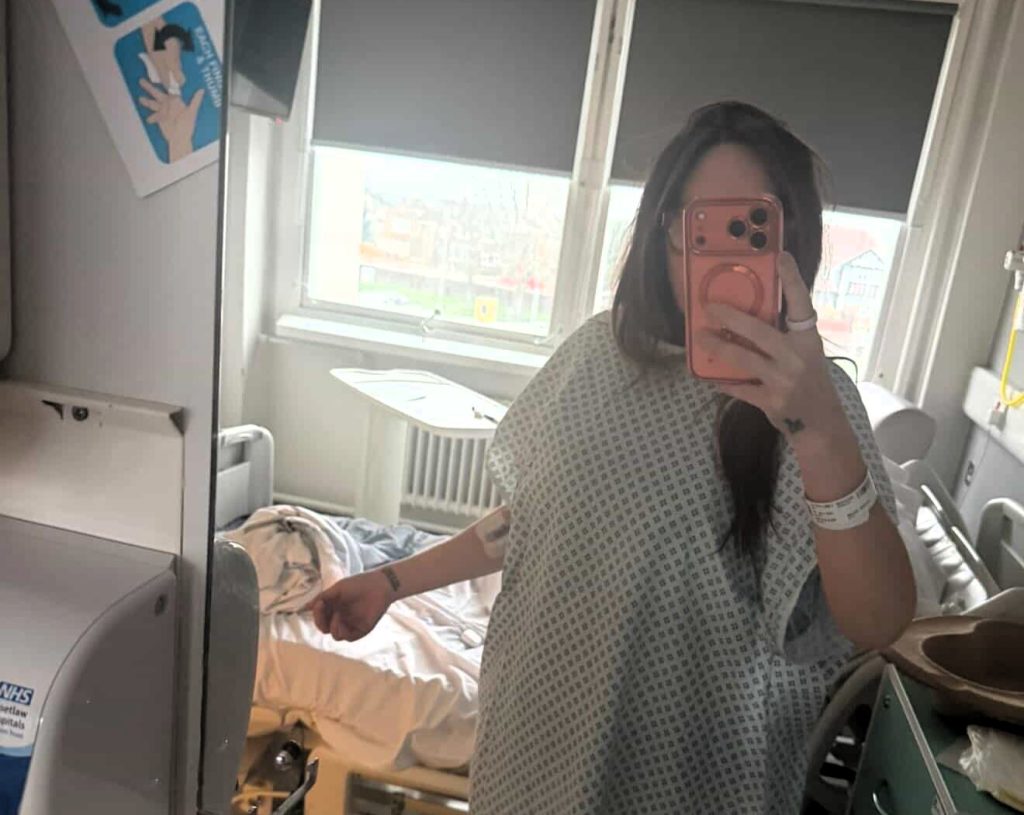
“I required two ambulances due to the severity of my symptoms, including extreme dizziness and fatigue.
“I was eventually rushed in to have the surgery on my uterus on Saturday night instead.
“Looking back, I strongly feel this situation could have been handled sooner and more appropriately.
“Rather than trying to stabilise my blood loss in the hospital, why not operate? Why continue to leave me bleeding?
“I think a lot of this could have been avoided had they admitted me quicker – because I’m not just left with anemia, I now have vestibular neuritis which is crippling when I’m autistic and I have sensory issues, and the room is spinning.
“It’s paralysed me, essentially.
“I’ve been in bed on and off for weeks.”
After surgery, Danielle was diagnosed with severe anaemia – a condition where the body lacks enough healthy red blood cells to carry oxygen.
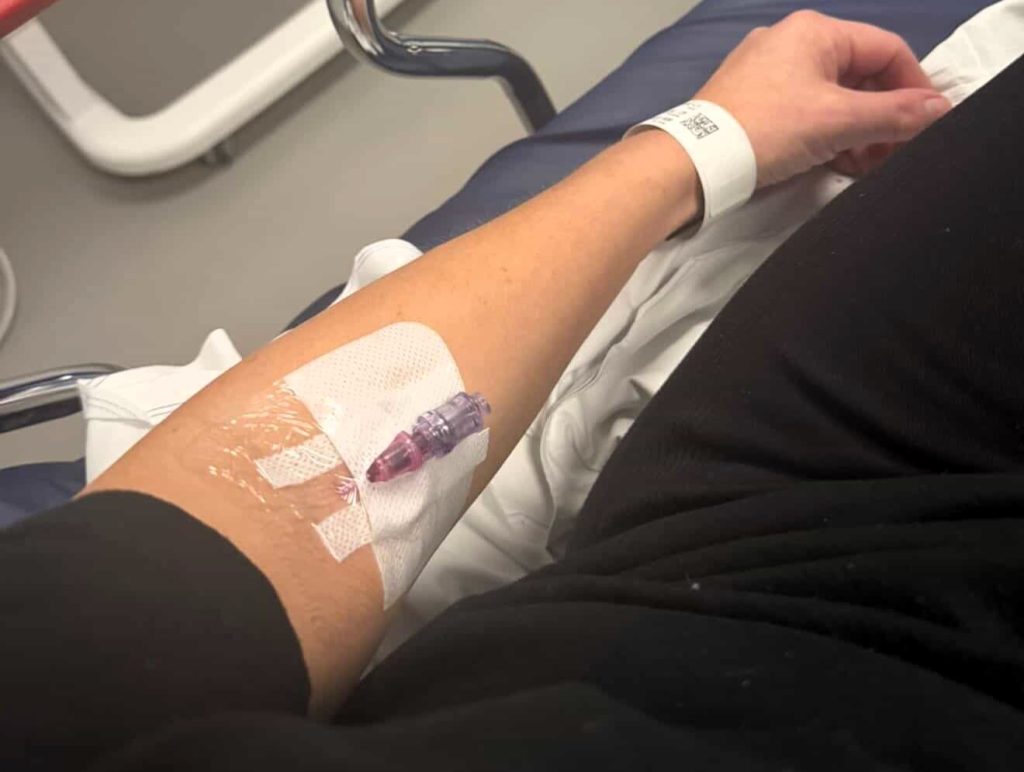
She said: “My haemoglobin levels were borderline for needing a blood transfusion.
“Due to the risks, doctors opted to treat me with an iron infusion instead.
“While this has helped, recovery has been slow and difficult, especially while caring for my children.”
Danielle is now also battling vestibular neuritis – an inner ear condition that causes severe dizziness, nausea and balance issues.
She said: “I’ve since had to seek private treatment with an ENT specialist, where I was diagnosed with vestibular neuritis.
“I was told this was likely triggered by the physical trauma my body went through, including the blood loss and resulting anaemia.”
She believes the most frustrating part of her ordeal was not being taken seriously.
Danielle said: “I was repeatedly told my symptoms were likely hormonal, and I don’t feel my concerns were taken seriously early enough.
“This isn’t the first time I’ve experienced this; I was also diagnosed later in life with autism and ADHD, after years of being treated for anxiety and depression.
“I do feel that women’s health concerns can often be overlooked or minimised.
“It’s too easy for serious symptoms to be attributed to hormones or stress, and that can delay proper diagnosis and treatment.”
Now recovering, Danielle says she is slowly improving – but still faces a long road ahead.
She takes vitamins, magnesium, iron and omega-3, but says the impact on her life has been huge.
She added: “I was given a range of different medications for the vestibular neuritis; anti-nausea, anti-dizziness, anti-anxiety tablets, it was too much.
“They’re too quick to push tablets on to women, it’s preventing proper care.
“I don’t want to be filled with tablets that aren’t working and have severe side effects.

“I can’t even drive at the minute due to the vestibular neuritis; this is something that isn’t going to change overnight, it’s something that I’ll have to continue to navigate.
“This has had a huge impact on my day-to-day life.
“The dizziness and vertigo have been debilitating at times, and I’m now navigating recovery from both anaemia and a vestibular condition caused by the effects simultaneously, while also raising my children.
“This experience has completely changed how I view my health and how important it is to be listened to.
“[I want] to raise awareness so that other women feel empowered to push for answers and not ignore persistent symptoms.”
READ MORE: Influencer’s nose COLLAPSES after botched Turkey job – and fixing it costs her £39K