
A woman had a huge section of her back cut away after a flesh-eating infection left her skin blackened, blistered and oozing pus.
The 38-year-old underwent emergency surgery to remove a 40cm by 30cm area of infected skin, fat and muscle – leaving parts of her ribs, shoulder blade and spine exposed.
She had been living with untreated type 2 diabetes for five years and had allegedly declined medication when she was diagnosed.
READ MORE: TikTok star arrested in ‘multimillion-pound money laundering’ inquiry
The woman eventually developed a devastating infection across her back, suffering extensive tissue death, sepsis and diabetic ketoacidosis.
By the time she was admitted to hospital, doctors discovered large areas of necrotic skin across her thoracic and lumbar back.
Her skin had blistered and was producing pus, while gas had become trapped beneath the tissue.
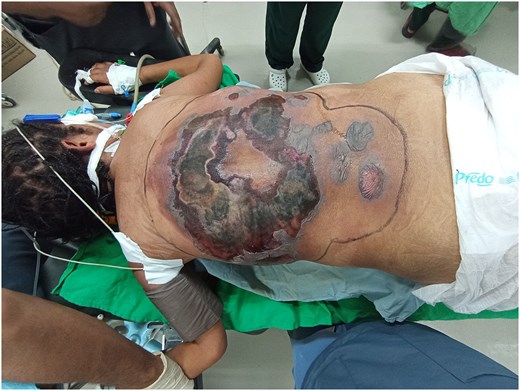
Pre-operative picture upon patient presentation. (Picture: Jam Press)
She was also suffering from a fever, rapid breathing and confusion, with her blood sugar at dangerously high levels.
Doctors diagnosed her with sepsis and necrotising fasciitis – a rare but potentially fatal infection in which bacteria rapidly destroy tissue beneath the skin.
She was immediately treated with antibiotics, intravenous insulin and blood transfusions while being stabilised in intensive care, as reported by Need To Know.
Surgeons then carried out emergency radical debridement, cutting away dead and infected skin, fatty tissue and muscle until they reached healthy, bleeding tissue.
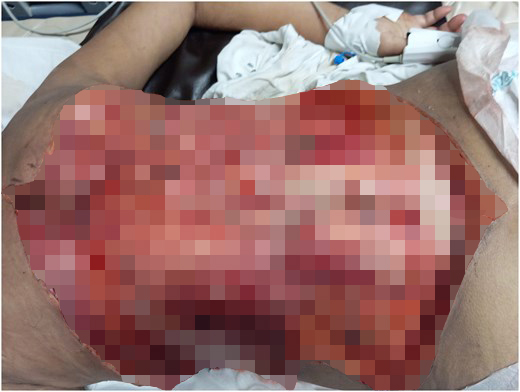
The huge operation left a wound measuring approximately 40cm by 30cm.
Parts of her posterior ribs, the tip of her shoulder blade and bony projections of her spine were left exposed.
The woman had initially noticed swelling on her back, which progressively worsened over two months.
In the weeks before being admitted, she developed abdominal pain, rapid breathing, fever and confusion.
A second operation was needed to remove remaining unhealthy tissue.
Doctors decided attempting a major reconstruction immediately would put her recovering body under too much strain.
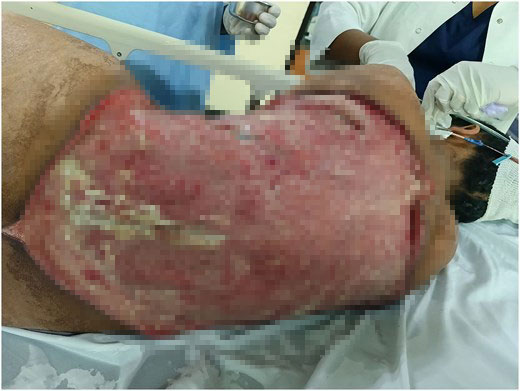
After wound has granulated well with dedicated wound care protocols in place. (Picture: Jam Press)
Instead, they gradually prepared the enormous wound for skin grafting.
Small holes were drilled into the outer layer of her exposed ribs to encourage bleeding and the growth of healthy tissue.
Prominent exposed sections of spinal bone were also carefully reduced, while nearby muscle was moved across the wound to cover viable bone and provide a healthy blood supply.
The woman underwent daily wound care under sedation as doctors continued cleaning the area and removing unhealthy tissue.
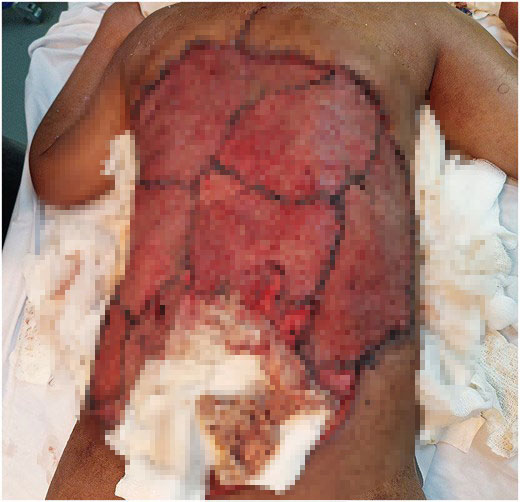
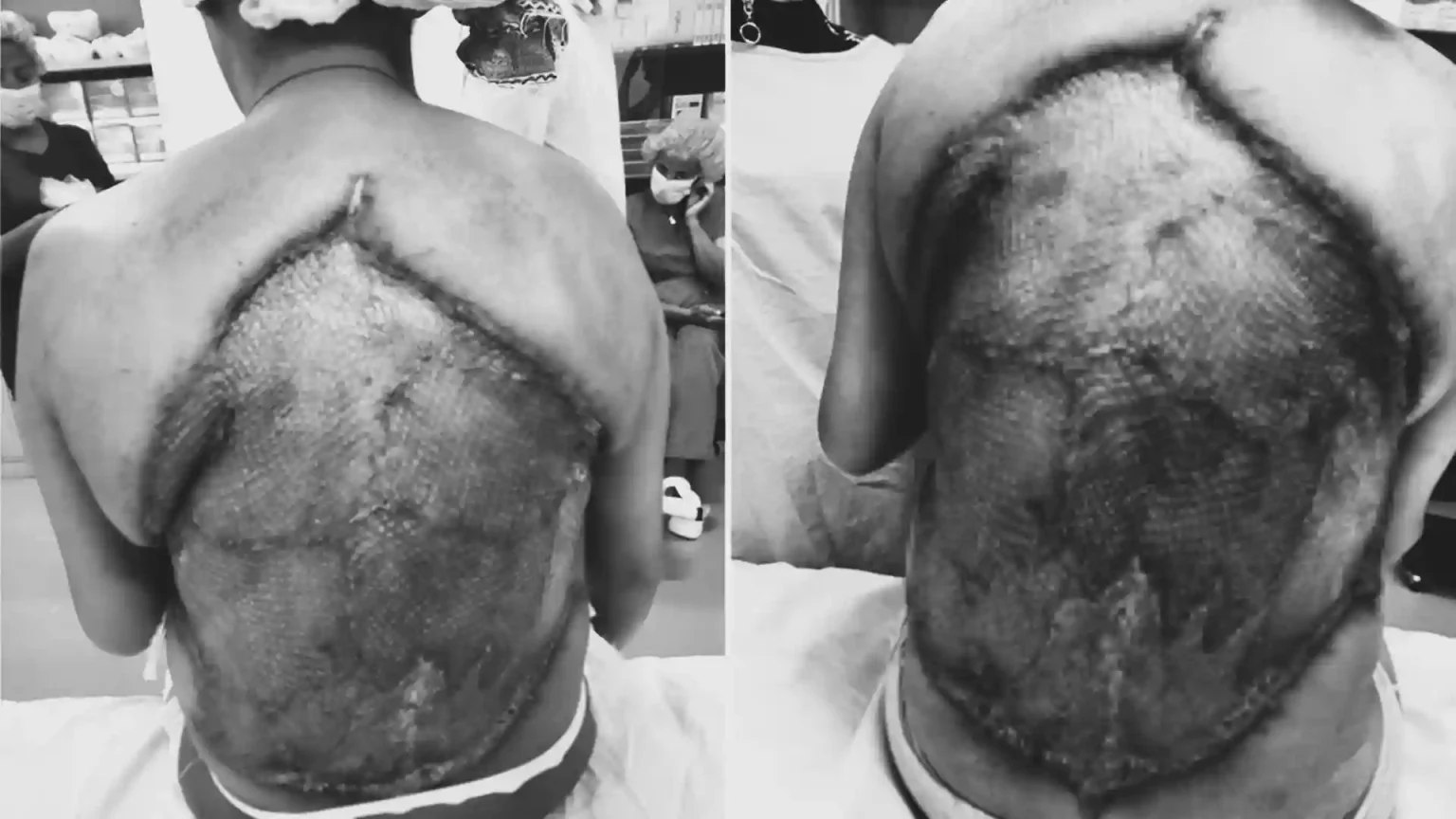
First post op day after skin graft surgery, undergoing wound dressing change. (Picture: Jam Press)
One month after her initial operation in Addis Ababa, Ethiopia, surgeons began reconstructing her back.
Skin was harvested from her left thigh and nearby soft tissue was moved to reduce the size of the wound before the graft was applied.
Around 70% of the remaining wound was covered during the first procedure.
Doctors deliberately limited the operation to reduce the strain on her body and preserve potential donor skin for later treatment.
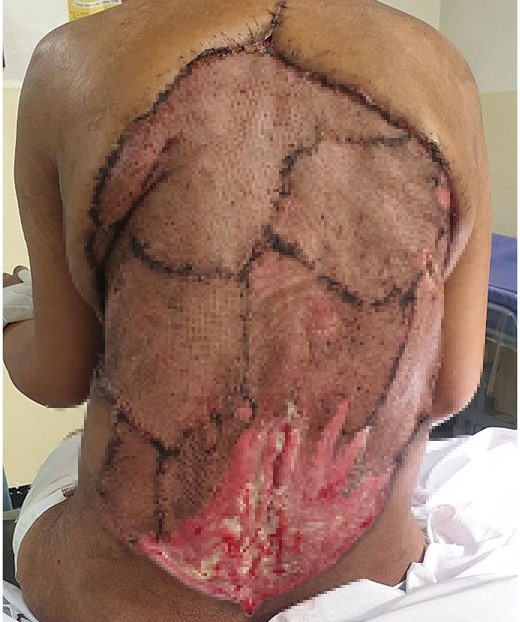
Three weeks later, the graft had completely taken.
Surgeons then harvested skin from her other thigh to cover the remaining area.
The woman was kept off her back using alternating side-to-side positioning and protective padding to prevent pressure on the newly grafted skin.
Her blood sugar eventually stabilised, the grafts were successful and she made a full recovery.
READ MORE: Influencer dies aged 107 after revealing simple secret to long life

Skin grafts upon discharge of the patient, final cosmetic and functional outcome. (Picture: Jam Press)