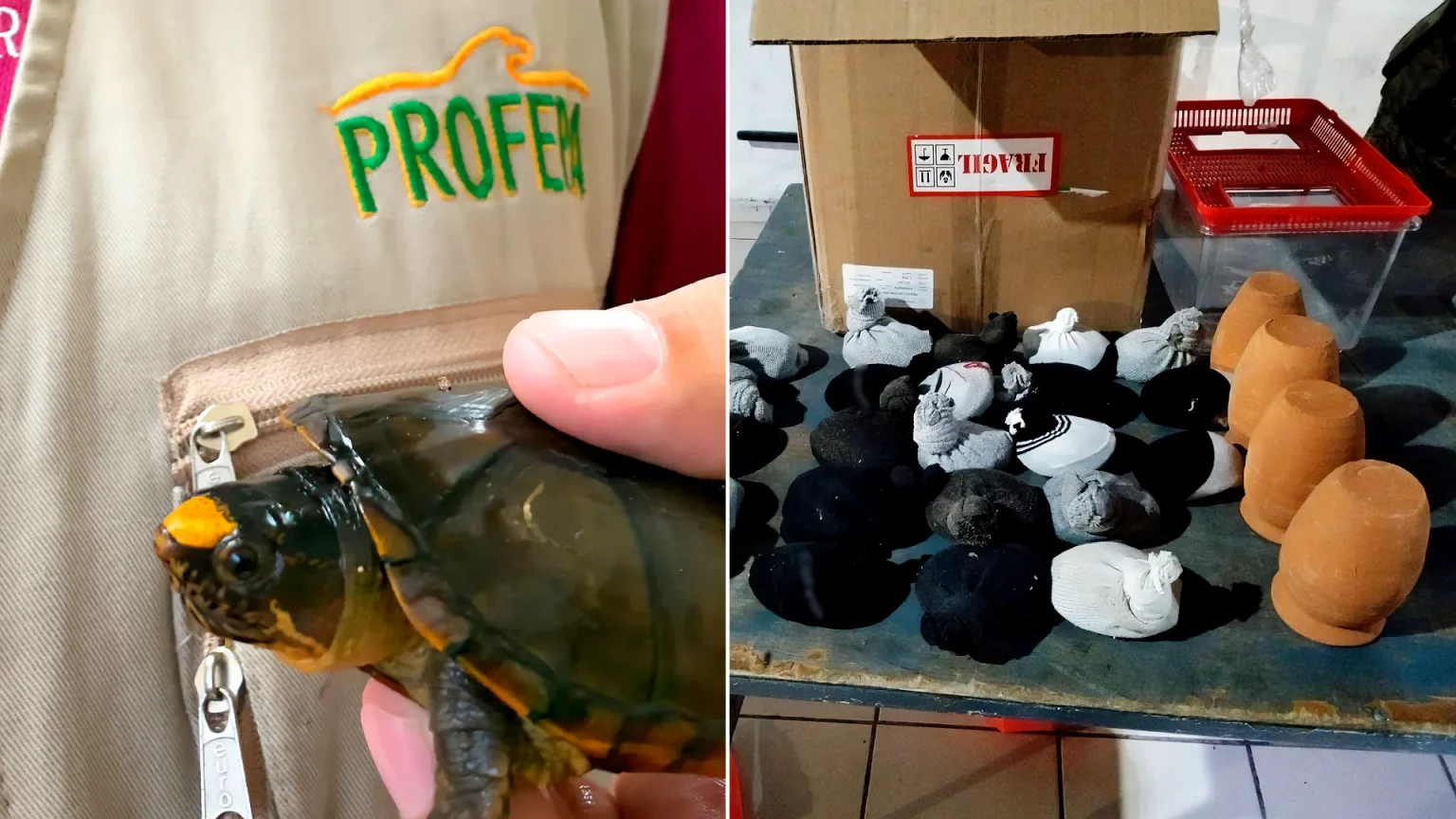

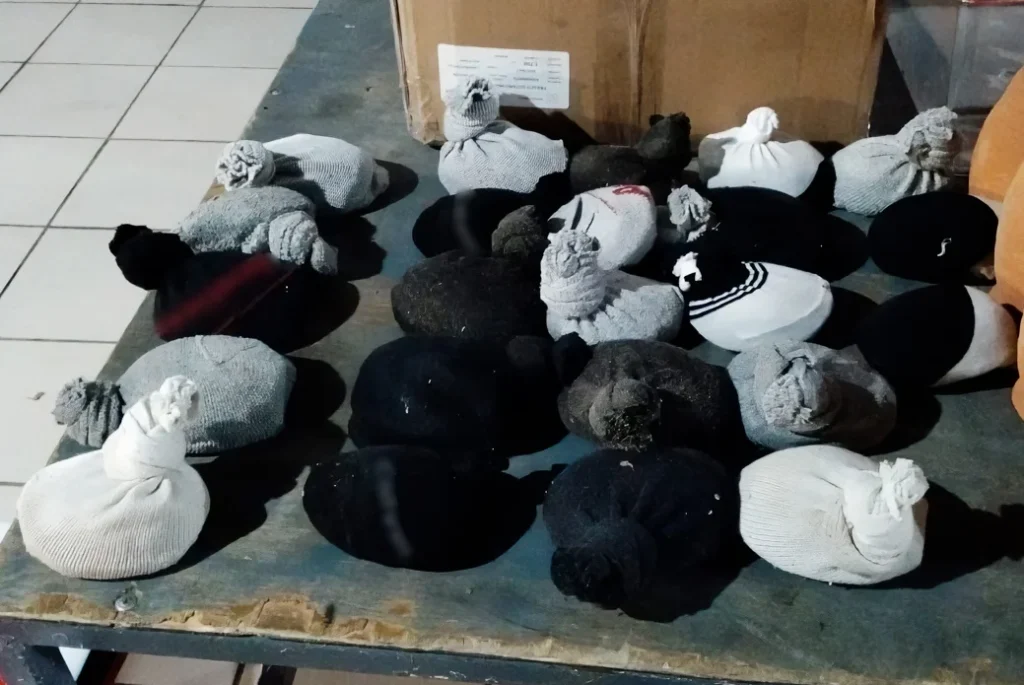
Wildlife officials seized 70 turtles that had been stuffed into socks and hidden inside clay pots by traffickers trying to send them by bus.
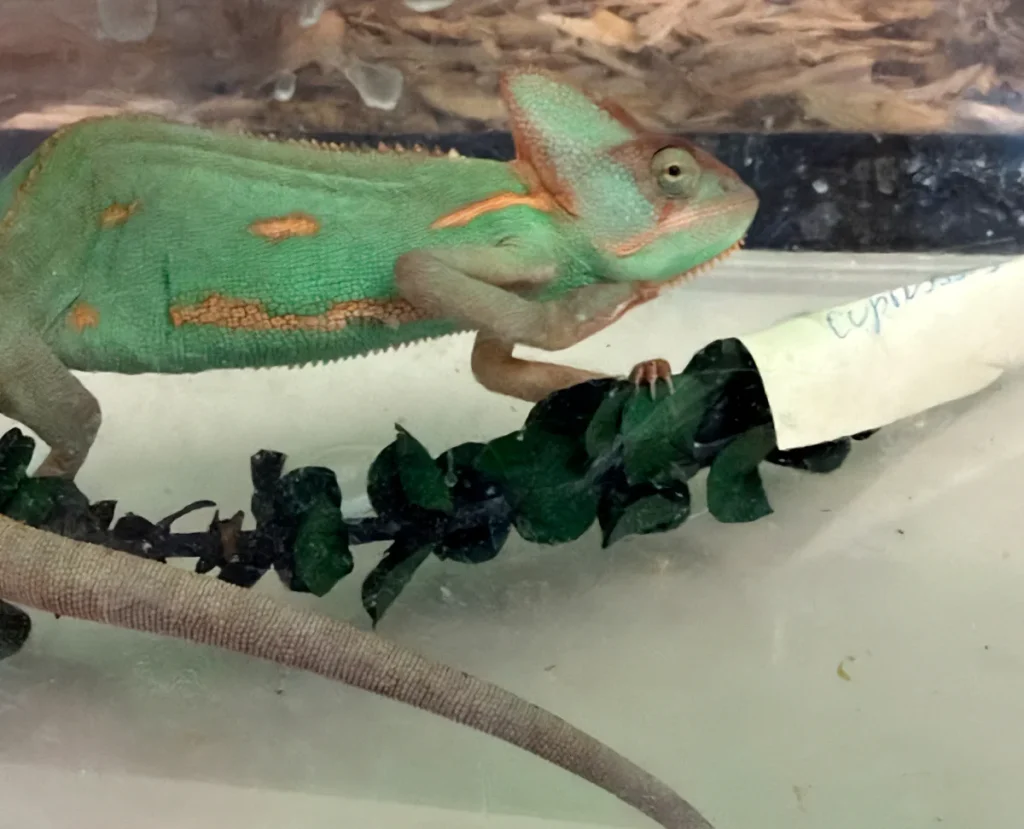
A veiled chameleon was also found in a bag labelled as plastic, bringing the haul to 71 animals.
Two of the turtles were already dead when they were discovered, Mexico’s environmental watchdog revealed yesterday (24 Nov).
READ MORE: Husband ‘killed wife for REFUSING to cook for him’
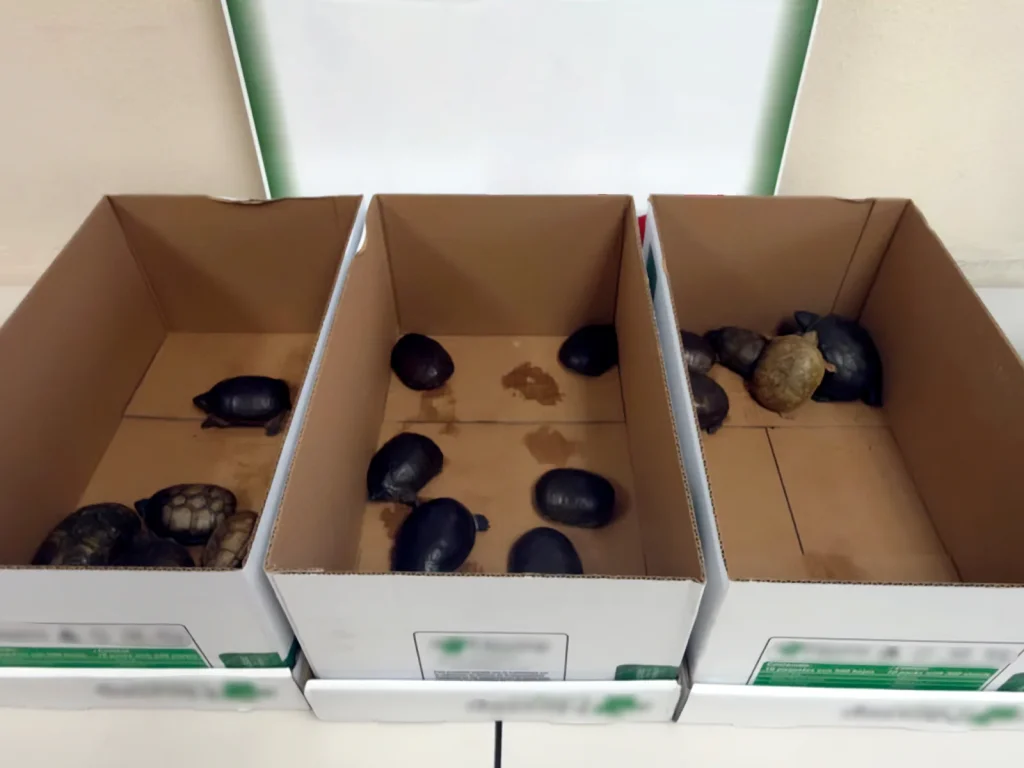
The Federal Attorney for Environmental Protection (PROFEPA) said the animals were being moved in three boxes with no paperwork to prove they had been obtained legally.
The agency added that they were being kept in poor conditions with little regard for their welfare or care.
Earlier this month, on 10 November, staff from the Ministry of National Defence alerted PROFEPA to a suspicious parcel from a bus company found during a vehicle inspection.
The checkpoint sits on Federal Highway 45, which links Ciudad Juárez with the city of Chihuahua, in northern Mexico.
When the package was opened, officers found clay pots containing socks with 51 turtles tucked inside, as reported by Need To Know.
The following day (11 Nov), a second box holding another 19 turtles, hidden the same way, was found on its way to the bus terminal in Ciudad Juárez.
Then on 13 November, the veiled chameleon (Chamaeleo calyptratus) turned up at the same checkpoint.
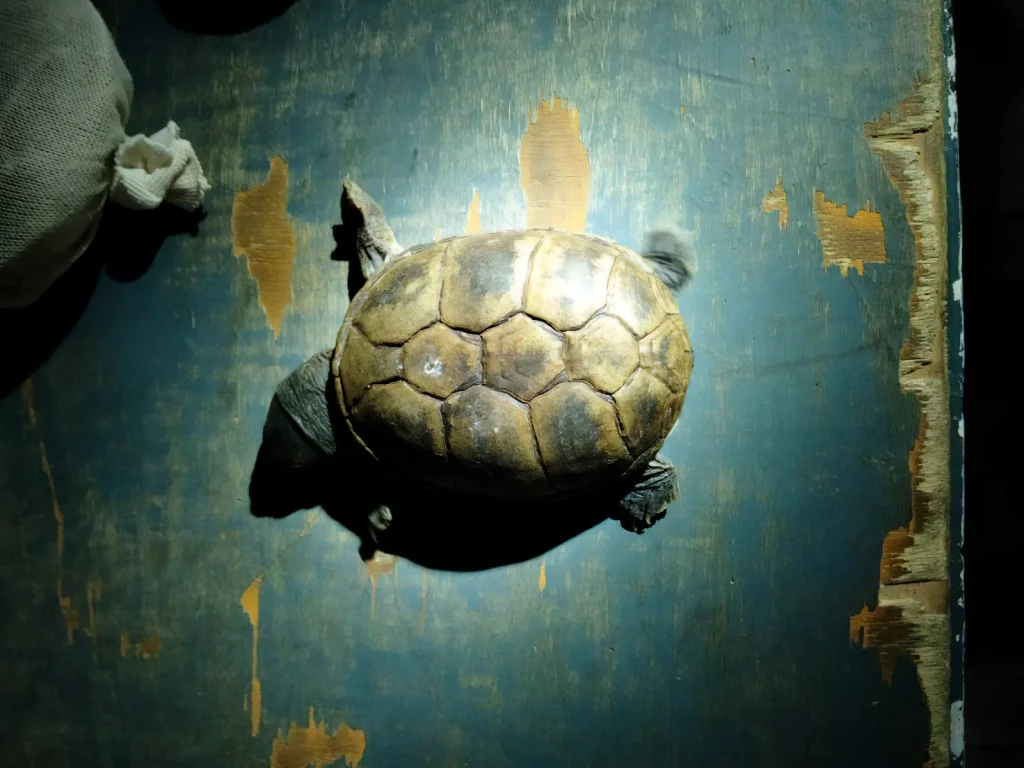
Experts later identified five Vallarta mud turtles, 21 Cora mud turtles, 15 scorpion mud turtles, 18 Jalisco broken-breasted turtles and nine Mexican broken-breasted turtles, plus two Cora mud turtles that had already died.
PROFEPA said the Vallarta and Cora mud turtles are endangered, while the scorpion and Mexican broken-breasted species are subject to special protection.
All of the turtles are listed by the Convention on International Trade in Endangered Species of Wild Fauna and Flora (CITES), with the Vallarta and Cora species in Appendix I and the rest in Appendix II.
Appendix I covers species threatened with extinction, where international commercial trade is generally banned, while Appendix II species can only be traded under strict permits.
Kinosternon mud turtles are small, semi-aquatic reptiles with a double-hinged lower shell, made of two movable flaps at the front and back, which they can fold up to protect themselves.
The veiled chameleon, which is also listed in Appendix II, is not native to Mexico and comes from the mountainous regions of Yemen and southwestern Saudi Arabia.
It is one of the most popular reptiles in the exotic pet trade and is legally bred in captivity worldwide, but moving one without permits proving it came from a registered breeder is a federal crime in Mexico.
Under Mexico’s General Wildlife Law, fines for such offences are more than 5,000,000 MXN (£195,000).
READ MORE: OnlyFans star in tears as CAR stolen on livestream while playing GTA