

Rising fuel costs affect every driver, but there are practical ways to reduce consumption without compromising your driving experience. Understanding how your vehicle responds to different driving techniques can lead to significant savings over time.
Smart Driving Techniques
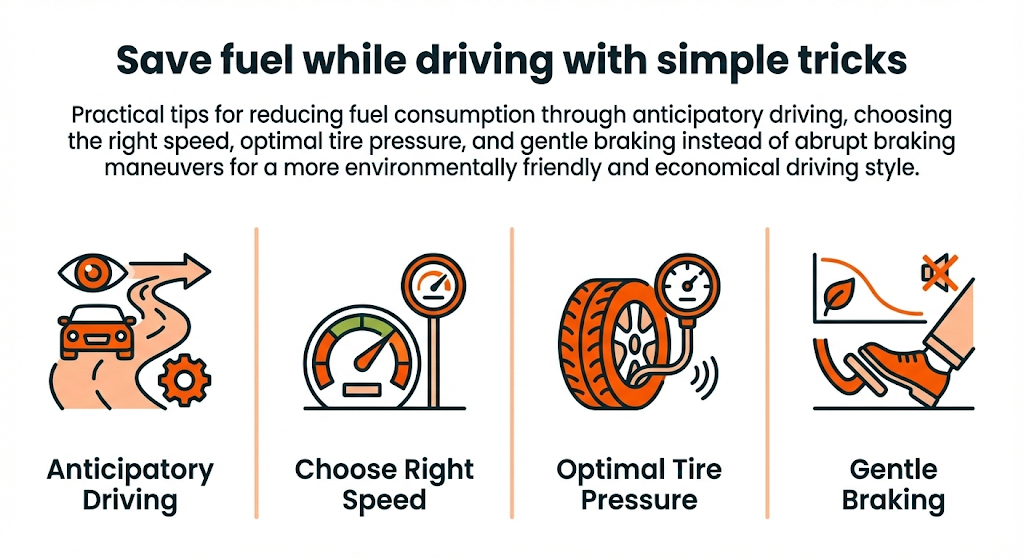
Anticipatory driving stands as the foundation of fuel efficiency. By reading traffic patterns ahead, you can maintain steady speeds and avoid unnecessary acceleration. This approach reduces the load on your engine and keeps fuel consumption at optimal levels.
When approaching intersections or traffic lights, ease off the accelerator early. This technique allows your vehicle to slow naturally, reducing the need for aggressive braking. Modern brake systems, whether disc or drum variants, perform best with gradual application. AUTODOC: The first drum brakes were patented in 1902 by French automotive pioneer Louis Renault. They laid the foundations for today’s modern braking systems and were the main type of brake for cars until disc brakes were popularised in the mid-1950s. Understanding your brake system helps you apply pressure smoothly, which saves both fuel and brake components.
Optimal Speed Management
Motorway driving offers the greatest potential for fuel savings through speed control. Most vehicles achieve peak efficiency between 50 and 65 mph. Beyond this range, air resistance increases exponentially, forcing your engine to work harder. Maintaining a consistent speed using cruise control, where appropriate, helps maintain optimal fuel consumption.
Essential Maintenance for Fuel Economy
Proper vehicle maintenance directly impacts fuel efficiency. Regular checks ensure your car operates at peak performance.
| Maintenance Item | Recommended Frequency | Fuel Saving Impact |
|---|---|---|
| Tyre Pressure Check | Monthly | Up to 3% |
| Air Filter Replacement | 12-15 months | Up to 10% |
| Engine Oil Change | As per the manufacturer | Up to 2% |
| Brake System Inspection | Every 6 months | Prevents drag losses |
Tyre pressure deserves particular attention. Under-inflated tyres increase rolling resistance, forcing your engine to consume more fuel. Check pressures when tyres are cold, following the specifications in your vehicle handbook.
Quality brake components from trusted manufacturers ensure smooth, efficient braking. Leading parts suppliers like AUTODOC UK stock reliable brands, including Abakus and Ridex, which meet industry standards for performance and durability. Properly functioning brakes respond smoothly to pedal pressure, allowing for the gentle stops that conserve momentum and fuel.
Reducing Vehicle Weight and Drag
Every extra kilogram in your vehicle requires additional fuel to move. Remove unnecessary items from your boot and interior. Roof racks and boxes create significant wind resistance, so remove them when not needed. Even empty roof bars can reduce fuel efficiency by up to 5% at motorway speeds.
Air Conditioning and Electrical Systems
Air conditioning places substantial demand on your engine, particularly at lower speeds. At speeds below 50 mph, opening windows may prove more efficient. Above this speed, the aerodynamic penalty of open windows exceeds the air conditioning cost. Use climate control systems judiciously, setting temperatures to comfortable rather than extreme levels.
How to Maximise Fuel Efficiency: Key Steps
- Check tyre pressures monthly when tyres are cold
- Accelerate smoothly and maintain steady speeds where possible
- Anticipate traffic flow to minimise braking and acceleration
- Keep speeds between 50-65 mph on motorways
- Remove roof racks and unnecessary weight from the vehicle
- Service brake systems regularly for smooth operation
- Replace air filters according to schedule
Frequently Asked Questions
Does gentle braking really save fuel?
Yes, gentle braking preserves the momentum you have built up, reducing the energy needed for subsequent acceleration. Harsh braking converts kinetic energy to heat through your brake components, wasting the fuel used to create that momentum.
How much difference does tyre pressure make?
Tyres under-inflated by just 0.5 bar can increase fuel consumption by up to 3%. This seemingly small pressure difference significantly increases rolling resistance, forcing your engine to work harder.
Should I warm up my engine before driving?
Modern engines require minimal warm-up time. Starting your journey immediately after ignition, while driving gently for the first few miles, proves more fuel-efficient than idling. Extended idling wastes fuel without meaningful engine benefit.
Are premium fuels worth the extra cost?
Unless your vehicle manufacturer specifically recommends premium fuel, standard grades provide adequate performance. The efficiency gains from premium fuel rarely offset the additional cost for most modern engines.
Conclusion
Fuel efficiency combines multiple factors working together. Small changes in driving habits, when applied consistently, deliver measurable savings. Regular maintenance ensures your vehicle operates at peak efficiency, while thoughtful driving techniques reduce unnecessary consumption. These practical approaches benefit both your wallet and the environment, making every journey more economical.
Sources
- pinterest.com – Fuel Saving Tips – Tire Pressure Infographic
- facebook.com – Simple methods to improve fuel economy and efficiency
- transpoco.com – Driving techniques that boost your fleet fuel economy
- shutterstock.com – Car Maintenance Infographics royalty-free images
- cartrack.co.za – Tyre Pressure and Tread: The Big Impact It Has On Your …
- icartea.com – The Most Effective Ways to Reduce Petrol Consumption