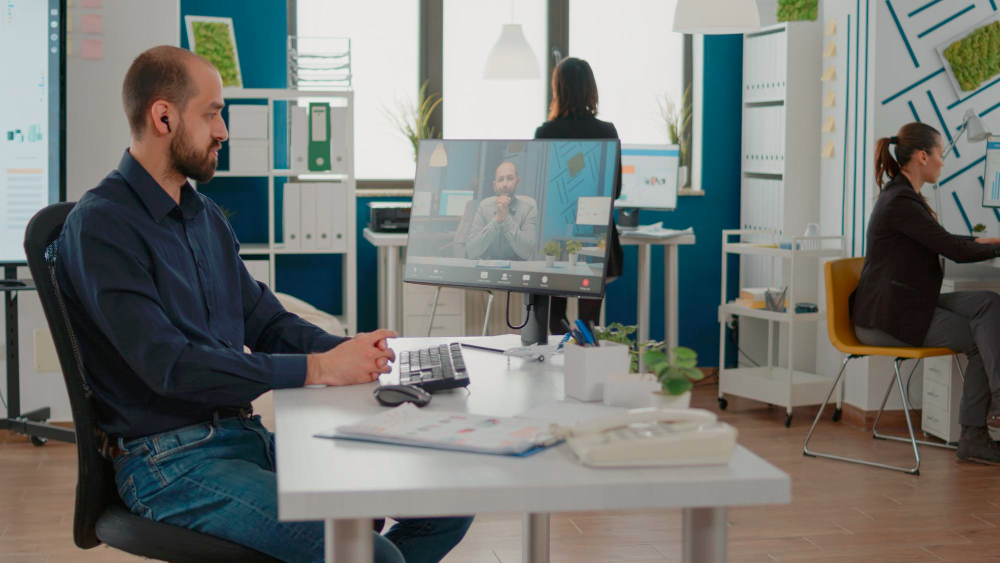

In recent years, the hybrid working model has become one of the most talked-about topics in the world of business and technology. It combines the best elements of the traditional office and remote working. With the development of digital technologies and the emergence of new opportunities to work from anywhere in the world, many companies and employees have begun to rethink their usual ways of working. This transformation has affected a wide range of industries, including those not traditionally associated with remote working, such as the gambling industry. However, how do hybrid workplaces affect other areas of business? How does technology support this model? Let’s examine how hybrid workplaces are evolving, their impact on various industries, and the future of business in the face of changing realities.
Hybrid workplaces and the impact of technology on remote working
Not so long ago, companies faced difficulties in transitioning their staff to remote working. The situation changed when it became clear that innovation and technological development could significantly simplify this process. The introduction of hybrid workplaces became the answer to new challenges, offering staff flexibility and businesses new ways to improve efficiency.
One striking example of the hybrid model in business is non gamstop casinos. These online casinos, operating outside the self-exclusion system, apply a hybrid model both to the work of their teams and to their interaction with players. Casinos adapt their work processes so that employees can work from different parts of the world without compromising productivity.
Modern technology plays a key role in supporting hybrid workplaces. The introduction of video conferencing, cloud services and other collaboration tools has significantly simplified interaction between offices and remote staff. Today, companies can not only operate effectively but also offer their staff the opportunity to choose comfortable conditions for carrying out their tasks.
The benefits of hybrid workplaces for business
One of the key advantages of the hybrid model is its ability to adapt to the needs of different types of business. This impact is particularly noticeable in sectors such as finance, marketing, education and IT. Combining office-based work with remote formats allows for a flexible approach to work organisation, which is particularly important for companies operating in highly competitive environments.
Companies implementing hybrid workplaces can reduce operational costs, cut office rental expenses and improve their employees’ work-life balance. Furthermore, thanks to remote working, companies become more competitive in the labour market, as they can attract talented professionals from all over the world.
It is also worth remembering that hybrid workplaces allow employees to manage their time more effectively. This approach helps to boost productivity and improve the quality of work. Working in a hybrid format, employees are able to take a more flexible approach to their duties and choose the best working conditions depending on the tasks at hand.
How does the hybrid model affect company culture?
Hybrid workplaces can significantly change corporate culture. This way of working requires employees and managers to adopt a new approach to communication, as well as to rethink team management methods. For example, skills such as self-discipline and the ability to work effectively without constant supervision become paramount.
A key aspect of the hybrid model is the presence of a strong corporate culture that can be maintained both in the office and remotely. To achieve this, companies need to implement tools that help strengthen connections between employees, regardless of where they are. This could include regular communication via video conferencing, the use of corporate chat groups, or even virtual team-building activities.
Modern companies must strive to create conditions in which the company’s culture and values are preserved and strengthened, despite the physical distance between employees. This requires company management to work actively to maintain team spirit, employee engagement and strengthen their loyalty.
Technologies that support hybrid workplaces
The transition to hybrid workplaces is impossible without the use of technologies that enable high levels of productivity and interaction between employees. This primarily concerns video conferencing platforms and various cloud-based collaboration solutions.
The implementation of artificial intelligence, cloud storage and project management platforms not only simplifies collaboration but also enhances data security. For example, many companies have started using cloud services to store corporate data, allowing employees to access the information they need at any time and from anywhere in the world.
Furthermore, for hybrid teams to work effectively, it is necessary to implement automation systems that help reduce the time spent on routine tasks. This allows employees to focus on more important aspects of their work, increasing overall productivity and reducing the likelihood of errors.
Problems and challenges of hybrid workplaces
Despite the obvious advantages, the hybrid working model also faces a number of challenges. One of these is the difficulty of maintaining team cohesion in a remote working environment. For some employees, the lack of face-to-face interaction with colleagues can lead to feelings of isolation and a decline in morale.
It is also worth considering potential technical issues, such as an unreliable internet connection or a lack of necessary equipment. In a hybrid working environment, companies must invest in technology that ensures remote employees can work seamlessly.
The role of hybrid workplaces in the future of business
Hybrid workplaces, which have become a key aspect of business in recent years, represent not a passing trend but a profound and sustainable transformation that will shape the future of organisations. In the future, the role of hybrid working in business will continue to grow, influencing company structure, corporate culture and the ways in which employees interact. In the context of globalisation and technological innovation, the hybrid working model is becoming a key factor in success and competitiveness in the market.
The hybrid model as the foundation for new business structures
With each passing year, more and more organisations are beginning to view hybrid workplaces not as an exception, but as a vital component of their business strategy. This is due to a number of factors, such as reduced office rental costs, increased employee productivity, and the need to attract talent from around the world. In the coming decades, hybrid models will become increasingly widespread, and for companies this will mean not just adaptation, but the need to review and create new business structures.
Businesses that are able to integrate a hybrid model will gain additional advantages. They will be able to work with flexible, dynamic teams and offer employees the choice of the most convenient working conditions, which will boost overall motivation and job satisfaction. It is important to note that the hybrid model opens up opportunities for diverse teams, which may consist of employees working in different countries and time zones, fostering innovation and a better exchange of ideas.
Improving efficiency through hybrid workplaces
One of the significant aspects of the transition to a hybrid working model is the improvement in the company’s overall efficiency. For example, many businesses are already noting that employees working in a hybrid format are becoming more productive. This is because the hybrid approach allows employees to choose the working conditions in which they are most effective, whether that be a home environment or the office.
The hybrid model helps to balance various aspects of work, including a focus on employees’ personal lives. When employees can take a flexible approach to managing their time, this leads to better utilisation of their intellectual and physical resources. They are less prone to stress from having to commute to the office every day and are more focused on completing tasks.
In turn, companies benefit from this, as their employees become more engaged and interested in the results of their work. This has a direct impact on business performance and the achievement of long-term goals. Furthermore, hybrid workplaces enable a more optimal distribution of work processes, which reduces management costs and increases profitability.
The appeal of hybrid workplaces to job seekers
Hybrid workplaces are an attractive option for most modern professionals, particularly for generations accustomed to digital technologies and high mobility. At a time when more and more people are seeking flexibility and control over their own time, companies offering a hybrid model are becoming the preferred employers. Importantly, hybrid working appeals not only to those seeking a work-life balance, but also to people who value the opportunity to work from different locations, be it at home, in a co-working space or elsewhere.
This opens up new horizons for recruitment: companies are no longer limited by the location of their offices, but can hire talent from all corners of the world. Thus, hybrid workplaces are becoming not just a competitive advantage, but a prerequisite for attracting and retaining qualified professionals.
One of the key factors influencing the appeal of hybrid workplaces is ensuring decent conditions for employees, including the necessary technical resources, support for their mental health, and opportunities for professional development. It is precisely these aspects that make the hybrid model attractive not only to start-ups but also to large international corporations seeking to adapt to the rapidly changing labour market conditions.
The role of hybrid workplaces in corporate culture
The introduction of hybrid workplaces changes not only the processes themselves but also corporate culture. Companies that adopt hybrid working models face the need to restructure their internal communication and management approaches. A crucial part of this process is creating and maintaining a corporate culture that works effectively for both office-based and remote employees.
Effective leadership in a hybrid environment requires managers to adopt a more flexible approach to communication and interaction with their team. This often involves using digital platforms for regular meetings, planning and tracking task completion. Furthermore, companies must focus on fostering a sense of community among employees, regardless of their physical location.
Organisations that successfully implement and maintain a hybrid model will be able to create conditions in which employees feel part of a single team. This will not only increase employee loyalty but also ensure a high level of engagement with the company’s processes. In the future, such companies will have a more sustainable corporate culture based on trust, mutual respect and a shared commitment to a common goal.
The benefits of hybrid workplaces for innovation and flexibility
The hybrid working model opens up opportunities for an innovative approach to business. When employees work remotely, they are often better able to focus on solving tasks without being distracted by the daily office routine. In such conditions, it is easier to implement new ideas, develop non-standard solutions and devise innovative approaches.
Furthermore, companies that utilise hybrid workplaces can adapt more quickly to changes in the external environment. Whether it be a pandemic, an economic crisis or changes in legislation, the hybrid format allows businesses to respond more quickly to any challenges. Moreover, the ability to work remotely or in the office depending on the situation enables companies to be more flexible in their strategic planning and to improve operational efficiency.
The introduction of hybrid workplaces creates scope for testing new business models, as well as for optimising existing processes. This helps companies not only to survive in turbulent times, but also to thrive by improving their competitiveness.
The future of hybrid workplaces in business
In the coming years, the hybrid working model will continue to evolve, and businesses that are able to adapt will be at an advantage. The ongoing adoption of technology, increased employee mobility and the development of new management methods will open up new opportunities for business and make it more flexible and resilient.
Hybrid workplaces will become not just a trend, but a sustainable business model ensuring companies’ long-term success in a rapidly changing world.
Conclusion
Hybrid workplaces are not just a trend, but an important stage in business development that is changing the approach to organising work. Technology plays a key role in supporting the hybrid model, helping companies to effectively manage remote and office-based staff. Despite the challenges organisations face, hybrid workplaces offer unique opportunities for development and growth.
As the experience of many companies has shown, the hybrid working model helps to boost productivity, improve the work-life balance of employees, and reduce operating costs. In the future, hybrid workplaces will become the norm for many companies seeking to remain competitive and attract the best talent from around the world.
The introduction of hybrid working models will benefit not only organisations but also employees, allowing them to choose comfortable conditions in which to carry out their duties. Ultimately, these changes will help create more flexible and productive work processes, adapted to modern business conditions.