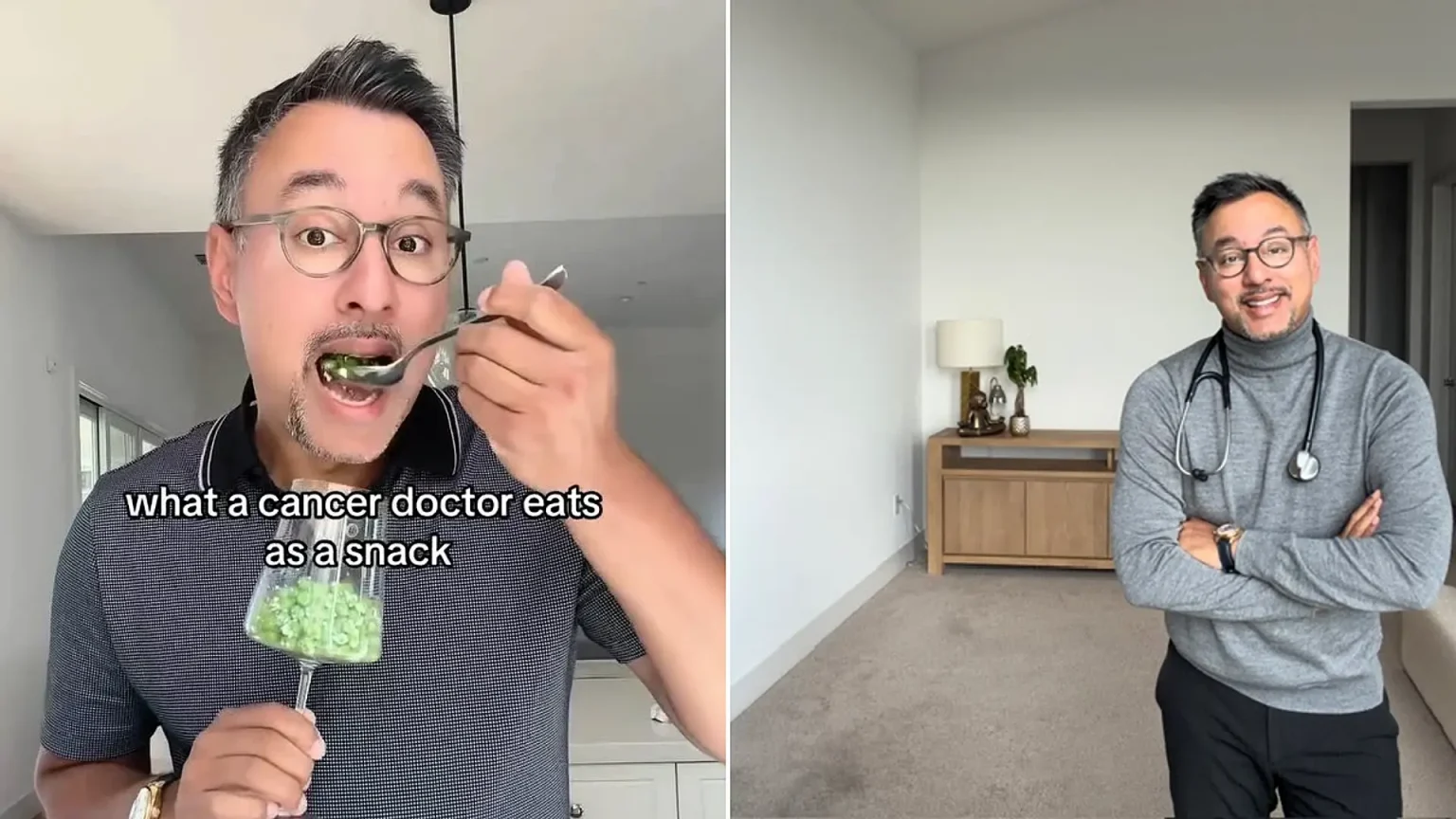

A cancer doctor has made an unlikely vegetable the star of his snack routine – and the way he eats it has left people shocked.
Dr Amit Garg is obsessed with frozen peas – saying frozen veg can be just as nutritious as fresh.
The 45-year-old has gone viral after sharing his top snack online with nearly 30,000 people weighing in.
The good doctor eats peas in three ways: cold in a wine glass with Parmesan, butter and salt, mashed into a dip and spread across a slice of bread or blitzed with Greek yogurt, feta, mint and oilve oil.
Aside from peas, his penchant for adding butter to greens and fruits also extends to prunes – which has left people shocked, saying it is “far too many calories”.
But Dr Garg stands by his snack choices.
“Studies show similar nutrition with fresh and frozen peas in terms of protein, fibre, vitamin C, folate, and the B vitamins,” the doctor, who has 63,000 followers, told Need To Know.

“Frozen veggies are a great alternative and last longer.”
Butter isn’t inherently a bad ingredient to add.
Although it is high in saturated fat and can raise cholesterol, and admittedly olive oil would be a healthier alternative, butter can add flavour that makes vegetables easier to eat for those who aren’t a fan of greens.
But people online aren’t entirely convinced.
“Nooo not peas,” said one woman.
“Where is the butter,” asked Nicole.
“I thought this was for a pet,” said someone else.
“Aaargh! Peas are one of the few veggies I just don’t like,” another viewer shared.
Meanwhile, commenting on the prune video, someone else said: “Way too many calories for that dessert! 4 prunes are 100 calories.”
Coddie said: “Prunes in butter what??”

But others were onboard.
“I love peas so I’m loving the pea content,” said one person.
“My English husband approves,” added someone else.
“After I saw this last week I went out and bought peas. Couldn’t stop thinking about it. Yummy!,” said another person.
“Nice touch out of the wine glass. Presentation is everything,” said another viewer.
The doctor’s other go-to snacks include nuts, Greek yogurt, berries, apples, hummus and vegetables such as cucumbers.
Being a cancer doctor has made him think more carefully about his own food habits, particularly when it comes to nutrition advice circulating online.
He said: “I see misinformation online, foods supposedly ‘feeding’ cancer, restrictive diets, detoxes, or one ingredient being marketed as preventing cancer.
“Nutrition just isn’t that simple.
“Remember, you don’t have to be perfect.
“Focus on long term habits.”
The doctor recommends a varied diet of adequate protein, fruits and vegetables, whole grains, legumes and nuts and limiting highly processed foods.
He also says eating a high-fibre diet has been associated with a decreased risk of colorectal cancer.
READ MORE: How lack of sleep affects the heart: what the latest research says