

A British woman has revealed how she was diagnosed with an incurable liver disease – and spending years hoping she wouldn’t get it.
Michelle Timmons has suffered with chronic health conditions for several years, facing severe abdominal pain, bleeding, needing to go to the toilet urgently, and extreme fatigue.
The 30-year-old has also watched her father deal with the same problems due to Ulcerative Colitis, an inflammatory bowel disease, as well as a rare condition called Primary Sclerosing Cholangitis (PSC), which causes inflammation and scarring of the bile ducts inside and outside the liver.
READ MORE: My £3,900 Turkey teeth are FALLING OUT – now it’ll cost £40K to fix, don’t make my mistake
Michelle, who was diagnosed with Ulcerative Colitis in 2019, had hoped she wouldn’t be among those also affected by PSC.
Unfortunately, the mum-of-two was diagnosed with the same condition as her father, despite initially showing no obvious symptoms.
“I felt frightened and overwhelmed,” Michelle, from Birmingham, told Need To Know.

“I was aware that PSC can sometimes occur alongside inflammatory bowel disease, but it was still a huge shock when I received the diagnosis.
“Having seen first-hand the impact these diseases had on [my dad’s] life made the diagnosis particularly emotional and something I had always hoped I wouldn’t have to face myself.”
Following her Ulcerative Colitis diagnosis, Michelle received regular health check ups and during one round of blood tests in 2020, doctors realised her liver function was abnormal.
Since she was already experiencing severe symptoms, such as fatigue, bleeding and abdominal pain due to her condition, she hadn’t considered that there may be something else at work.

She added: “Looking back, the fatigue was probably one of the most challenging symptoms because it is something people often can’t see or understand.
“PSC can be difficult to spot because symptoms are often vague or may not appear until the disease has progressed.”
The senior dental nurse was already under the care of the gastroenterology team, who further investigated her abnormal results.
She underwent an MRCP scan, which is a specialised MRI scan that looks at the bile ducts and liver.
It was the MRCP that eventually confirmed the changes associated with Primary Sclerosing Cholangitis (PSC) and led to Michelle’s diagnosis.
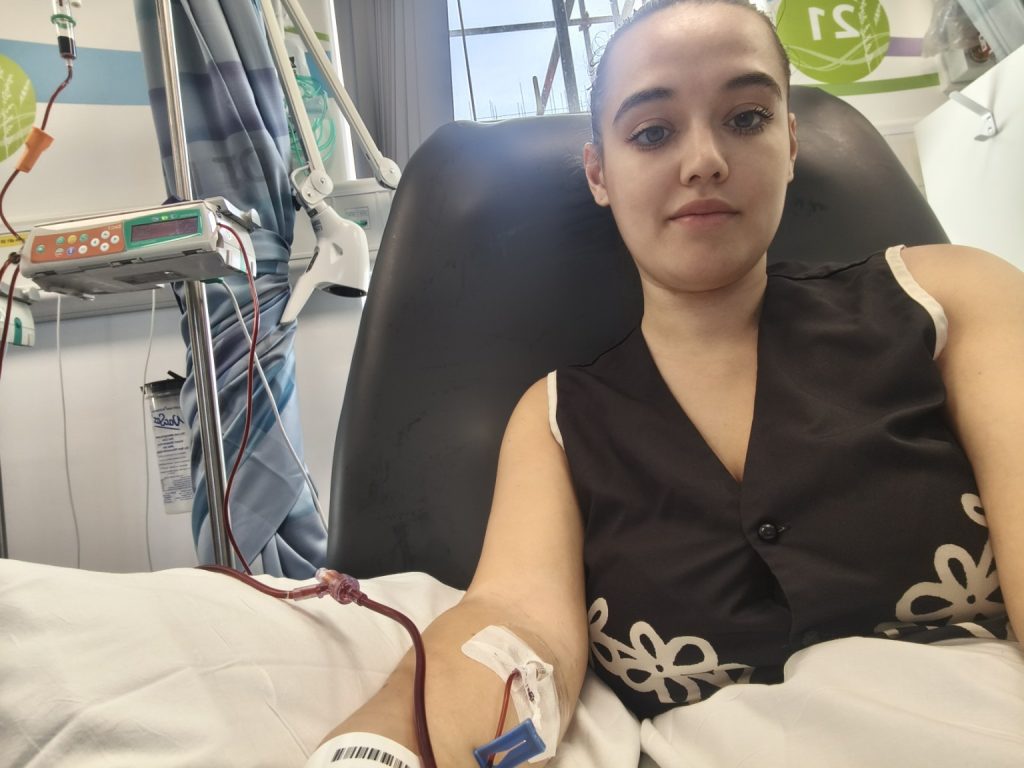
While it was a “relief” to finally have an answer, Michelle says it was “difficult to hear” that she had the same condition as her father, who recently passed away from bowel cancer.
She said: “My father also lived with both Ulcerative Colitis and PSC, so I was already aware of the condition and some of the challenges it can bring.
“PSC is a rare condition and when you’re first diagnosed there are so many unknowns.”
Michelle says due to her dad dealing with PSC for many years, she “knew how serious the condition could be”.
She added: “That made the diagnosis even harder to process because I had seen first-hand the impact it can have on someone’s life.
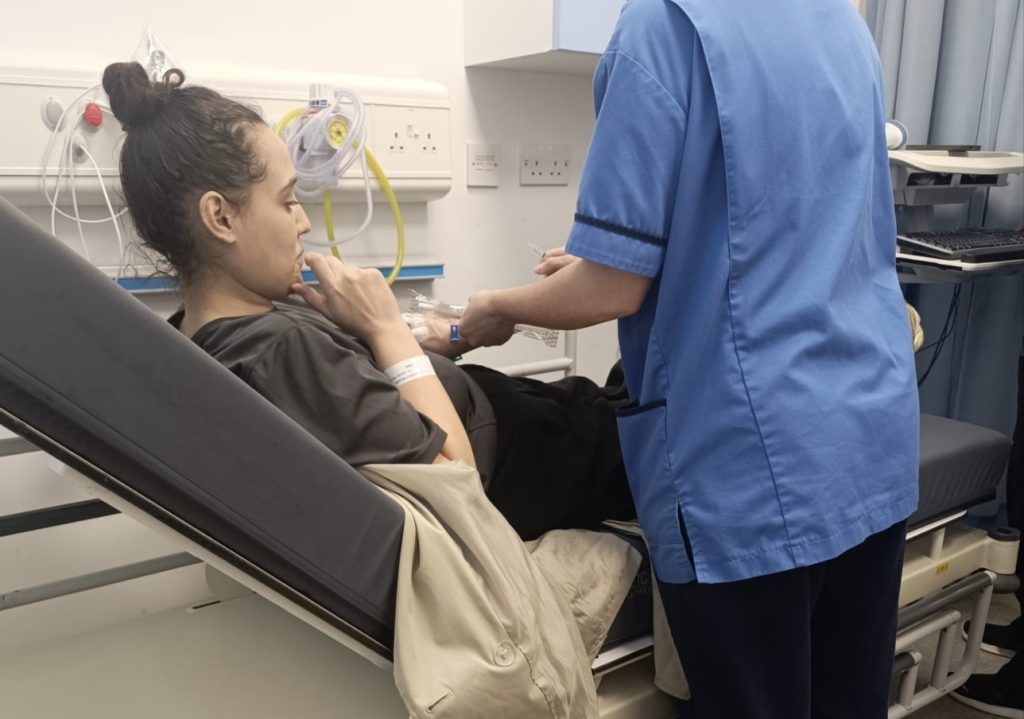
“My dad’s PSC had progressed to the point where he needed a liver transplant, but unfortunately due to other health problems he wasn’t able to have one.
“Seeing him go through that was incredibly difficult and naturally made me worry about what the future might hold for me.
“Knowing that PSC can progress over time and that some people may eventually need a liver transplant was one of the things that frightened me most when I was diagnosed.”
However, Michelle decided to focus on “what she could control” and looking after her health as best as possible.
Since there is currently no cure for PSC, Michelle’s treatment focuses on monitoring the condition and managing symptoms or complications.
She has regular blood tests, scans, specialist appointments and ongoing monitoring by her liver team to keep a close eye on how the condition is progressing.
Michelle says living with PSC “means living with uncertainty” and that despite sometimes feeling well, she knows this could change at any time.
She added: “It has made me more conscious of my health and the importance of attending appointments, blood tests and scans.
“Balancing this alongside full-time work and raising two young boys can be challenging, but I try not to let the condition define me.
“I love spending time with my family and friends, being social, making memories and getting out and about, but I am always aware of how my health can impact those plans.
“Sometimes I have to think ahead, make adjustments, or accept that I may not have the same energy levels as everyone else.
“Despite that, I try to make the most of every opportunity and not let my conditions stop me from enjoying life.”
Alongside PSC, Michelle has undergone extensive treatment for Ulcerative Colitis, including immunosuppressive medications, biologic infusions and surgery.
In June 2026, she is due to undergo a total proctocolectomy with a permanent ileostomy, a surgical procedure that creates a new path for digestive waste to leave the body when the large intestine needs to be bypassed or removed.
This comes after years of battling severe bowel disease, and may also help with her PSC symptoms.
She said: “My surgeon has explained that removing my bowel and rectum may also have a positive impact on my PSC.
“As the inflammation caused by Ulcerative Colitis can contribute to ongoing stress on the body, there is hope that removing the diseased bowel could help reduce the risk of my liver condition deteriorating as quickly in the future.
“While there are no guarantees, knowing that the surgery may benefit both my bowel disease and potentially my long-term liver health has given me additional reassurance that I am making the right decision.
“While it is a huge adjustment, I am hopeful it will give me back a quality of life that my bowel disease has taken away.”
For now, Michelle’s PSC is being closely monitored and my liver function remains stable.
While Michelle’s condition was spotted during blood tests, she encourages anyone showing symptoms such as persistent fatigue, itching (particularly at night), abdominal pain, jaundice, dark urine, pale stools, unexplained weight loss, fevers and night sweats to seek help.
She added: “PSC is a rare disease that many people have never heard of, yet it can have a profound impact on someone’s life.
“Because many of these symptoms can be mistaken for other conditions, PSC is often discovered through abnormal blood tests and further investigations, as it was in my case.
“I recently lost my dad to bowel cancer, which has made my own health journey even more emotional.
“It reinforced how important it is to listen to your body, seek medical advice when something doesn’t feel right, and not be afraid to talk openly about conditions affecting the bowel and digestive system.”
READ MORE: I lost my heartbreak weight with a 60-year-old method – I’m 7st down WITHOUT jabs