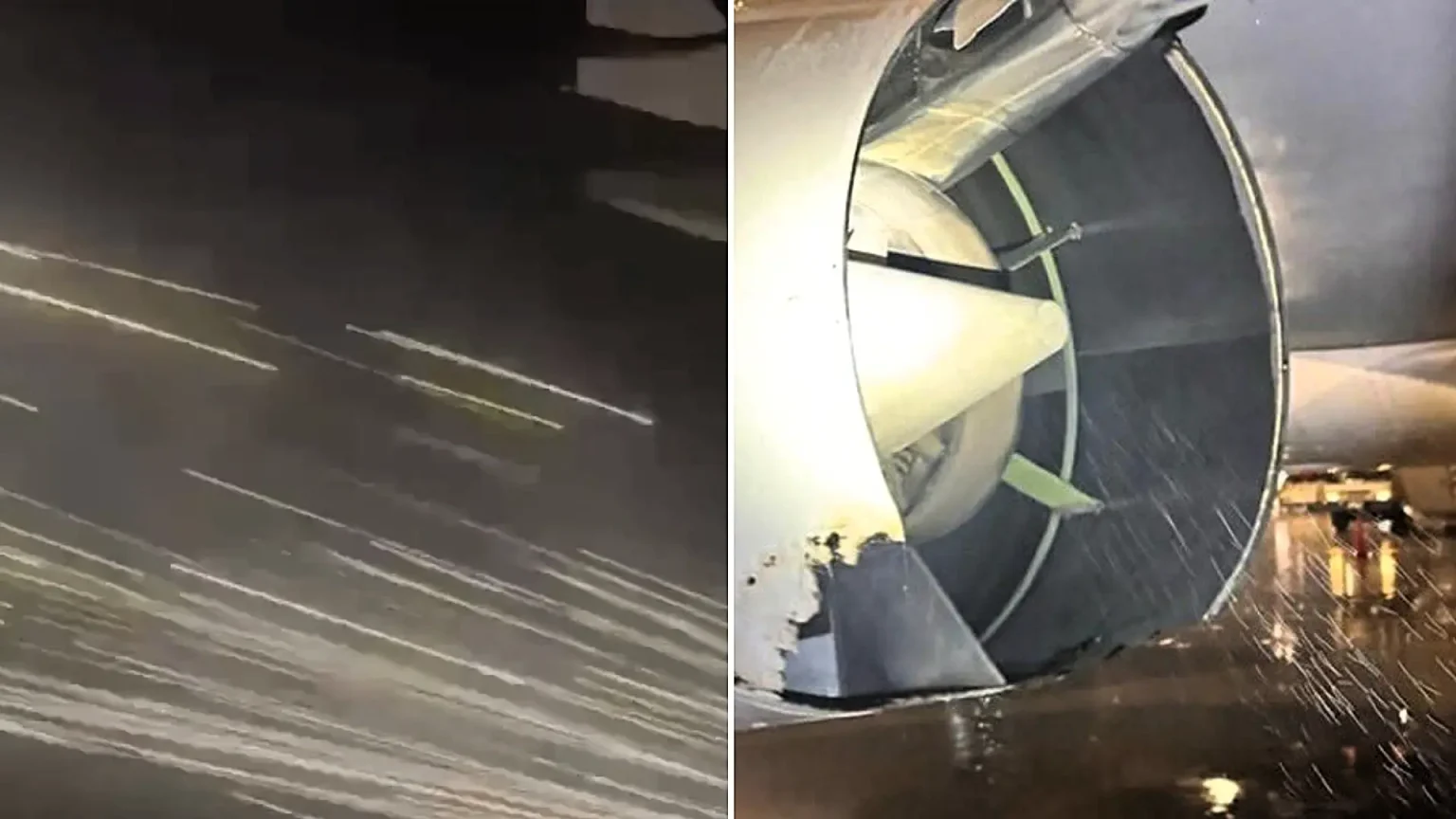

An airliner carrying more than 200 people lost part of an engine after being struck by lightning mid-air.
SriLankan Airlines flight UL606 was climbing out of Colombo in the early hours of Friday (12 Jun) when the strike occurred.
Passengers reported hearing a loud bang before seeing sparks shooting from the rear of the left engine.
The pilots opted to turn back to Colombo International Airport rather than continue the flight to Sydney, Australia.
Footage filmed after the plane landed safely shows a large section of the affected engine’s exhaust nozzle missing.
Despite the dramatic incident, none of the 207 passengers or 16 crew members on board were injured, as reported by Need To Know.
The aircraft, an Airbus A330-243 powered by two Rolls-Royce Trent 772B-60 turbofan engines, was built in 2004.
A replacement aircraft departed Colombo at 5:51am and eventually arrived in Sydney at 8pm, more than five hours behind its scheduled 2:40pm arrival.
Passenger Kanchana de Silva later wrote online: “What began as a routine flight turned into an unexpected and frightening experience.
“During those uncertain moments, the professionalism, calmness and dedication shown by the captain and crew gave us confidence and reassurance.
“Your composure helped keep passengers calm and reminded us that we were in capable hands.
“I would also like to thank my fellow passengers. In a stressful situation, everyone remained patient, cooperative and respectful, allowing the crew to focus on our safety.
“After our safe landing in Katunayake, the care and support provided by SriLankan Airlines were exceptional.
“Food, water and other necessities were arranged promptly, and every effort was made to ensure passengers were comfortable and looked after.
“What impressed me most was how quickly another flight was organised, allowing us to continue our journey and arrive safely in Sydney.”
Commercial aircraft are designed to withstand lightning strikes, which typically hit an airliner once every one or two years.
In most cases, the electrical current passes safely through the aircraft’s structure and the flight can continue normally.
Even so, engineers carry out thorough inspections after a strike to check for hidden damage and ensure the aircraft is safe to return to service.
READ MORE: Brits warned of travel chaos as nationwide strike threatens flights, trains and airports