A paramedic who ignored strange noises in her ear for years was left stunned when doctors discovered a huge brain tumour.
Paige Footner had suffered with tinnitus for three years, brushing it off as stress from her busy life as both a medic and circus performer.
But the 31 year old was left reeling when a scan revealed a 4cm growth on her brain.
READ MORE: Rattlesnake bite victim given 54 doses of anti-venom – now faces £970,000 hospital bill
Now recovering after surgery, she says the experience has completely changed her outlook and even inspired her to go on 50 dates in search of love.
“I had pulsatile tinnitus in one of my ears for three years,” Paige, from Adelaide, Australia, told Need To Know.
“I thought it was maybe stress related but after a year or two it started to get worse and was there all the time.
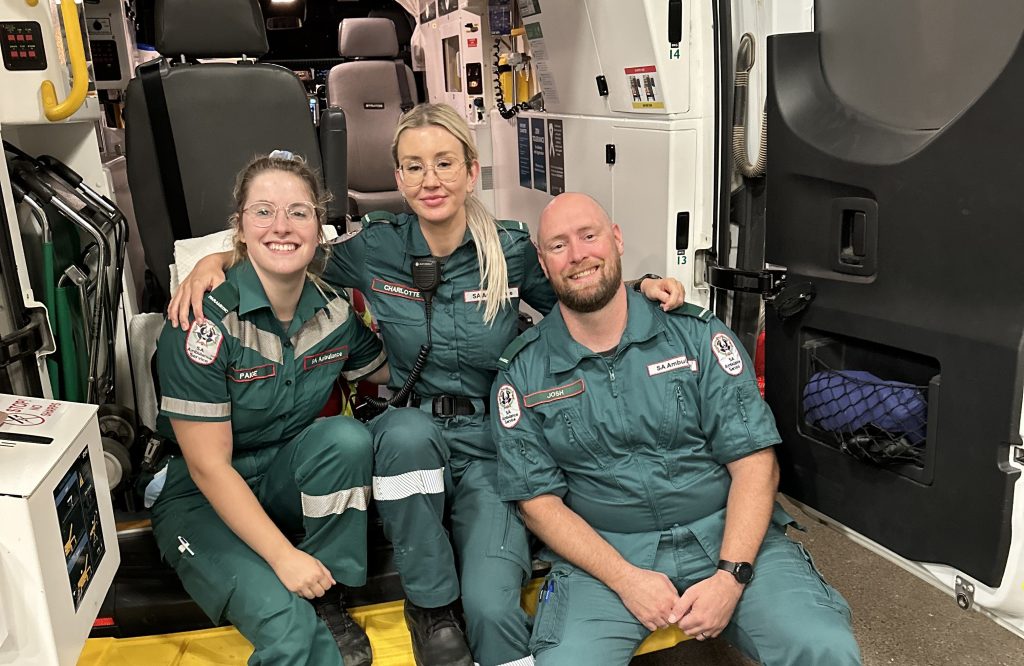
“Even though I wasn’t overly stressed about it, I mentioned it to my GP who said it could be a sign of something sinister and referred me to an ENT specialist.
“But because I go away a lot for the circus, it took me over a year to properly follow up.
“The specialist said it was probably from a benign cause, maybe an infection or past trauma – and I hit my head a lot doing circus so it made sense.
“He said to get an MRI just in case, but it would likely be fine.
“I also got some headaches occasionally, but because I work shift work, they’re not uncommon.
“I was recently diagnosed with ADHD too, which my neurosurgeon said was probably a symptom of the tumour because it was in my frontal lobe.
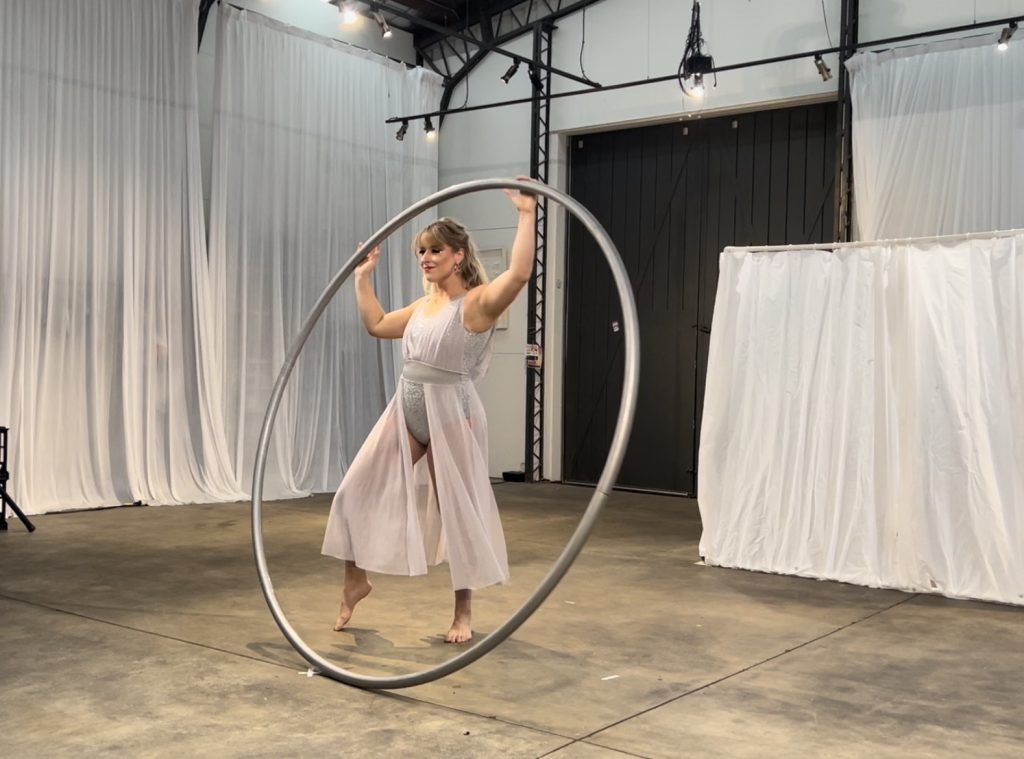
“They actually think the tumour was an incidental finding and it wasn’t causing the tinnitus.
“I was just super lucky they found it.”
Paige’s MRI had revealed she had a very significant brain tumour.
The radiologist told her it could be cancer and she was referred to a neurosurgeon.
She said: “I had a lot of scans done after that – MRIs, CTs, and PET scans – but the tumour was considered to have atypical findings so they couldn’t diagnose it without surgery.
“When I saw the neurosurgeon she gave some hope and said it looked like a meningioma which is often benign but she needed to do another scan to be sure.
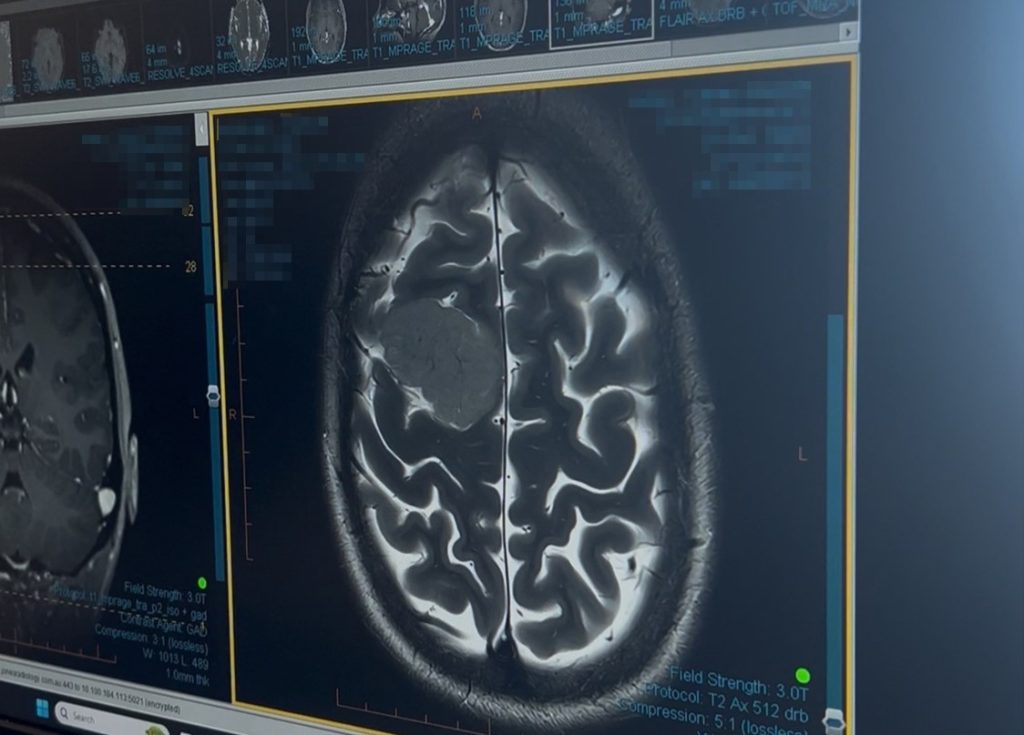
“Unfortunately, that scan did not show the typical features of a benign tumour, it showed some concerning findings that meant it could be a cancerous tumour or lymphoma.”
With the surgery now urgent, Paige had to cancel her trip to Edinburgh Fringe festival and all of her work overseas, which she said was “a huge financial and mental blow”.
But after the surgery, she was “immensely blessed” with good news.
Paige said: “It ended up being a grade one meningioma which is benign.
“Unfortunately the tumour does have a high proliferative score, though, which means it can be more aggressive than a grade one and has a higher chance of returning, but they will just monitor it closely and do surgery again rather than radiotherapy.”
Paige said the diagnosis eight months ago forced her to reassess her life.
She said: “In the radiology clinic time instantly froze and my life flashed before my eyes like a TV show.
“As a paramedic, we get a front row seat into other people’s lives and decisions, as well as their regrets before they die.
“This had motivated me to live my life fully, but in that moment I realised I had failed.
“I was 30 and I’d never experienced love.
“I’d never had a boyfriend, never even had a fling or a romantic kiss.
“I was literally a virgin.
“The pain of missing out on love was indescribable.
“I also regretted hustling so much at work, missing my friends’ events and not putting them first.
“I had money in the bank rather than spending it making memories.
“But I also looked back on my life and smiled.
“I’d performed in the circus all over the world, achieved what I never thought I could, and made incredible friends that held my heart and became family.
“At the end of the day, all we have are our memories and connections with our loved ones.
“And I had more than most, what a privilege.”
Paige says she struggled to tell people at first because it was her job to be “brave”.
She said: “I couldn’t let my family see this side of me, so I did what I always do in times of crisis – I messaged my boss.
“I said, ‘Matt, I have a brain tumour, I don’t mean to scare you but I don’t think I’m going to be at work Monday’.

“And I am so glad I told him.
“It was helpful having someone rational and medical to talk through it with me.
“My plan was to tell everyone I was injured – that’s why I wouldn’t be at work – and to tell my parents I was going overseas for six months.
“I was going to have brain surgery without them knowing.
“My boss was adamant that I needed to tell people, though, and even though I argued, he was right.
“Telling people opened the door for people to show me I was loved, that I was memorable and that I’d made a positive impact in their life.
“It was crazy. People who I thought didn’t even know who I was, because they were so cool, messaged me.
“Even my crush messaged me.”
Paige says she wasn’t scared going into brain surgery because she’d reframed vulnerability as a strength.
And despite a tough recovery, she’s now determined to live life to the full.
She said: “I had surgery to remove the tumour – it was 4cm which is quite big.
“I must admit, the thought of your brain and skull being cut open is rather scary and intimidating.
“But I was very lucky to have a good experience.
“I had an all female team and my neurosurgeon was one of the best, kindest and most compassionate people I’ve ever met.
“She really made a difference and helped bring some light to a dark, vulnerable time.
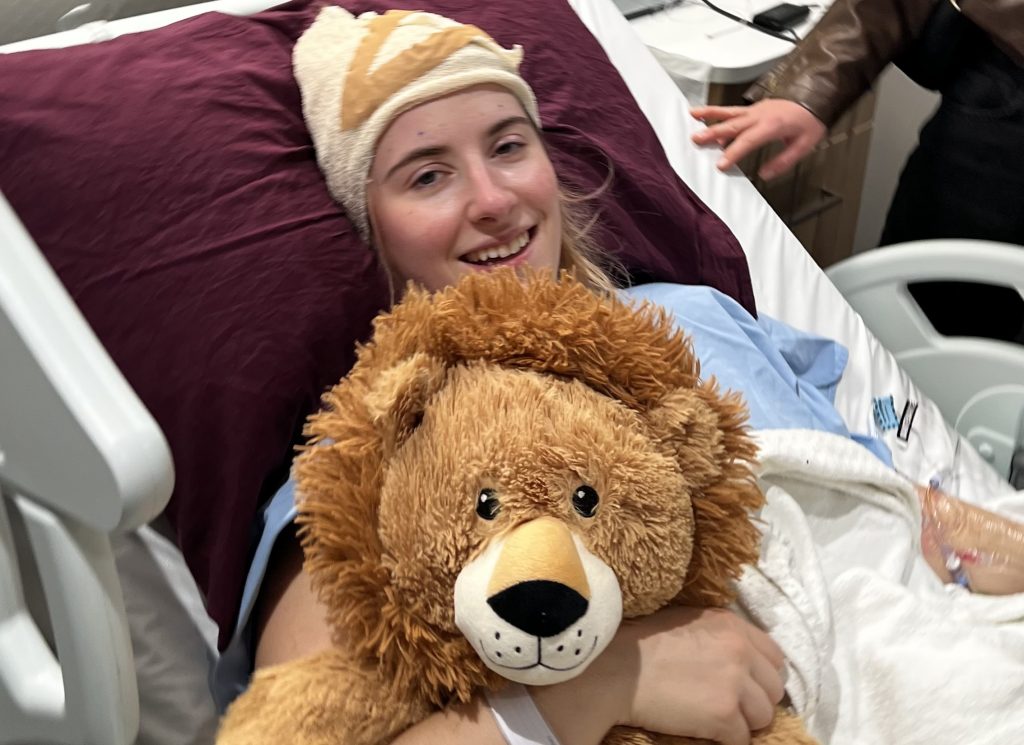
“I actually got quite sick after the surgery and was in there for three weeks.
“I couldn’t move my left arm very well, couldn’t walk without falling over and sometimes I couldn’t even lift my head off the pillow or talk.
“My body had always been the door to my dreams and now I was stuck in a bed barely able to even roll over.
“One of the doctors said, ‘We don’t know if you’re ever going to make it back to acrobatics and paramedics,’ which was a very confronting and not at all helpful thing to say.
“My neurosurgeon thankfully was far more reassuring and turned over every stone to figure out what was causing it.
“It ended up being a multitude of factors but one of them was seizures, which can happen from the swelling.”
Paige has lost her driving license as a result of the seizures and can’t work for a year, which has caused financial stress.
She also can’t perform.
She said: “People talk a lot about the difficulties of immediate recovery post major surgeries, but the months after when you go home, and you’re starting to feel better but can’t go back to your normal life, are also incredibly hard to navigate.
“In hospital, your sole purpose is to rest, but at home you start to have energy.
“You feel as though you have no purpose.
“I had to learn to find joy in small things and create new purposes.
“As soon as I could get on a plane, I went overseas to see my friends.
“I’ve made a pact with myself to go on 50 dates in a quest to find love.
“My neurosurgeon also inspired me so much that I’ve also started studying for the exam to get into medical school.
“I want to do what she did for me – I want to help make difficult times a little less difficult, lonely and scary.
“My biggest advice would be to chase that dream, do the thing, start the hobby, tell the boy you like him.
“The pain of dying with regret is far, far, far worse than the pain of any rejection, failure or embarrassment.”