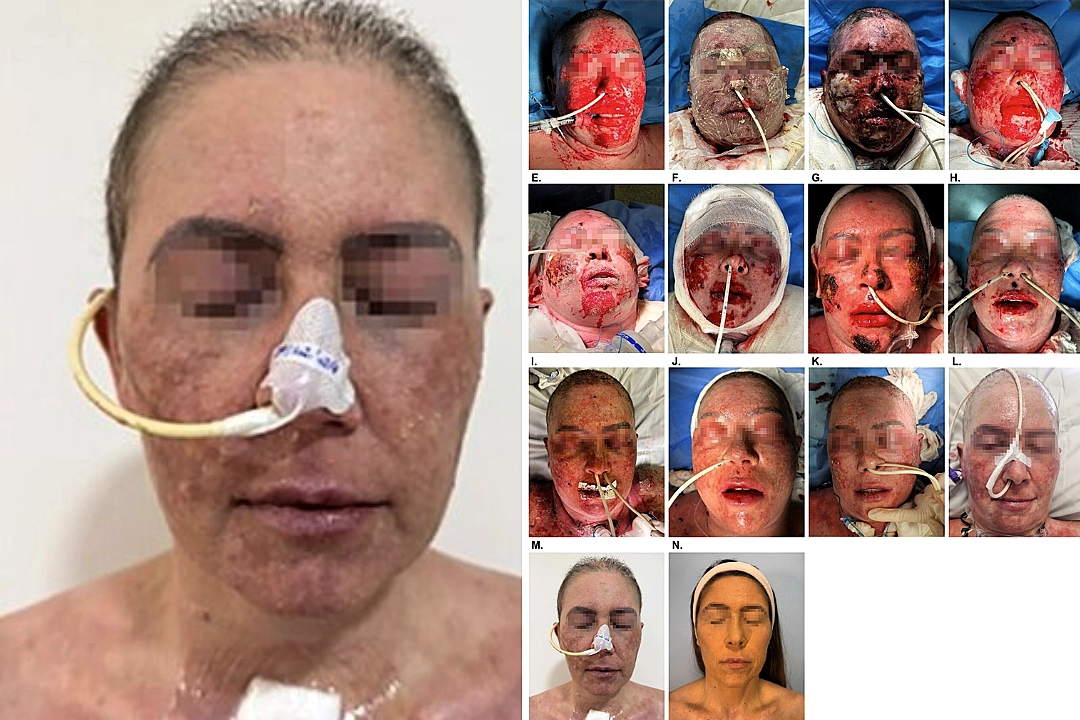

A woman’s face started to burn off and blister severely after her depression medication triggered a rare reaction.
The 42-year-old was rushed into hospital with shockingly red and blistered skin to her face, head, neck and torso.
Doctors found that the patient, who did not share her name, had been prescribed the anticonvulsant Lamotrigine to help manage her depression, which they believe had triggered toxic epidermal necrolysis (TEN).
READ MORE: Daughter and father both hit by cancer at same time – having ops and chemo back-to-back
TEN is a rare, life-threatening skin disorder, characterised by widespread blistering, necrosis, and detachment of the skin.
While uncommon, doctors noted reactions to Lamotrigine had been reported before.
The patient’s symptoms had begun three weeks ago, gradually worsening until she was taken into the ICU for urgent treatment, with her face most severely affected.
Upon her admission, she was started on a course of several antibiotics, as well as an antibacterial biomaterial being used for tissue regeneration on her facial wounds.
Four days in, she showed signs of healing, and the treatment continued with evaluations every other day, as reported by Need To Know.
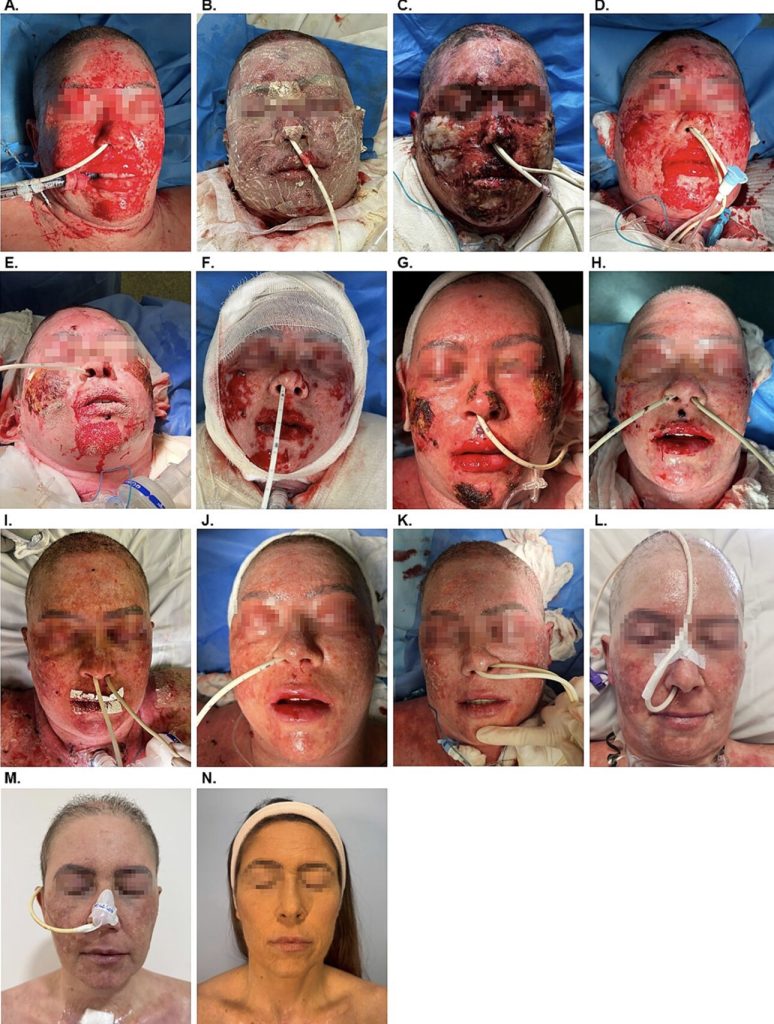
Representative images of the treatment progression. (Picture: Jam Press)
She remained in hospital for 66 days, with doctors monitoring her progress as her skin slowly healed.
Pictures showing the progress of her condition throughout her time in hospital, as well as during a follow-up appointment six months after she was discharged show the incredible recovery she was able to make, with her skin visibly less scarred.
Doctors described the affected areas as having undergone “excellent” restoration at the follow-up appointment.
The woman was treated at Hospital Beneficência Portuguesa de São Paulo in São Paulo, Brazil.
READ MORE: ‘I got meningitis TWICE – my family was told to prepare for the worst’


