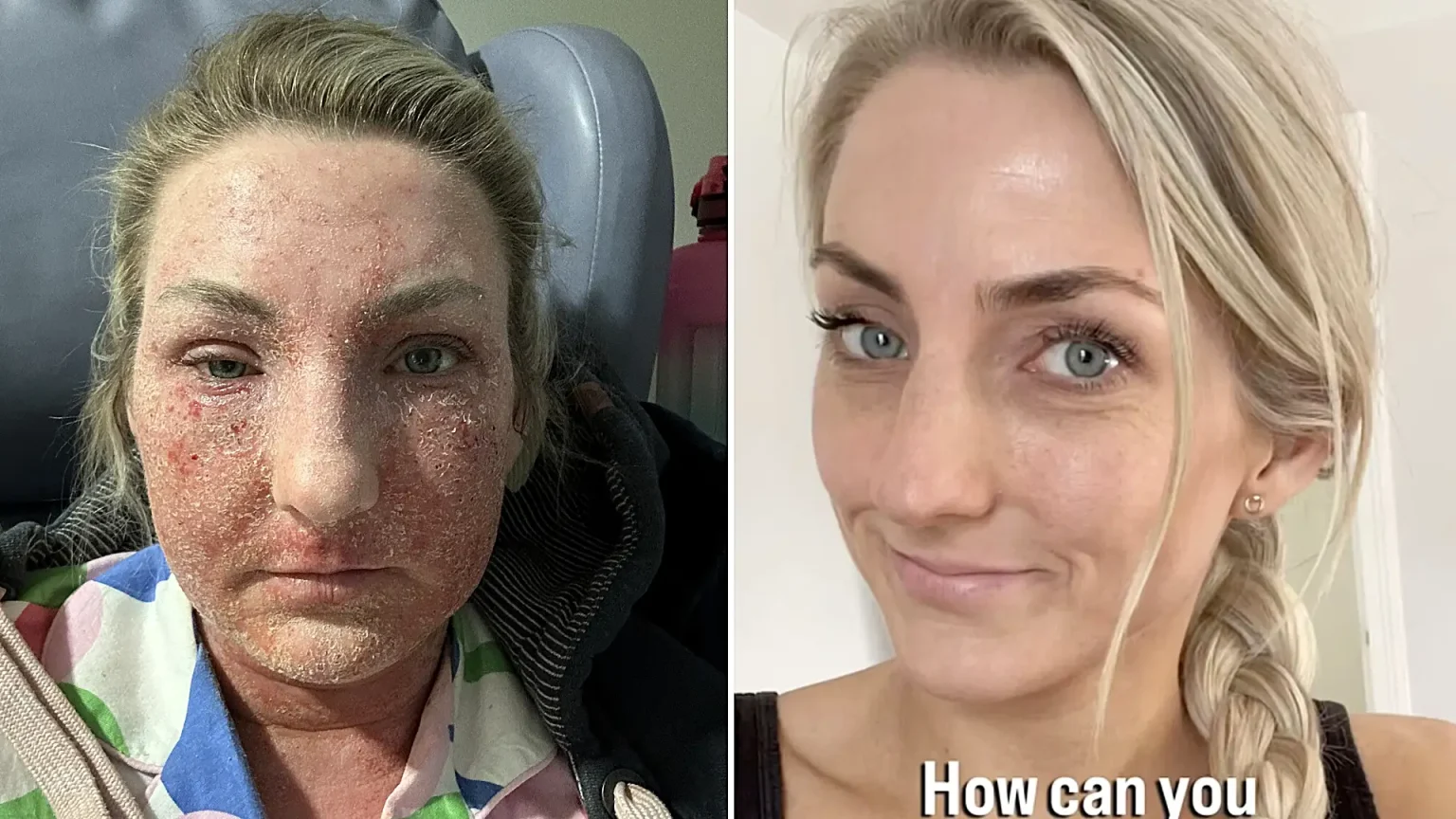

A teacher says that eczema creams prescribed by doctors left her unrecognisable and in “indescribable pain”.
Amy Wilson was first prescribed topical steroid creams for eczema when she was just six months old and continued using them on and off for more than three decades.
The 36-year-old believes years of repeated use led to a severe withdrawal reaction after she stopped using the creams in January 2024 – known as topical steroid withdrawal (TSW).
READ MORE: Doctor warns social media is ‘WORSE than smoking’ as Keir Starmer proposes under-16s ban
Just days after quitting the cream, she was left in “indescribable pain”, full body inflammation and severe swelling and three weeks later, she was hospitalised.
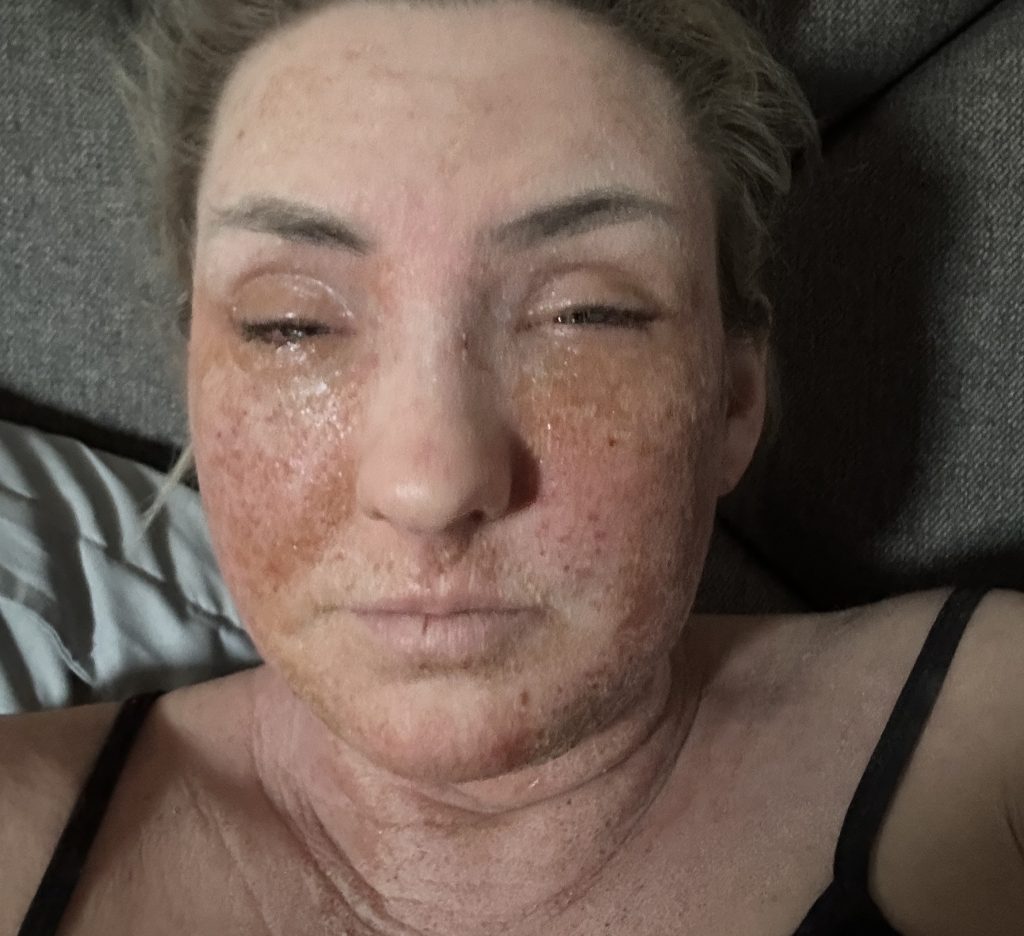
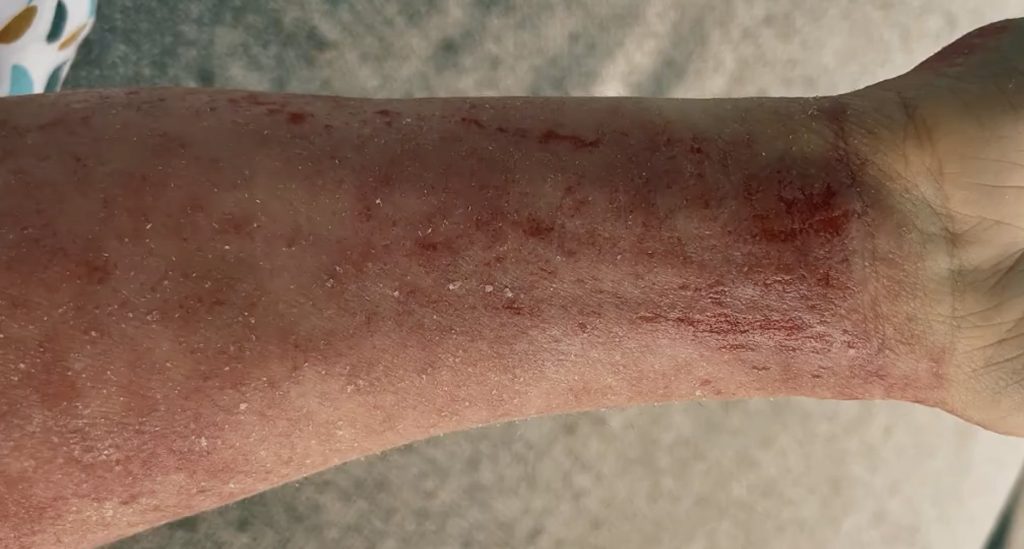
“When I stopped using them, my face swelled to the point it was almost unrecognisable and my skin was cracked and oozing from virtually every inch of my body,” Amy, from Birmingham, told Need To Know.
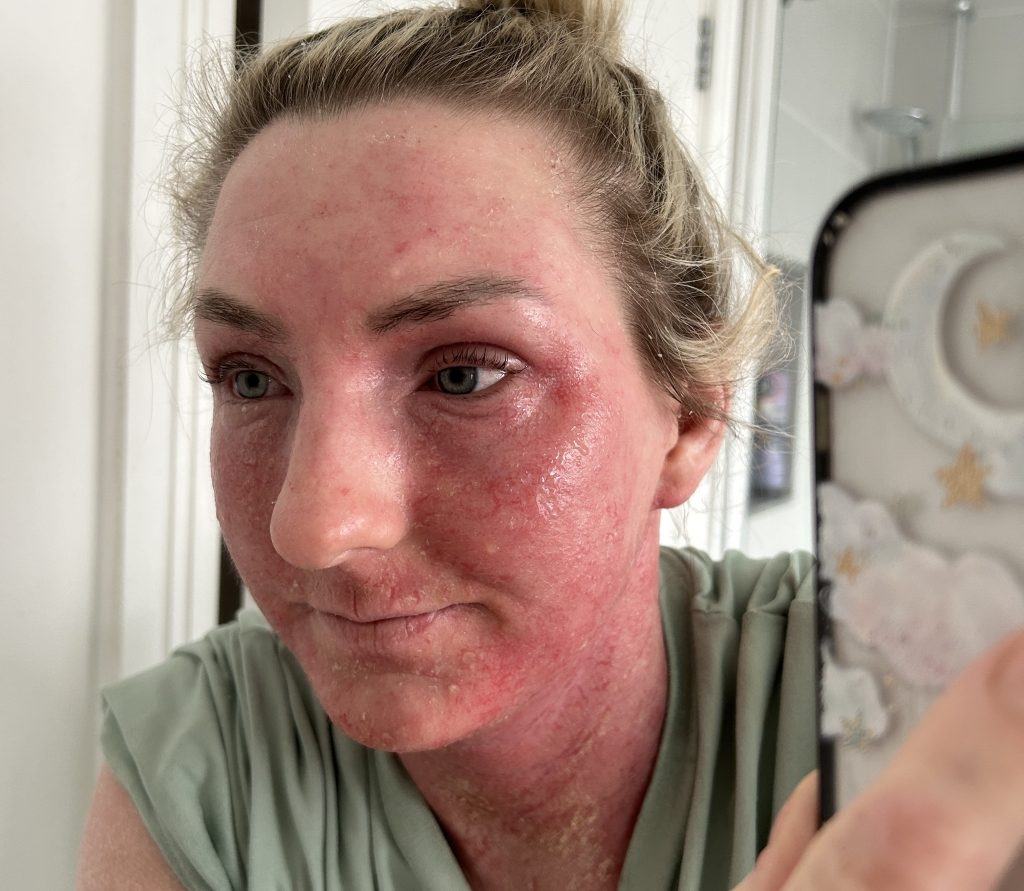
“The severity, burning, swelling, and full-body symptoms felt completely different from anything I had experienced before.
“The pain, exhaustion, isolation, and fear became overwhelming.
“There were moments where I genuinely felt prepared to take my own life because I couldn’t see a way out of what I was experiencing.
“I treated them like a magic cream because I just wanted normal skin.
“You apply them, your skin improves temporarily, and you think that’s the answer but for me it became a cycle I didn’t fully understand.
“I reached a point where I felt my skin was no longer behaving like normal eczema.
“The creams were helping short-term, but overall things were escalating.
“I started questioning whether my skin had become dependent on them.”
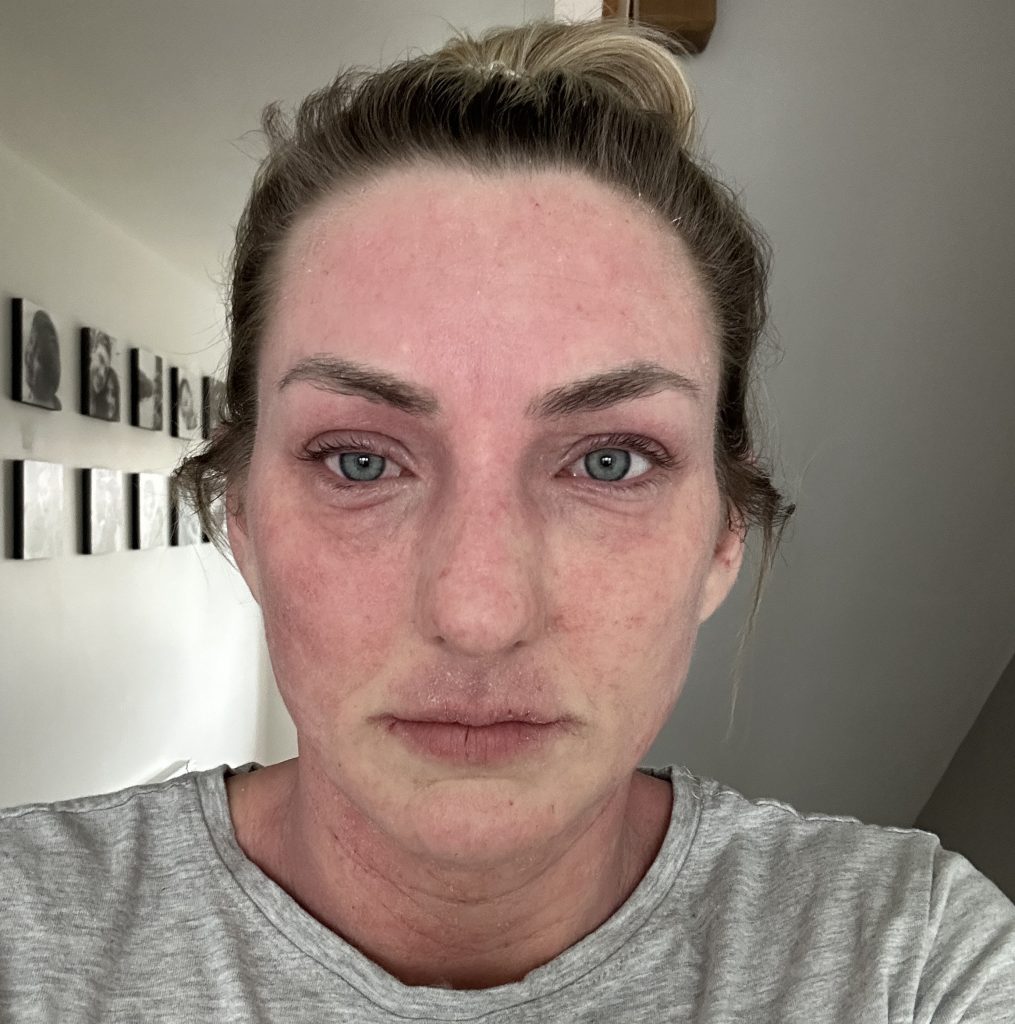
Amy described experiencing intense burning skin, severe redness, nerve pain, flaking, exhaustion, temperature dysregulation and extreme sensitivity after stopping the creams.
At its worst, Amy says her skin became so inflamed and fragile it felt “paper-thin and raw”.
She said: “My skin felt like it was on fire constantly.
“I barely slept, and the pain consumed every second of the day.
“Mentally, there was also this overwhelming sense of doom, like my body was shutting down and I was either going to die or, at best, never get better.
“At times, my skin barely felt like skin anymore.
“It felt paper-thin and raw, like my body had lost its protective barrier completely.
“The swelling would distort my features, especially around my face and eyes, and the inflammation spread far beyond the areas I’d previously had eczema
“Honestly, the pain was indescribable.
“It was burning, stinging, nerve pain, deep aching, and relentless discomfort all at once.
“I couldn’t sleep properly because my body was in such a heightened state constantly.
“Even resting hurt, clothing hurt, showering hurt, existing hurt.
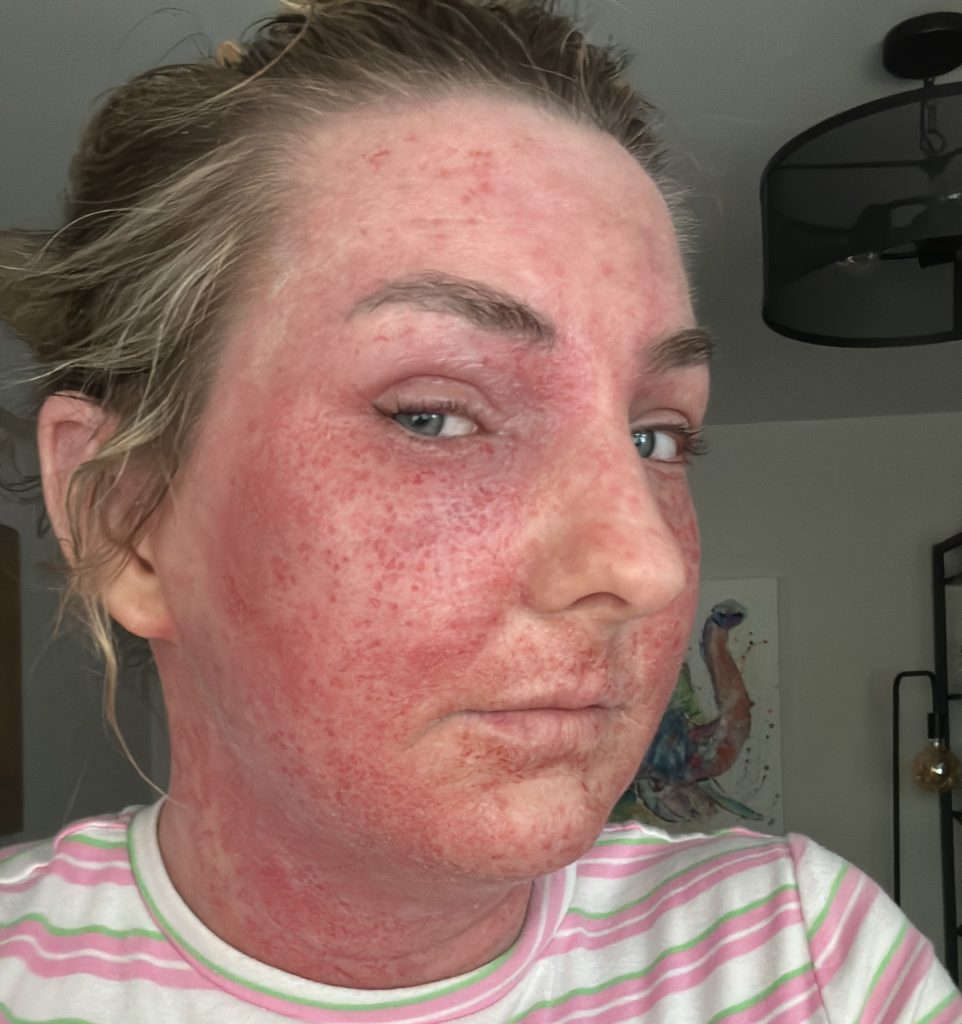
“At times my skin looked chemically burned.
“I looked like a burnt hamster.
“It affected every single part of my life.
“There were long periods where I didn’t want to leave the house because I was physically hurt and emotionally didn’t recognise myself anymore.
“My confidence disappeared.
“As a teacher and mum, there’s pressure to keep functioning no matter what, but at times I genuinely couldn’t.
“I had to take time off work, and there were moments where simply getting through the day felt impossible.
“The mental impact was enormous.
“Living in relentless pain while watching your appearance change so dramatically is incredibly isolating.
“And I still say now: I would not wish this upon my worst enemy.
“I wasn’t expecting withdrawal from a prescribed cream to affect my entire body so severely.”
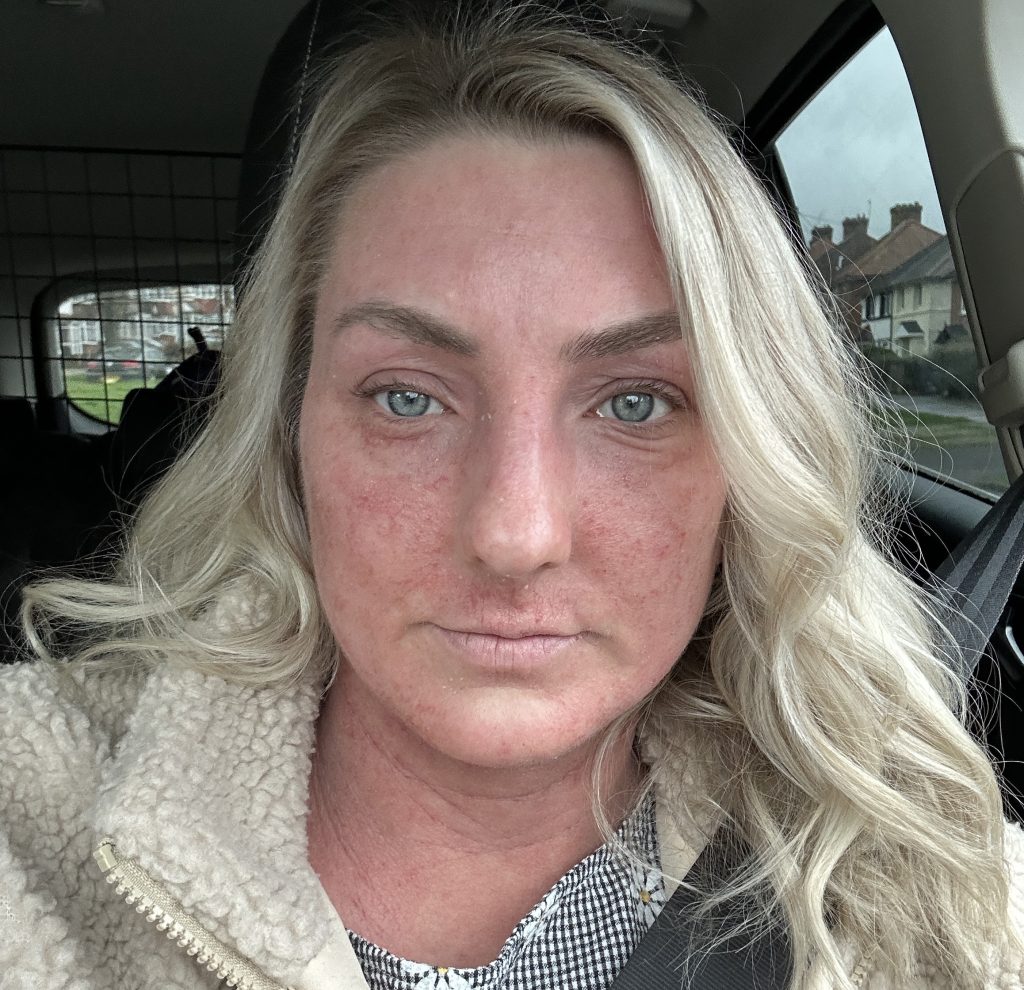
Amy is now under the care of a dermatology consultant and says she has taken a holistic approach to recovery alongside medical support.
Her routine has included stress management, nervous system regulation, skincare focused on repairing her skin barrier, improved nutrition and red light therapy.
She also revealed she is currently taking medication to help manage her symptoms.
Amy said: “Healing has not been linear, and honestly, I still believe I’m on that journey.
“Recovery for me has involved time, understanding my triggers, supporting my skin barrier, improving nutrition, reducing stress where possible, and finding approaches that support both my physical and emotional health.
“I’m also on medication, which I do still sometimes worry I’m reliant on.
“But right now, I also need to live a normal life and function day to day, and this is the option I’ve chosen for myself.
“I’ve also had to rebuild trust in my body and work on my emotional wellbeing alongside the physical healing.
“I do believe supportive medical care and open conversations are important, especially when patients feel listened to and involved in decisions about their treatment.”
Amy says she is now using her social media platforms to raise awareness around eczema, TSW and visible skin conditions.
She said: “This journey has changed me deeply.
“ I’ve become more compassionate, more aware of how visible conditions affect people, and more passionate about advocating for patients to feel heard.
“If you’d told me two years ago that I’d be where I am now, I genuinely wouldn’t have believed you.
“I’ve also found an incredible community through this experience and some of the closest friends I have and probably ever will have.
“There’s an automatic connection because you share something that most people will never truly understand unless they’ve lived it themselves.
“I personally believe there needs to be far more openness around alternatives and a much deeper understanding of the potential risks associated with topical steroids, especially long-term use.
“I understand that for some people, they may currently feel like the only option they are being offered, but I don’t believe patients are always being given fully informed consent or enough information to make empowered decisions about their treatment.
“I’d encourage doctors to stay curious, truly listen to patient experiences, and recognise that not every worsening skin condition is simply more eczema.
“Patients deserve to be heard, monitored properly, and treated as whole people, not just symptoms on skin.
“And for patients, I’d say: ask questions, understand what you’re using, and trust yourself if something feels wrong.”