
Archaeologists have uncovered 77 headless skeletons at a 7,000-year-old settlement in a discovery that is raising chilling questions about death, ritual and violence among some of Europe’s earliest farming communities.
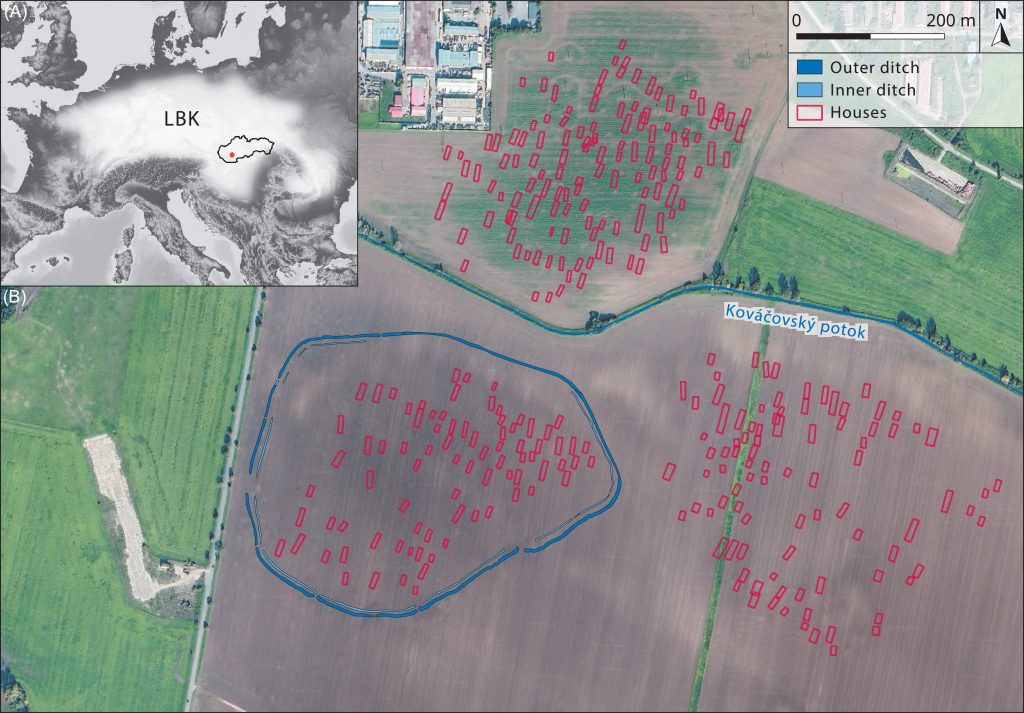
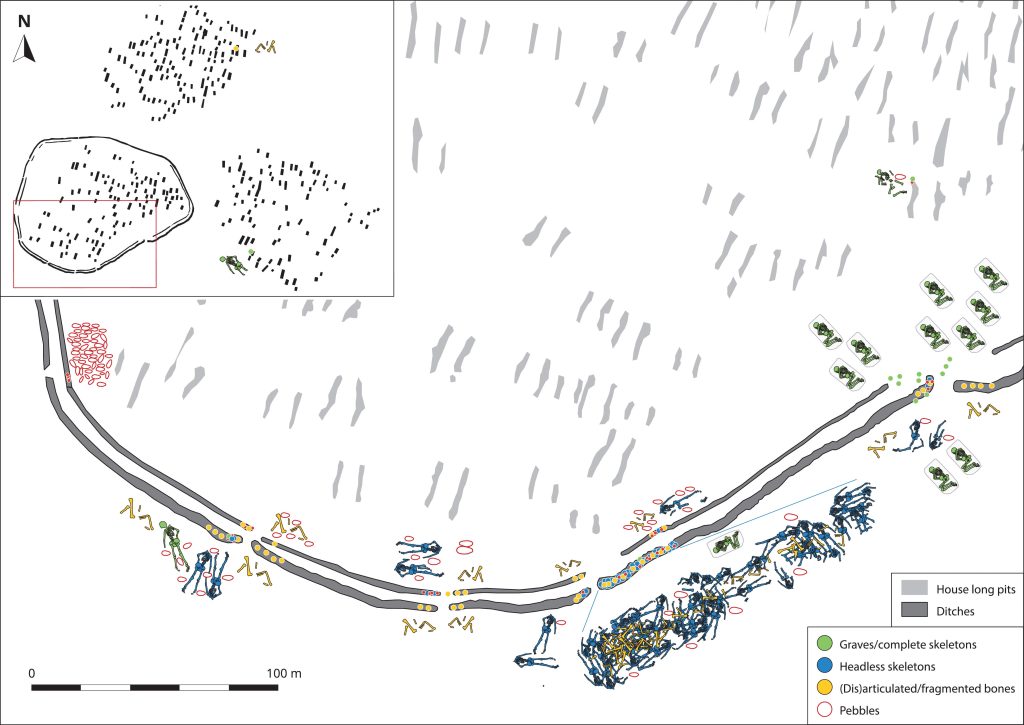
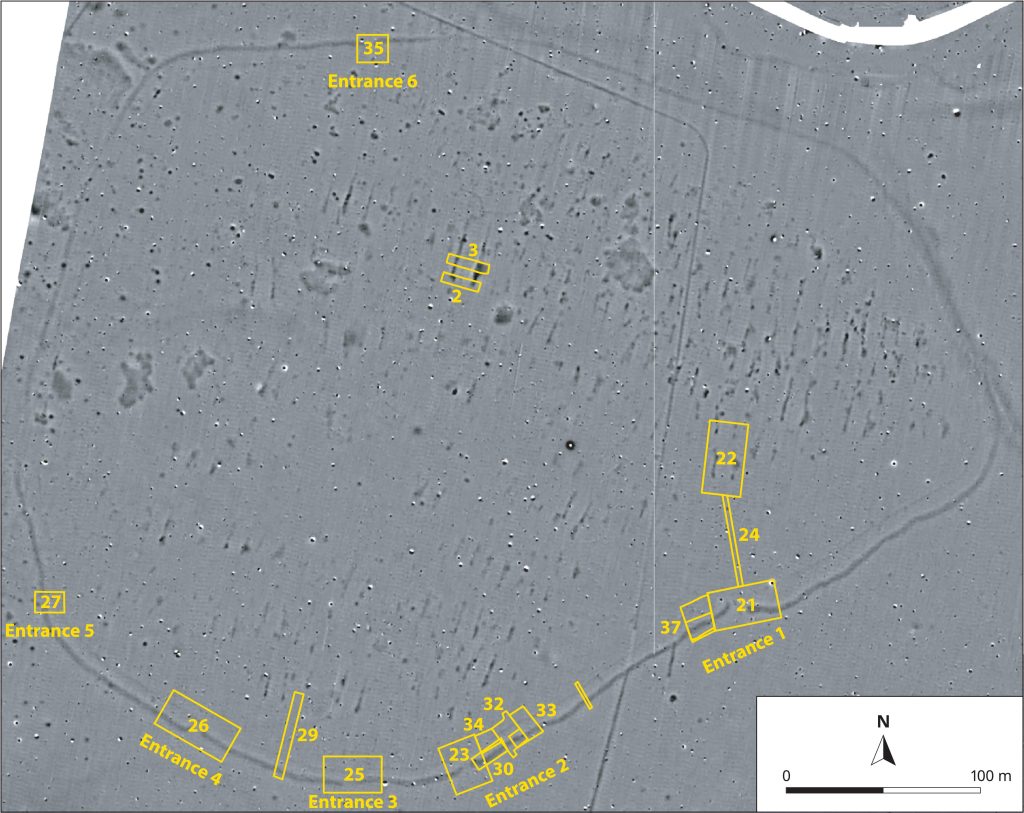
The remains were found in a ditch at the Neolithic settlement of Vráble-Veľké Lehemby in south-west Slovakia, one of the largest known sites linked to the Linear Pottery culture, also known as LBK.
The extraordinary discovery is detailed in a new study, Neolithic Bodies in Vráble – 7000 year-old Headless Human Skeletons in an Enclosed LBK Settlement in South-West Slovakia, published in the Proceedings of the Prehistoric Society.
READ MORE: Influencer and car model targeted in knife attack at auto show
The research was authored by Martin Furholt, Ivan Cheben, Zuzana Hukeľová, Maria Wunderlich, Alena Bistáková, Kata Furholt, Till Kühl, Nils Müller-Scheeßel and Katharina Fuchs.
At first glance, the find appears horrifying.
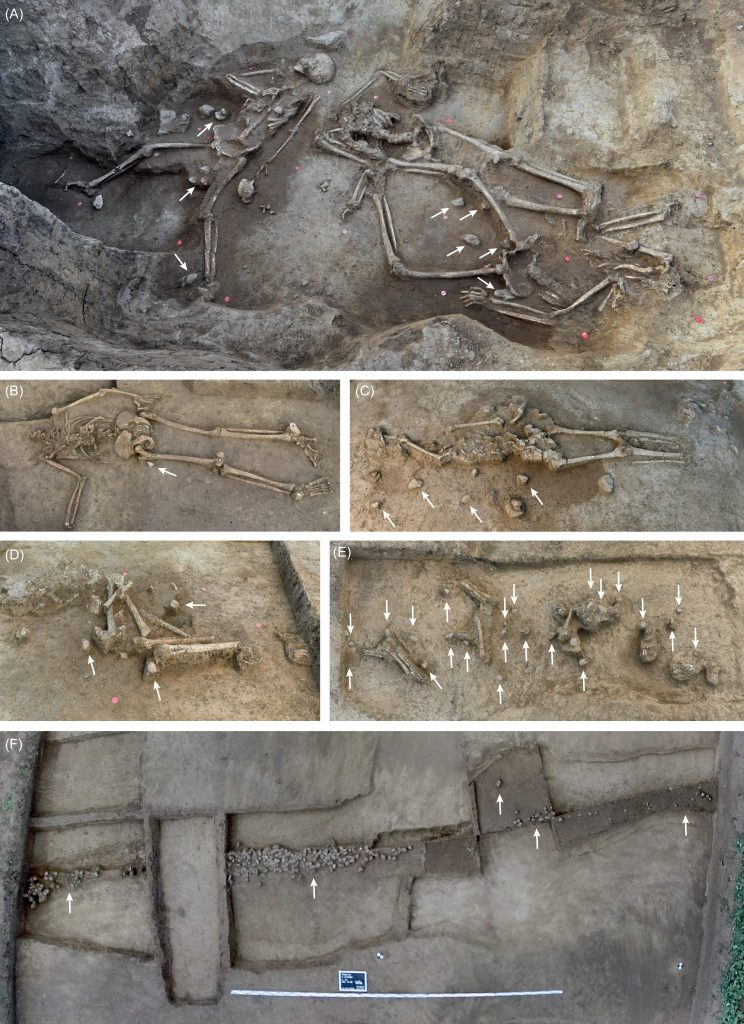
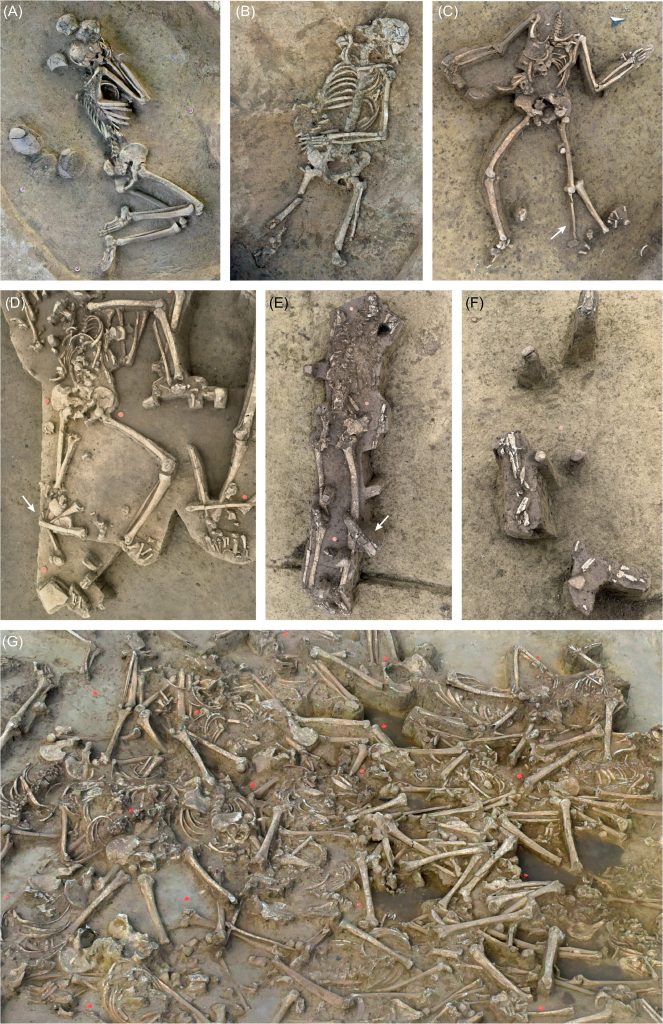
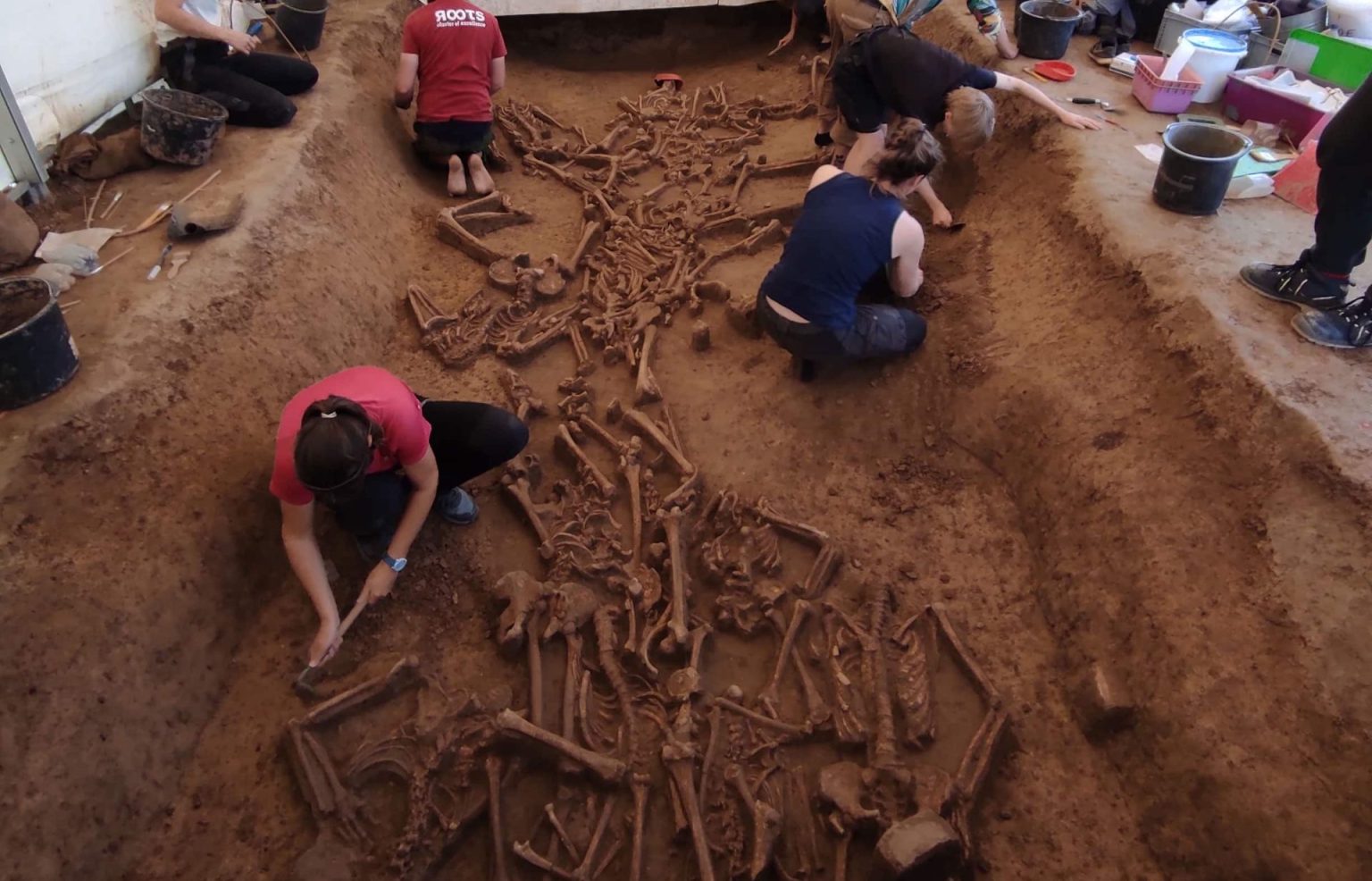
Dozens of skeletons were found lying in different positions, some on top of one another, with skulls missing from almost every body, as reported by Need To Know.
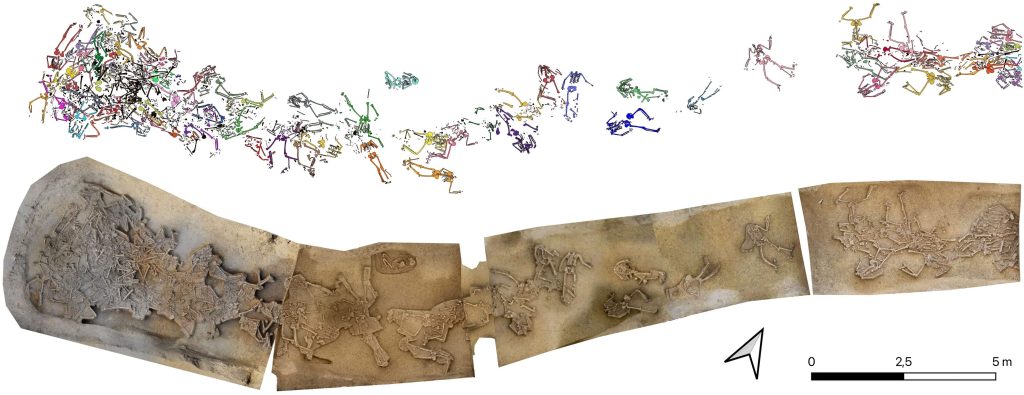
But researchers say the evidence does not currently support a simple massacre theory.
Instead, early analysis suggests many of the skulls may have been carefully removed after death as part of a complex ritual or social practice.
The settlement was occupied between around 5250 and 4950 BCE and contained at least 313 houses spread across three neighbourhoods.
Researchers from Kiel University and the Slovak Academy of Sciences have been investigating the site since 2012.
Human remains were first uncovered during excavations in 2016 and 2017, but the most dramatic discovery came in 2022 when archaeologists found a large concentration of headless bodies at the bottom of a ditch surrounding one section of the settlement.
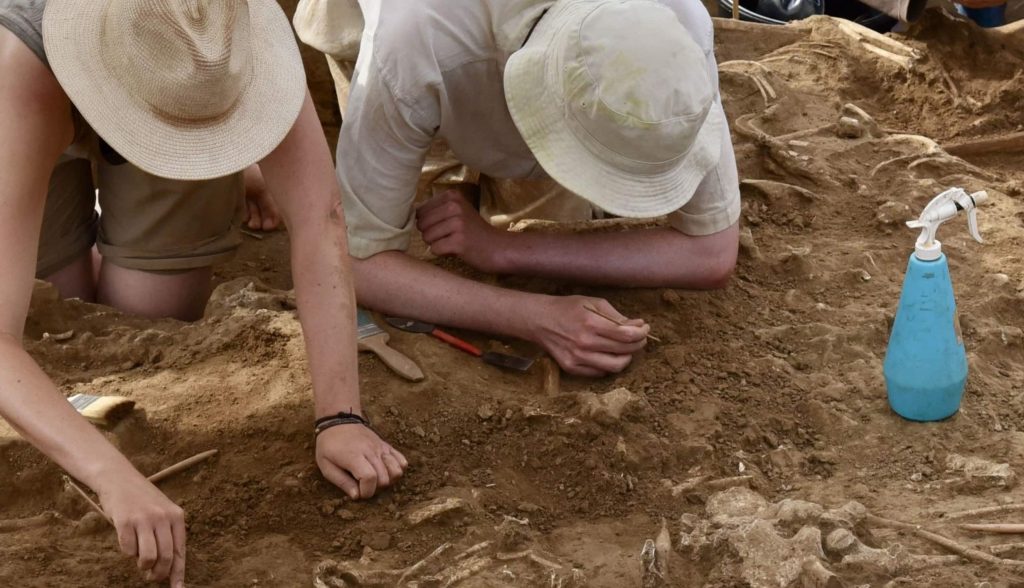
Further excavations revealed the scale of the find.
What was initially thought to be around 37 skeletons has now grown to at least 77 headless individuals and one complete skeleton.
The only person found with their skull still intact was a young child.
Researchers say the condition of the remains suggests the bodies were buried relatively soon after death rather than being left exposed for long periods.
Cut marks on neck vertebrae indicate the heads were removed using sharp tools, although scientists stress that more analysis is needed.
Dr Katharina Fuchs, a biological anthropologist at Kiel University and co-author of the study, said: “First analyses suggest, above all, that violent ‘decapitations’ were not conducted here, but rather skilful removals of the skulls.”
One of the biggest mysteries is what happened to the missing heads.
Only a handful of skull fragments have been recovered, leading researchers to suggest the skulls may have been taken elsewhere as part of a wider practice.
The authors note that the heads are currently archaeologically “invisible”.
Lead author Prof Martin Furholt, of Kiel University, believes the evidence points towards a more complicated explanation than simple conflict.
He said: “In contrast, we have evidence that the interments – which appear unusual to us – were part of social practices, which structured local and supra-regional relationships and are only limited signs of conflict and crisis.”
Co-author Dr Nils Müller-Scheeßel added: “The deposition of bodies and body parts may have been part of more complex, meaningful and recurring practices.”
The researchers do not rule out violence entirely.
However, they say the careful treatment of many of the bodies and the wider archaeological context suggest the remains may reflect beliefs and customs that are difficult to understand from a modern perspective.
The discovery also fits into a broader pattern seen at several late LBK sites across Central Europe, where human remains have been found in unusual contexts and sometimes show evidence of body manipulation after death.
Scientists are now carrying out further studies, including DNA testing, isotope analysis and detailed examination of the bones.
These investigations could reveal the individuals’ ages, biological sex, origins, diets and possible family relationships, while also helping researchers understand whether the burials happened during a single event or over a longer period.
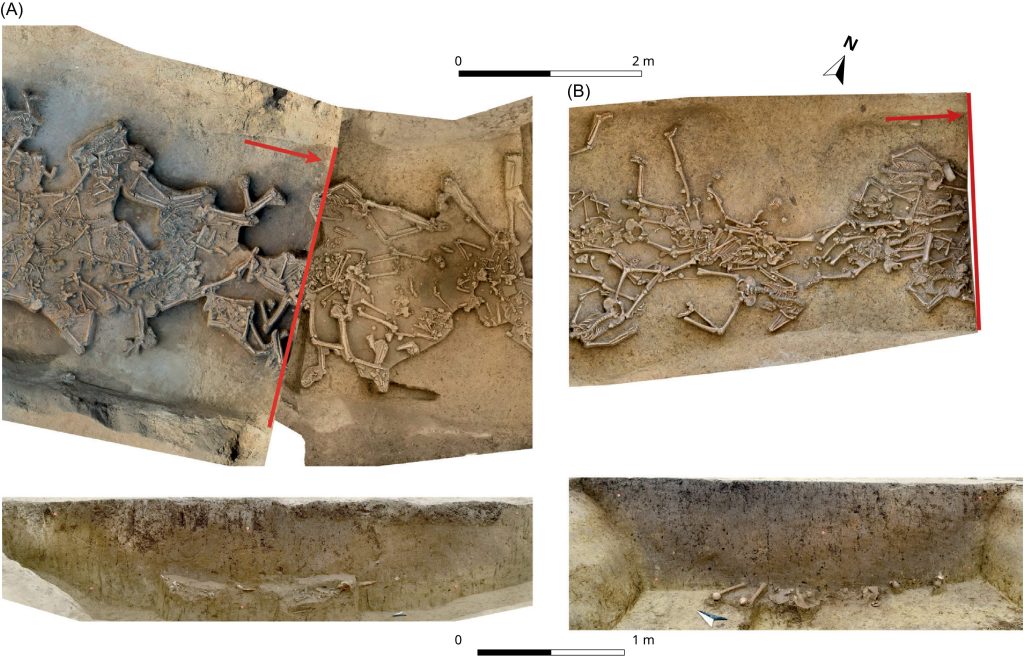
(Jam Press/T. Kuhl/K. Furholt)
Prof Furholt said: “We must assume that these practices were embedded in completely different contexts of meaning than those of modern societies.
“This is what makes an interpretation of them so challenging.”
For now, the 77 headless skeletons and the lone child with a preserved skull remain one of Europe’s most haunting archaeological mysteries.
READ MORE: Woman slaps cheating partner as he watches World Cup match