A team of researchers have developed 3D holograms that you can touch and pick up.
Known as volumetric displays, the graphics can be touched and moved by hand, and can be seen without the addition of headsets or glasses.
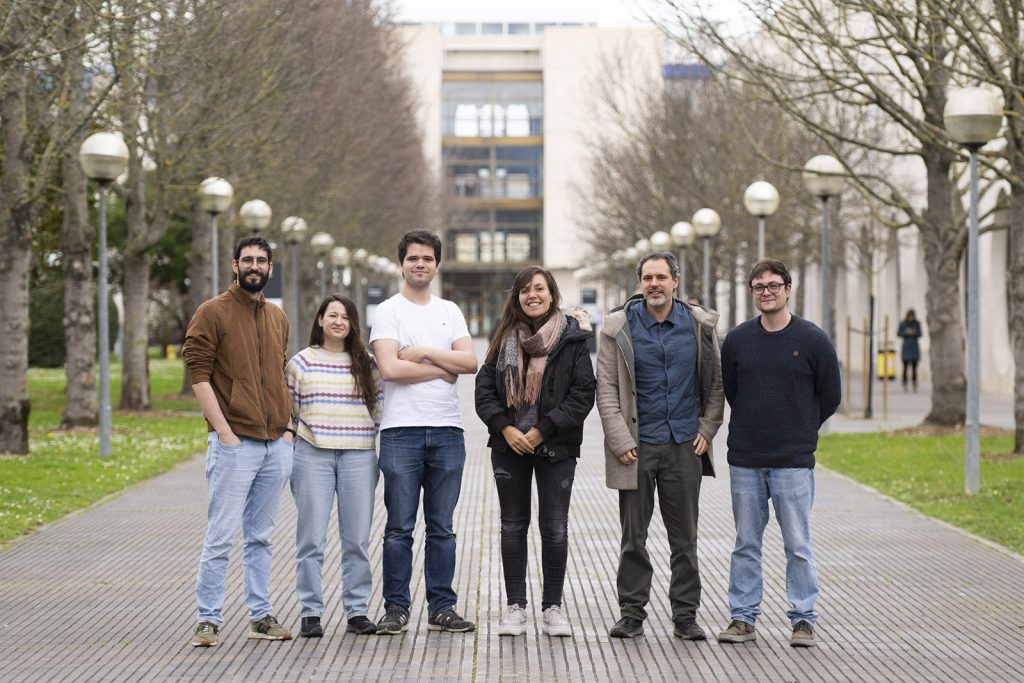
Created by a team led by Dr Elodie Bouzbib at the Public University of Navarra in Pamplona, Spain, the displays work by projecting images onto a fast-moving surface called a diffuser.
READ MORE: Darts star Gerwyn Price gets X-rated request from fan while trying to flog treadmill
Because of the how the human eye works, the scientists say that we see these layered images as a complete 3D object floating in mid-air.
The team tested various materials and found one that the human hand could touch and move, and people can now pinch and move the objects using their fingers.
The team said in a statement shared by Need To Know: “What we see in films and call holograms are typically volumetric displays.
“These are graphics that appear in mid-air and can be viewed from various angles without the need for wearing virtual reality glasses.
“They are called true-3D graphics.
“They are particularly interesting as they allow for the ‘come-and-interact’ paradigm, meaning that the users simply approach a device and start using it.”
Asier Marzo, the lead researcher, added: “Direct interaction means being able to insert our hands to grab and drag virtual objects.
“We are used to direct interaction with our phones, where we tap a button or drag a document directly with our finger on the screen – it is natural and intuitive for humans.
“This project enables us to use this natural interaction with 3D graphics to leverage our innate abilities of 3D vision and manipulation.”
And the team hope that in the future, their creation can be used in the real world in classrooms, museums and more.
A spokesperson said: “Displays such as screens and mobile devices are present in our lives for working, learning, or entertainment.
“Having three-dimensional graphics that can be directly manipulated has applications in education.

“For instance, visualising and assembling the parts of an engine.
“Museums are one area that could benefit immediately.
“Visitors can simply approach and interact with the content.”
The group plan to present their findings at the CHI 2025 conference in Yokohama, Japan, from 26 April to 1 May.