Soiled nappies and sanitary products are being turned into fuel by a new bio digester.
Most are thrown away with general waste and end up in landfill, where they can take hundreds of years to decompose, emitting methane – a potent greenhouse gas.
But company Go4Greener has invested £1.25m in a new machine which uses aerobic digestion to break down contaminants, leaving non-organic matter.
READ MORE: British cancer patient stuck abroad due to missile attacks desperate to get home for treatment
The waste processed by the machine is sourced from nappy and sanitary bins found in public places such as retail and leisure settings, as well as care homes, schools and nurseries.
The process also reduces the mass and volume of waste, meaning lower transport costs and emissions.
While they can process 4,000 tonnes annually, it has been estimated the UK throws away about 400,000 tonnes of nappies a year.
Nappies and hygiene products go into a shredder to get to the right particle size.
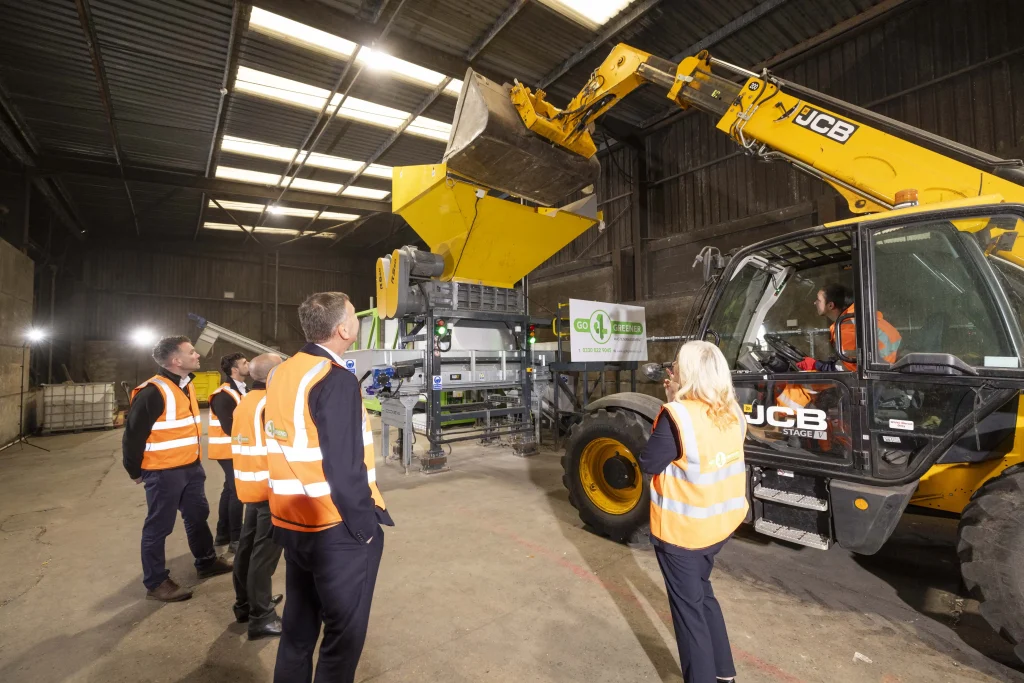
It then goes through four chambers, all the time being eaten and dried by biology, and the floc particles come out at the end.
A stimulant means the process is completed in 48 to 72 hours, as reported by Need To Know.
What’s remaining is a very high calorific value product which can be used as a coal replacement.
Go4Greener managing director Samantha Turton said the machine called the XO22 was a huge leap forward.
She said: “Green is in our name and we’re always looking for ways to accelerate our journey towards Net Zero and support our customers in doing the same.

“As our awards success demonstrates, we strive for excellence, and now the ability to turn waste into a commodity on-site will help us to add real value to our customers.
“We’re proud to be leading the way in turning one of the hardest waste streams into fuel and reducing waste to landfill in the process.”
Zaharaddeen Hussaini, lecturer in concentrated solar power at the University of Derby, added: “Nappies are a nightmare waste stream.
“Despite years of effort, current recycling methods barely scratch the surface, with the vast majority of the UK’s 3.6bn annual nappies still ending up in landfill.
“This creates a 500-year environmental legacy for a product used for only a few hours.
“This biological processing could potentially transform a difficult biohazard into a stabilised fuel capable of providing a lower-carbon alternative to traditional fossil fuels.”
READ MORE: Brit abroad shocked by ‘threat to humanity’ army of martial arts cyborgs