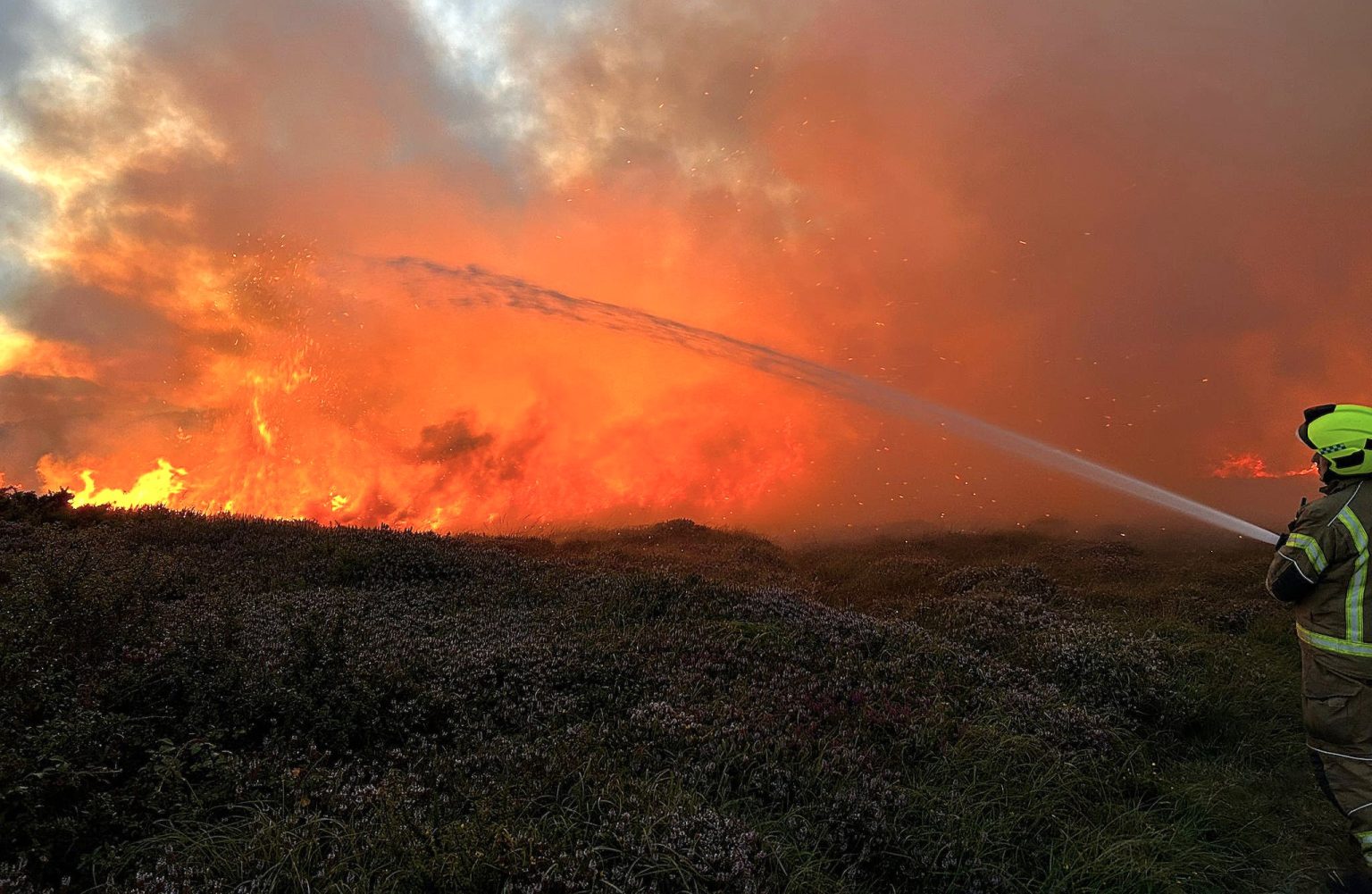

Britain’s driest year for decades has turned a wildlife paradise where Poldark was filmed into a barren Moonscape after a devastating fire.
The huge blaze erupted at the protected site of special scientific interest.
Crews from four fire stations battled to contain it.
READ MORE: Campers’ shock as tent torched by electric car blaze
The fire started on Tuesday, (29 Jul) and was still burning on Wednesday, (30 Jul).
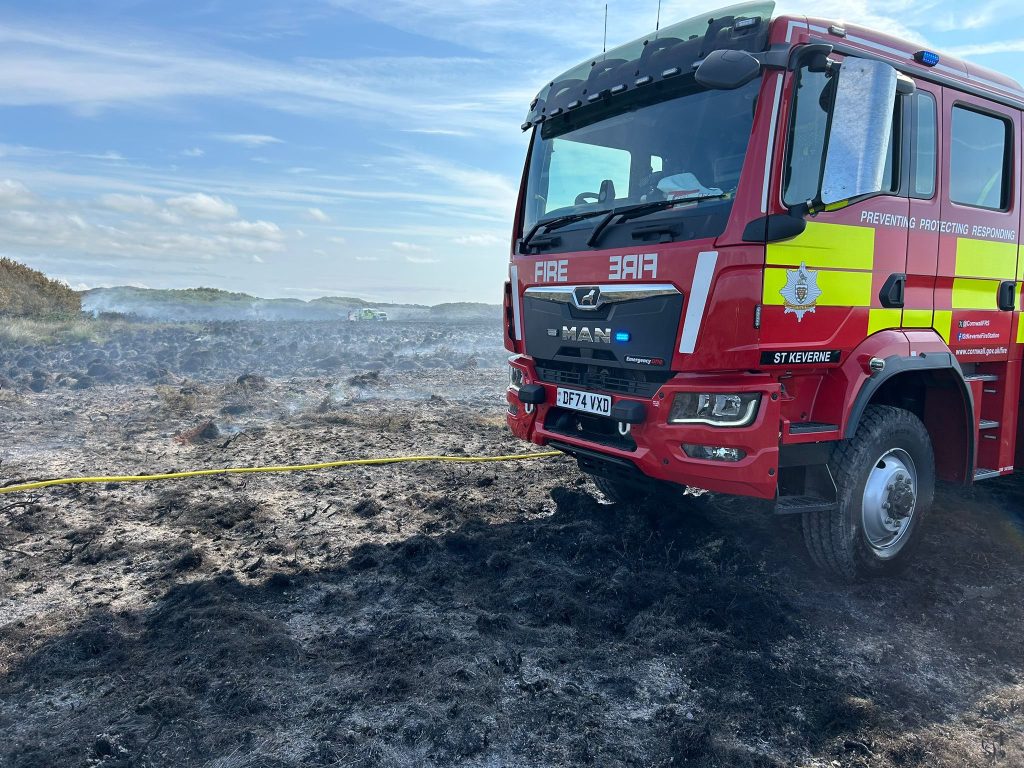
Crews from Mullion, Tolvaddon Helston and St Keverne arrived on the scene near Kynance Cove, Cornwall at 9pm on Tuesday.
Nearly 700-feet was alight.
On Wednesday morning a further wildfire estimated at about 66-feet was reported, as reported by Need To Know.
The location was used for filming hit BBC drama Poldark.
A spokesperson for St Keverne Community Fire Station said: “Busy day for crews across the lizard tackling a gorse fire.
“Crews from St Keverne, Mullion, Helston and Tolvaddon work hard in difficult conditions to bring the fire under and have now handed it back over to Natural England.
Cornwall Fire and Rescue Service incident commander Jason Boeuf, added “It’s a site of special scientific interest, so we have to be mindful of the flora and fauna.
“It means that we’re considering everything we do so as not to cause any unnecessary damage as we try to contain the fire.
“The fire is quite hard for us to put out at the moment,” he said.
“We intend to work with Natural England to utilise their plan to put in breaks using their tractor, to try and make sure that we don’t have any further spread, so we can control it better.”
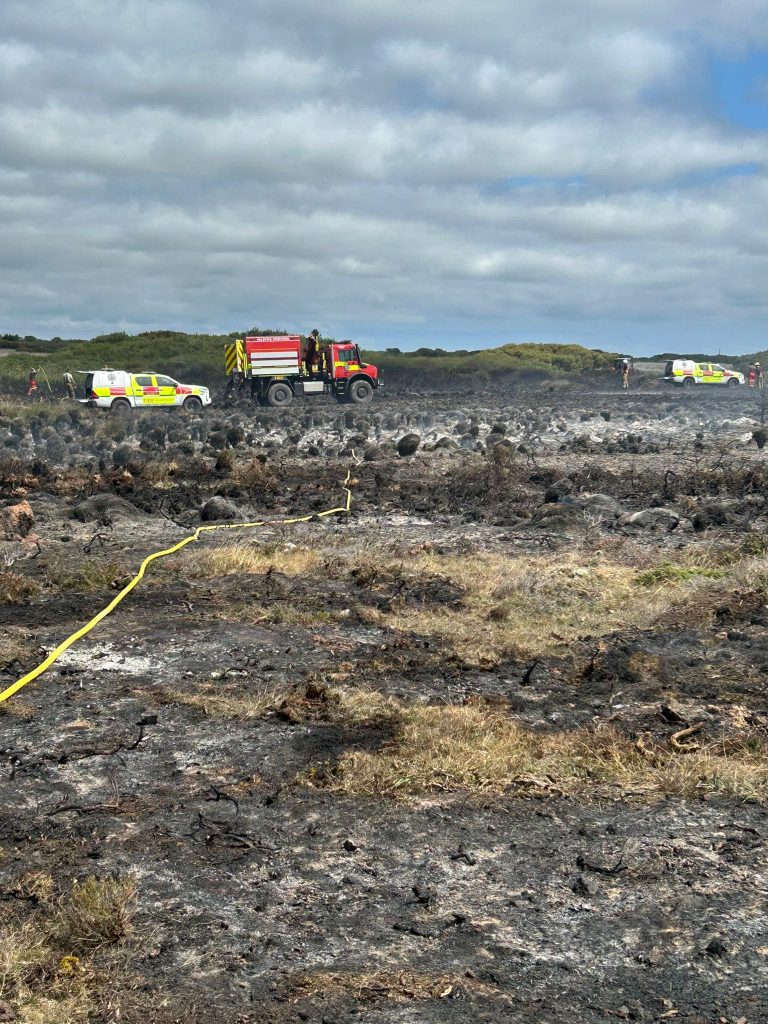
Cornwall Fire and Rescue Service has advised the public to keep away from the area for their own safety.
The area is designated as a Site of Special Scientific Interest and is in an Area of Outstanding Natural Beauty.
It is geologically important and designated as a Geological Conservation Review site because of its serpentine exposures which contain granite and gneiss.
The Cornish chough, a symbol of Cornwall, is found in the area
The unique serpentine rocks and the associated plants, such as sorrel, sustain a variety of insects, including bees gleaning nectar and pollen.
It also support adders and common lizards.
The UK is experiencing one of its driest years with some regions already in drought.
The spring was the driest since 1893 in England leading to low river flows and reservoir levels.
READ MORE: Belgian family’s holiday of lifetime after saving wild pony from agonising death at Brit beauty spot