Ethnologic photographs illustrating: (a) blackened teeth of Tonkinese people (northern Vietnam); (b) Gaddang people (Philippine) collecting tarry residue from a lit wood branch on an iron farming implemen. (Jam Press/Pierre Dieulefils/Zumbroich and Salvador-Amores/Man-li Ling)
SHARE
Archaeologists have uncovered teeth dating back over 2,000 years that reveal the early history of a tooth blackening trend that is still ongoing to this day.
The skulls uncovered by Yue Zhang and their team from the Australian National University point to a complex tooth-dying process unique to the area.
The practice involved using the plentiful amount of iron in the region to dye the teeth a striking black.
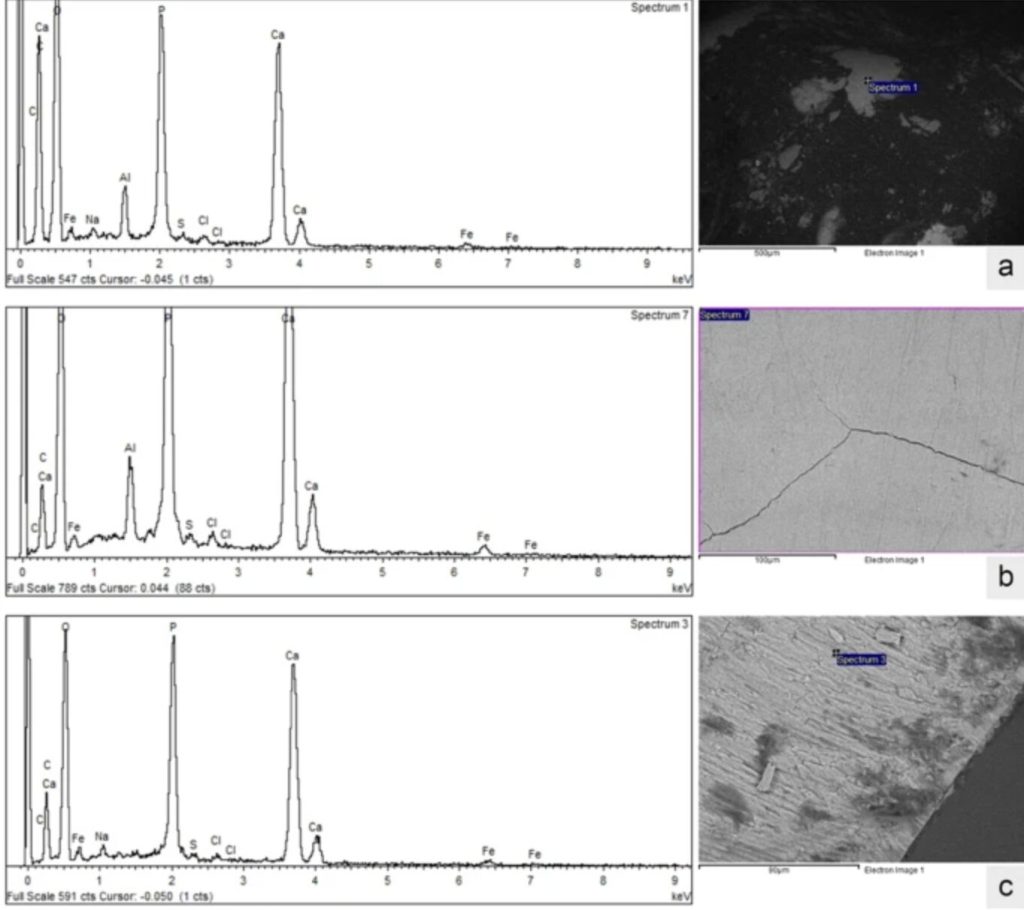
“We identified a diagnostic signature of tooth blackening in ancient samples, pointing to iron salts,” Yue said.
“These were likely combined with tannin-rich substances, as the primary active components responsible for the colouring process.”
The findings point to a practice that has stayed in South East Asia, with this particular archaeological discovery being found in Vietnam, as reported by Need To Know.
Comparison of dental residue possibly resulting from different practices: (a) reddish-brown staining on teeth from Gua Harimau, Sumatra. (b) a black pigment layer on teeth from Dong Xa, Vietnam. (Jam Press/Courtesy Prof. Truman Simanjuntak/Hsiao-chun Hung)
Accounts from the 19th century describe blackened teeth as common across society, regardless of status, class or gender
Zhang added: “Some oral traditions further portray blackened teeth as both a defining trait distinguishing people from humanoid devils, and an identity marker in cases of abduction by foreign invaders.”
Samples analyzed in this study: (a) Sample #1, Dong Son period; (b) Sample #2, Dong Son period; (c) Sample #3, 17th century. (Jam Press/Archaeological and Anthropological Sciences)Map showing the location of Dong Xa (star symbol) and other Dong Son Iron Age sites mentioned in this study, with (purple circle symbol) or without (black circle symbol) reported alteration of dental color according to Nguyen (1996, 2011). (Jam Press/CartoGIS Services/Scholarly Information Services/The Australian National University)Bayesian plot for the radiocarbon dates from the burial 04DXM1. (Jam Press/Dong Xa)Illustration of the tooth blackening process among the Tonkinese people (northern Vietnam). (a) Sanitization: clean and etch the teeth with coarse or sharp item (e.g., dried betel nut peel, charcoal, coral, glass powder, textile, or knife) and acidic agent (e.g., lime juice, vinegar, or rice wine), ensuring the enamel is decalcified and roughened. This step lasts approximately 3 days. (b) Red dyeing: mix the active ingredient for tannic acid (e.g., stick-lac powder) with acidifier (e.g., lime juice, vinegar, or rice wine), heat the mixture, apply it to leaf strips, and adhere the strips to the teeth overnight. This process lasts around 815 days. (c) Black dyeing: prepare a similar paste as in step (b), using a broader range of tannic acid source (e.g., Phyllanthus reticulatus, Galla chinensis, pomegranate rind, stick-lac, agarwood). Mix with acidifier (e.g., lime juice, rice wine), adhesive (e.g., glutinous rice, honey), and flavoring (e.g., cinnamon, star anise, clove). Additional metal substance (e.g., vitriol) may be added, or the heating mixture can be placed on a metal utensil before applying to leaf strips and adhering to the teeth overnight. This process lasts 28 days. (d) Polish: use burnt powder or tar from coconut shells, either applied directly or placed on a metal utensil before rubbing onto the teeth. This step lasts around 1 day. (Jam Press/Archaeological and Anthropological Sciences)Representative SEM-EDS spectra and backscattered electron (BSE) images: (a) Sample #1, enamel surface; (b) Sample #2, enamel surface; (c) Sample #3, fractured enamel section. A detailed region of interest is illustrated in Online Resource 1 and additional data are given in Online Resource 2. The aluminum (Al) signal observed in Sample #1 and Sample #2 is likely due to the aluminum foil used to stabilize the samples and reduce charging effects during the experiment. This signal is absent in Sample #3, where no foil was used. (Jam Press/Archaeological and Anthropological Sciences)