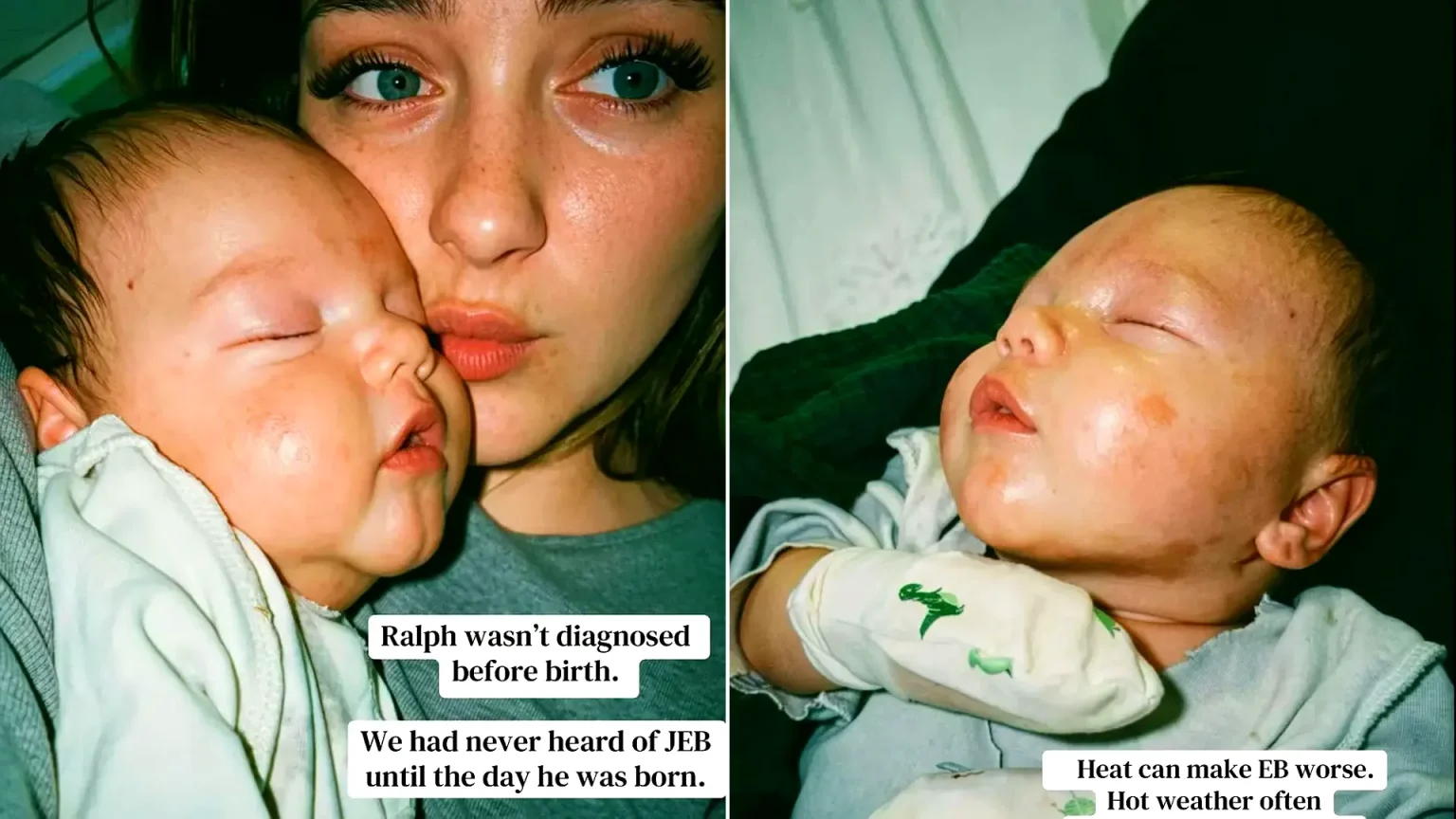

A mum has revealed how her baby son’s skin blisters at the slightest touch after he was born with a rare condition so severe that she says she wished she could give him her own skin to spare him the pain.
Ciara Burnside knew something was terribly wrong when she first saw her son Ralph’s skin shortly after giving birth.
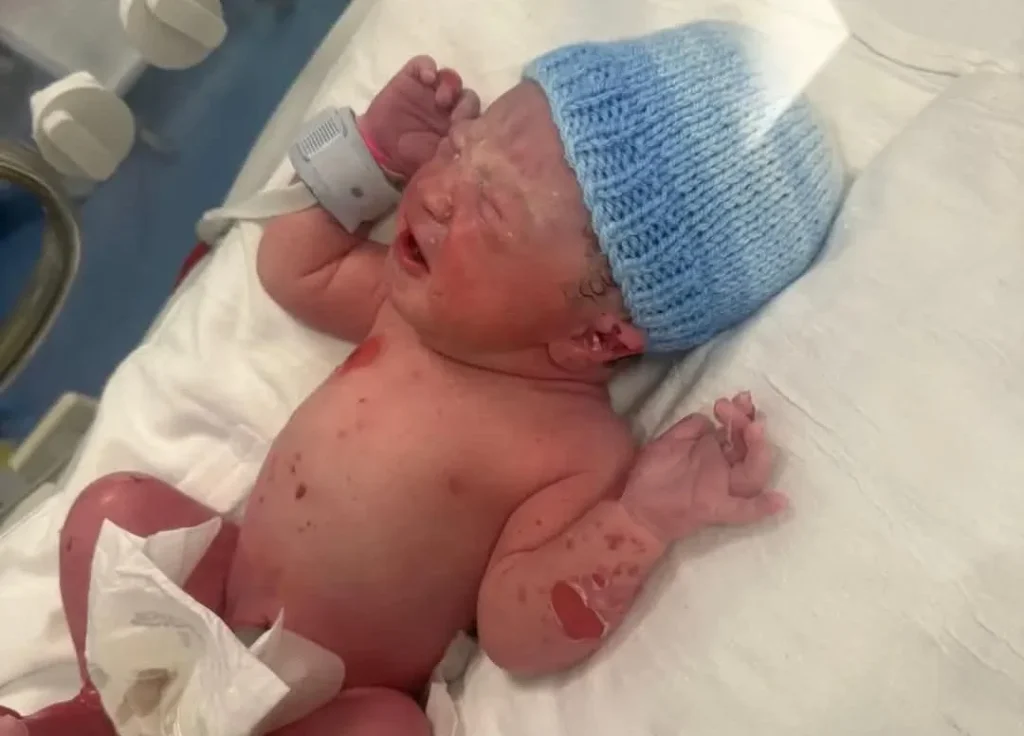
The 30-year-old watched as her son, now seven months old, was rushed to the neonatal intensive care unit after being born with patches of missing skin on his hands, feet and other parts of his body.
READ MORE: ‘Ketamine nearly killed me – now my bladder is the size of a TEASPOON’
“Sometimes, when Ralph is asleep, I’ll go outside and just scream and cry for a while,” Ciara, from Arlesey, Bedfordshire, told Need To Know.
“I ask myself ‘why him? almost every day.
“When Ralph was born, he was missing patches of skin on his hands, feet and other areas of his body.

“The skin almost looked as though it had rolled back and bunched up around his ankles, toes and fingertips.
“By the time I finally saw him, he was lying in a heated incubator and his skin had blistered almost everywhere.
“I remember looking through the incubator at him and just knowing something was terribly wrong.
“My stomach dropped.
“I can’t explain it, but something in me knew this was serious, something that couldn’t simply be fixed.”
Ciara, who shares Ralph with partner Lewis Archer, 30, says that when Ralph was two days old, specialists confirmed he had epidermolysis bullosa (EB), a rare genetic condition that causes the skin to become extraordinarily fragile.

Ralph has Recessive Junctional Epidermolysis Bullosa, Intermediate, caused by changes in his COL17A1 gene.
The condition means his skin can blister, tear and come away with minimal friction, leaving behind large areas of exposed, raw skin.
Ciara said: “Before his diagnosis, the specialist nurses explained that there was a possibility he wouldn’t survive infancy.
“They told us that if he survived, he’d have lifelong skin fragility and potentially face hair and nail loss, problems with the enamel on his teeth, chronic wounds and serious infections.
“They explained that even walking could become so painful because of blistering on his feet that he might eventually need a wheelchair.
“I’ve had to go back and ask the same questions over and over again because the moment they told me my baby might not survive, and that even if he did, his life could be filled with pain, I completely shut down.
“I felt trapped in a nightmare I couldn’t wake up from.
“I was faced with two utterly soul-destroying possibilities.
“Either I could lose my baby, or I could watch him live a life filled with suffering.
“And in that moment, as awful as it is to admit, I honestly didn’t know which possibility I was hoping for.
“When I heard the words epidermolysis bullosa, my stomach dropped.
“The thought of Ralph living in unimaginable pain for the rest of his life, from the very day he was born, completely destroyed me.
“No parent should ever have to imagine that future for their child, let alone face the reality of it.”
His feet have required continuous protection since birth, and even the dressings intended to protect him can sometimes contribute to further injuries.
Ciara said: “EB can affect the entire body, including areas you cannot see.
“Blistering and damage can occur inside the mouth, throat and other internal tissues.
“His sleep is disrupted by pain and relentless itching, which is another enormous part of living with EB.
“His body requires additional calories because it is constantly trying to repair damaged skin.

“The loss of nutrients through wounds and the energy needed for healing can affect his growth.
“Even his development can be impacted because something as simple as bearing weight on his hands or feet can cause injury.
“His clothes have to be worn inside out to prevent the seams from damaging his skin.
“At the moment, we can only sponge bathe him because of the risks associated with a normal bath.
“His car seat, pram and almost everything designed for babies can potentially injure him.

“He cannot even rub his own eyes to comfort himself without risking damage.
“We have to consider everything: the weather, the temperature, the fabrics around him, even the clothes we wear when holding him.
“We avoid denim, zips, buttons, harsh embroidery, jewellery and long fingernails because the smallest amount of friction can tear his skin.
“We rarely leave the house because home is the only environment we can truly control.
“Nothing about caring for Ralph is straightforward.

“Every movement, every touch and every ordinary part of daily life requires thought and caution.
“He was born into a world that simply wasn’t built with him in mind.”
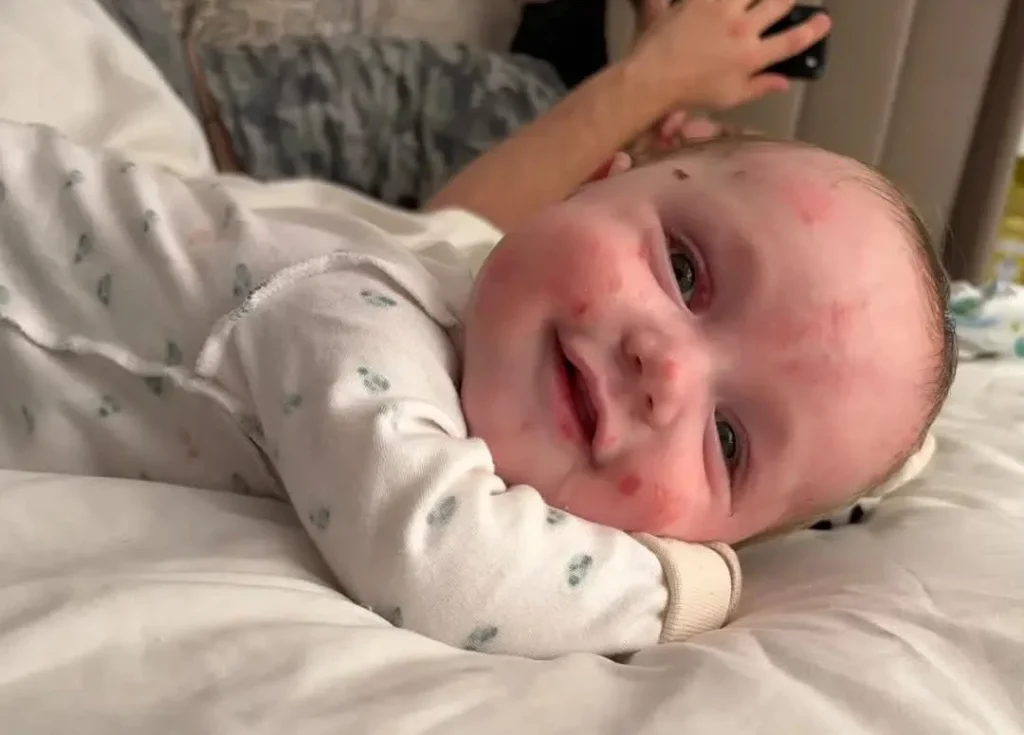
Ciara described the wounds as “stomach-turning”.
She said: “There is nothing that can prepare you for seeing your baby’s body like that.
“They are some of the most horrific, stomach-turning and violent injuries you could ever imagine seeing on a baby.
“At their worst, they look like something from a horror film.
“They can continue to expand, sometimes becoming enormous, almost like water balloons beneath the skin.
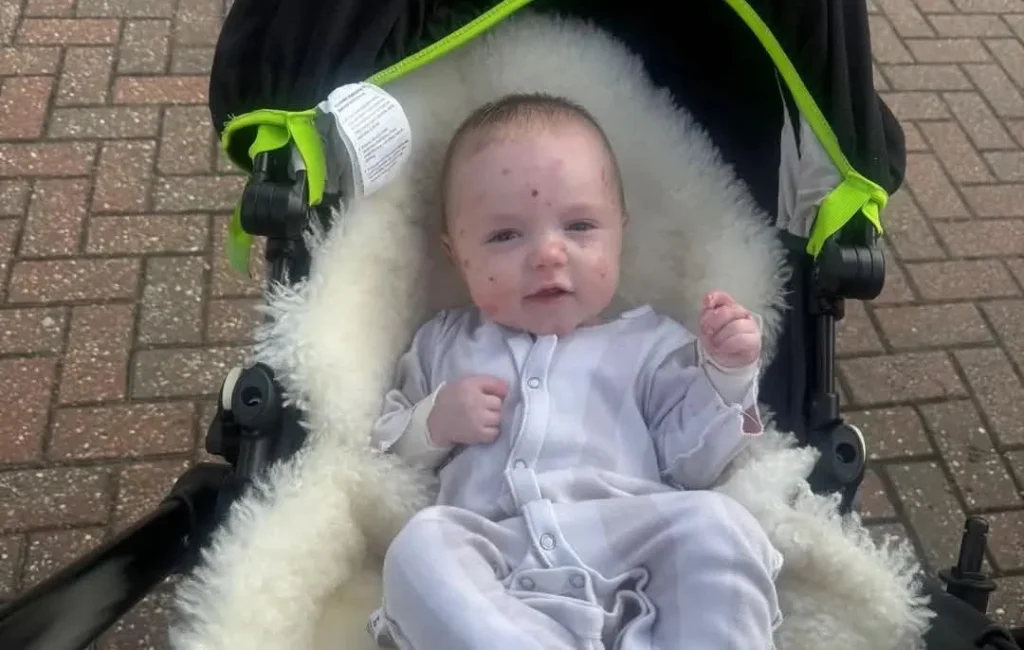
“They can fill with blood, and when they rupture, they leave behind large areas of exposed, raw skin that resemble severe burns.
“The surrounding skin can become waterlogged, fragile and almost saggy.
“Everything looks so incredibly painful.”
Ralph’s skin needs constant monitoring, while wound care and dressing changes can take anything from 20 minutes to two hours, depending on the severity of his injuries.
Some dressings need to be changed every few hours, while his feet are usually redressed daily or every other day.
The most extensive wound care often takes place at night, when his parents wait until he is deeply asleep before carefully removing and replacing his foot dressings.
Ciara said: “Ralph is incredibly resilient, as are so many people living with EB.

“He lives with a level of pain that most of us will never truly understand.
“Pain is part of his normality, and that alone is heartbreaking.
“When he has a particularly severe wound, caring for it can be absolutely unbearable to witness.
“Sometimes it takes two of us to hold him safely and keep him still enough to treat his skin while he screams and writhes beneath us.
“And the worst part is knowing that we’re the ones causing him that additional pain, even though we’re doing it to help him.
“Those screams are something I don’t think I’ll ever forget for as long as I live.
“I genuinely don’t think there are words in the English language that could adequately describe what it feels like to witness as a mum.
“I’ve spent months desperately wishing there was some way I could give Ralph my own skin.

“I’ve genuinely sat and thought about whether there could ever be a way to graft my healthy skin onto his body, just to spare him some of the pain.
“I love Ralph more than anything in this world.
“He is my whole heart, and watching him suffer breaks a part of me every single day.”
Ciara has channelled her energy into raising awareness, starting a petition for more funding for EB and contacting researchers she hopes might help improve the future for children living with EB.
There’s currently no treatment available to Ralph that addresses the underlying genetic cause of his condition.
She added: “I had always imagined the kind of mother I wanted to be.
“Someone relaxed, patient, kind and easygoing.
“I’m anything but relaxed.

“I’m constantly aware of every movement Ralph makes, every surface he touches and every person who comes near him.
“When I’m with him, my eyes rarely leave him.
“I cry a lot.
“But his diagnosis has changed me in positive ways, too.
“I’m stronger than I ever knew I could be, and fiercely protective of him.
“I’ve discovered a determination in myself that I didn’t know existed.
“I will genuinely stop at nothing to raise awareness of his condition and fight for a better future for him.
“EB is criminally underfunded and deserves more.
“Our children don’t have time to wait for medicine to catch up.”
READ MORE: ‘Trolls say I’m why abortions exist – I’m sick of people thinking my life isn’t worth living’