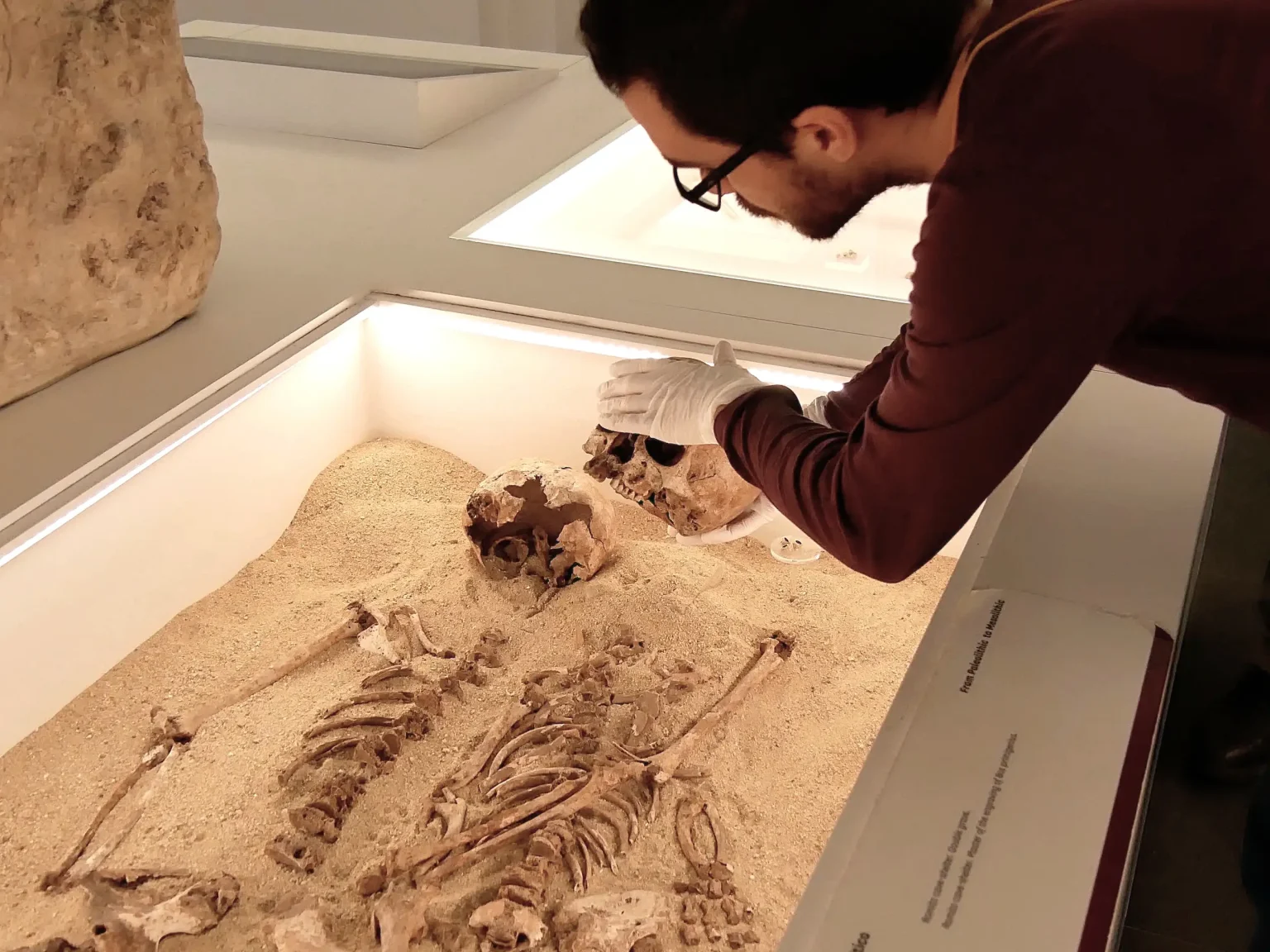

An ancient pair of skeletons found embracing was a mother and daughter who suffered from a rare form of dwarfism.
The remains were uncovered in 1963 at Romito Cave near Papasidero, in Italy’s Calabria region.
For decades, researchers were puzzled about the relationship between the two and the reasons for their unusually short stature.
READ MORE: Businesswoman, 33, dies after undergoing liposuction op
Recent DNA analysis of the petrous part of the temporal bone – the dense portion at the base of the skull – revealed that the two individuals, who lived over 12,000 years ago, were “most likely” mother and daughter.
They also identified mutations linked to skeletal growth and compared them with modern medical data, the University of Vienna said.
The findings confirmed that the daughter had acromesomelic dysplasia, Maroteaux type (AMDM), standing just 110 cm (3ft 7in) tall.
This rare inherited disorder causes severe short stature and notably shortened limbs, as reported by Need To Know.
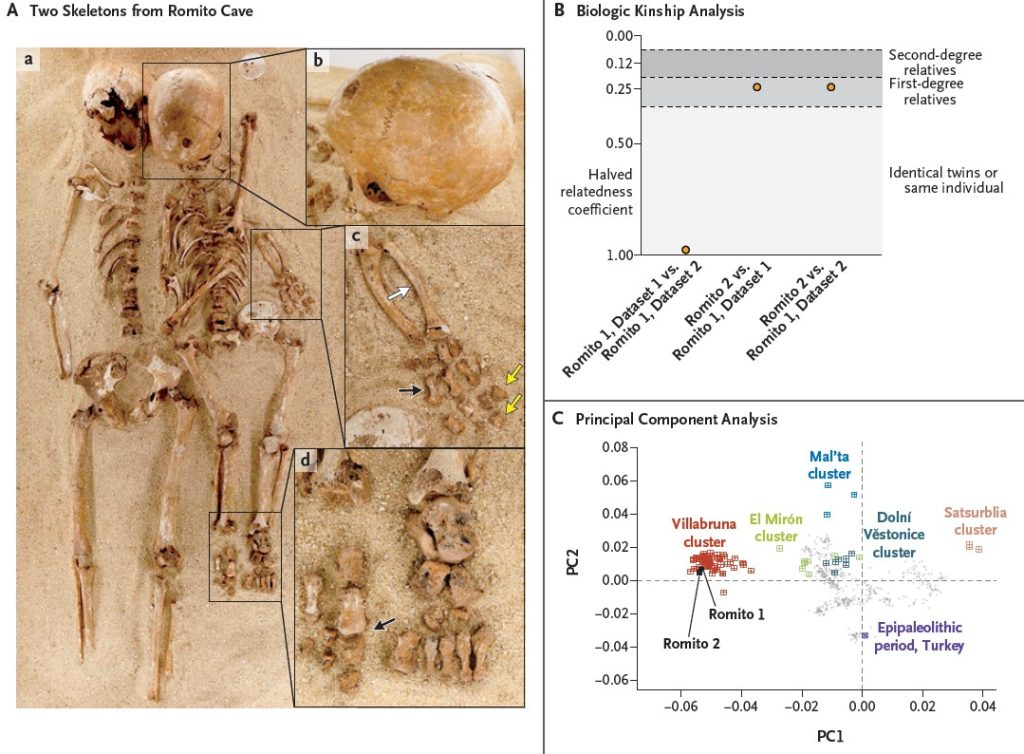
The mother, at 145 cm (4ft 9in), had a milder form of the condition.
Daniel Fernandes of the University of Coimbra said: “The older woman’s milder short stature likely reflects a heterozygous mutation, showing how the same gene affected members of a prehistoric family differently.”
Despite her physical challenges, the daughter survived into adolescence, suggesting that her hunter-gatherer community cared for her, providing help with food and mobility.
Adrian Daly of Liège University Hospital Centre added: “Rare genetic diseases are not a modern phenomenon but have been present throughout human history. Understanding their history may help us recognise such conditions today.”
READ MORE: British cancer patient stuck abroad due to missile attacks desperate to get home for treatment