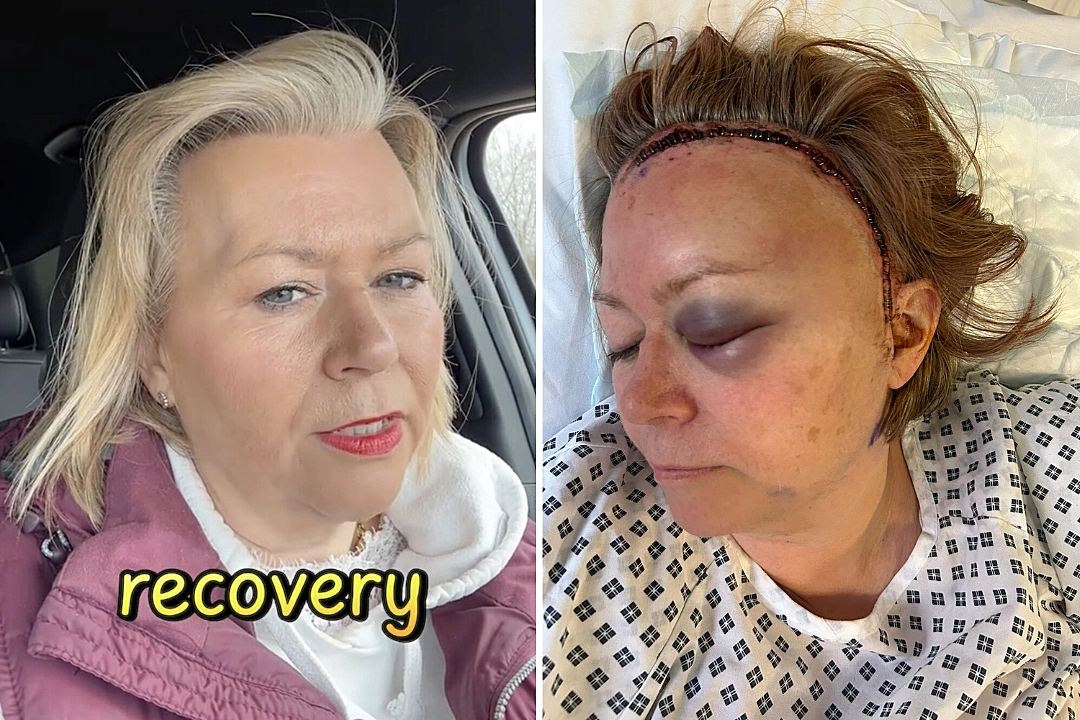

A nurse was hospitalised after a “thunderclap” headache uncovered a ruptured aneurysm that could have been growing in her brain since birth – with the symptoms concealed by menopause.
Mandy Park had suffered headaches and the occasional migraine for years, noticing they tended to appear around the time she was menstruating – but was otherwise in good health prior to the incident.
When the headaches became more frequent as she aged, the 49-year-old put it down to perimenopause.
READ MORE: ‘The first sign came at the pub – then a diagnosis changed everything before my first date’
But during a meeting at work, she suddenly felt a “thunderclap”-like headache and fell off her chair, vomiting before losing consciousness.
The aneurysm she had no awareness of had ruptured, causing a haemorrhage bleed.
“In the meeting, I recall saying something, but could only hear it outside of my head – like my ear was blocked with water,” Mandy, from Bedfordshire, told Need To Know of the day of the incident, back in April 2025.
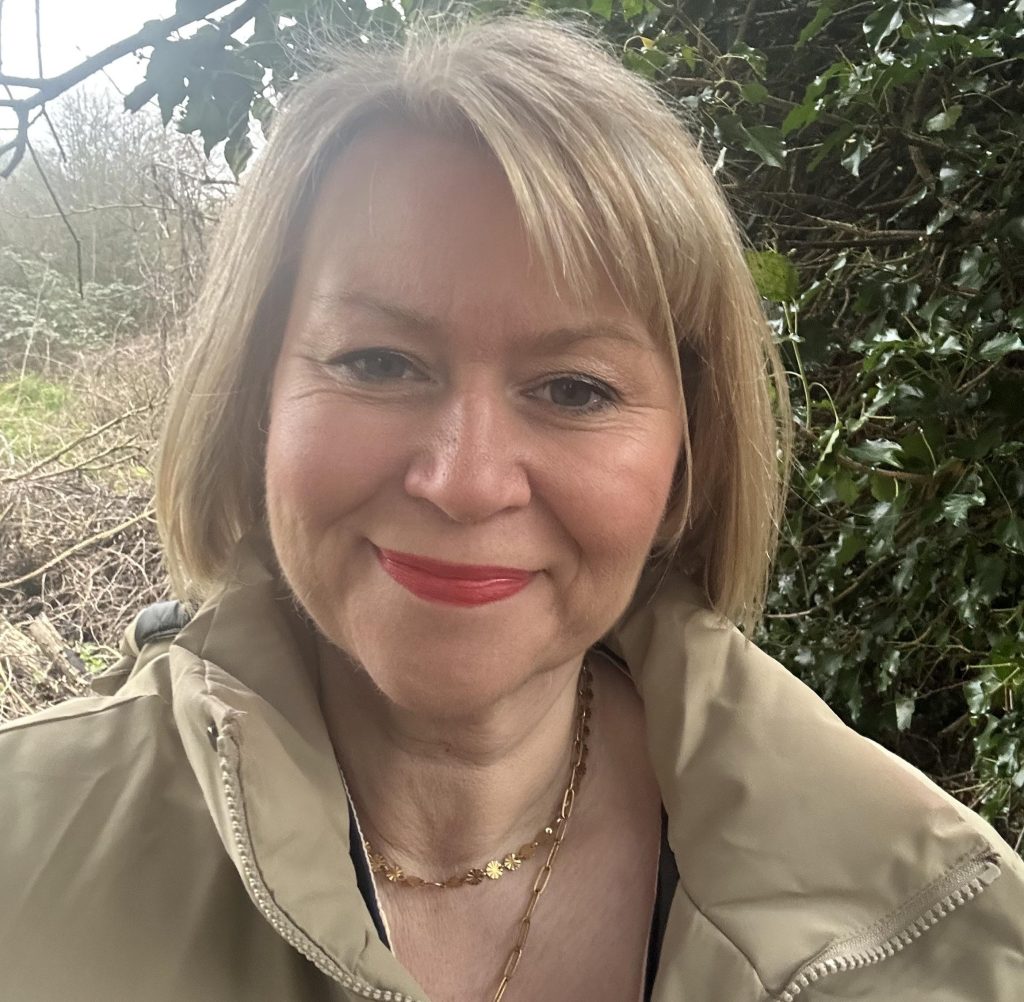
“I felt quite sick, clammy and like I was going to faint.
“I tried to pull myself together, but then had this almighty, excruciating pain in my head.”
After the ‘thunderclap’ struck, Mandy was rushed into emergency care – something that would have been impossible if it had happened just 30 minutes earlier when she was driving into work, and could have proved life-saving.
She regained consciousness an hour later in the emergency department, with her husband, Dave, at the end of her bed, talking to a doctor.
Mandy said: “I couldn’t work out what had happened as I felt OK – I assumed I’d just hit my head when I fell off my chair.
“It only felt like five minutes had passed.”
But the mum-of-two lost consciousness again, waking the following day in another hospital, having been transferred to neurosurgery.
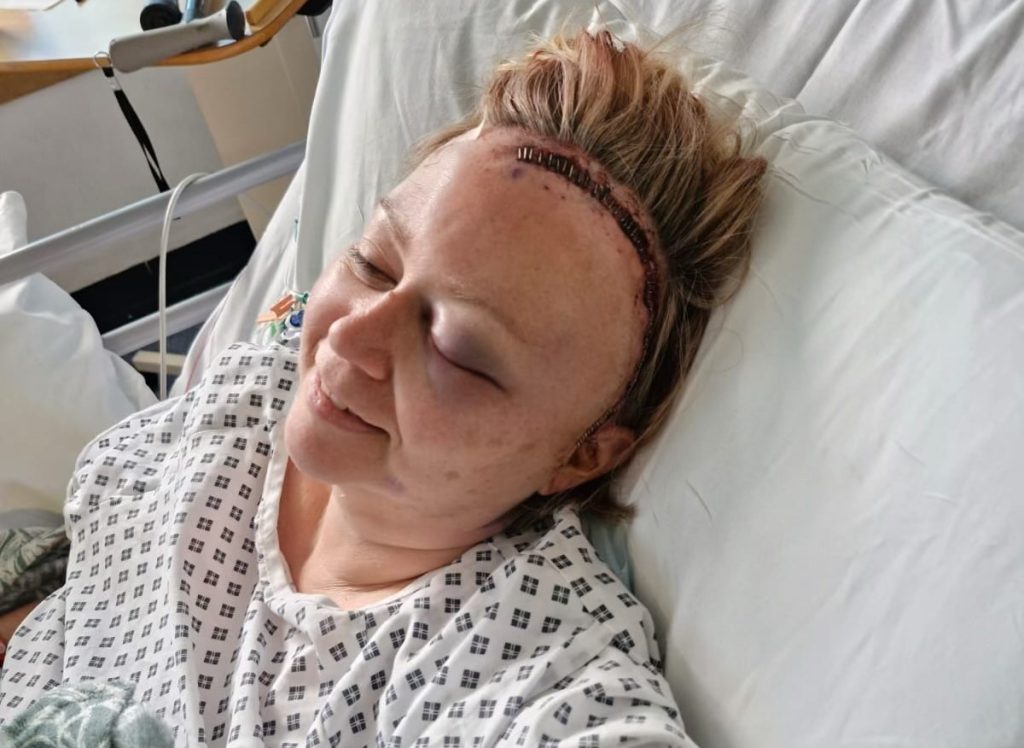
Mandy Park. (Jam Press/@livingwithabi8)
Having always been fit and healthy, aside from the “odd headache”, Mandy was baffled.
An anaesthetist informed her she was going in for brain surgery to insert a ‘clip’ in her brain to act as a way to stem the bleeding and close the rupture point – without which she wouldn’t survive.
Mandy, who had suffered a subarachnoid haemorrhage bleed caused by the aneurysm rupturing, was “in shock” and unable to properly process the news.
She underwent the four-hour procedure that day and had 52 staples put in her head, as well as a titanium plate where a piece of her skull was removed and replaced to strengthen it.
Mandy said: “After the surgery I couldn’t really talk, only grunted, and still didn’t really understand what was happening.
“I was told there were very few symptoms of the aneurysm growing, and that I could have been born with it, or it could have been growing over the last couple of years.”
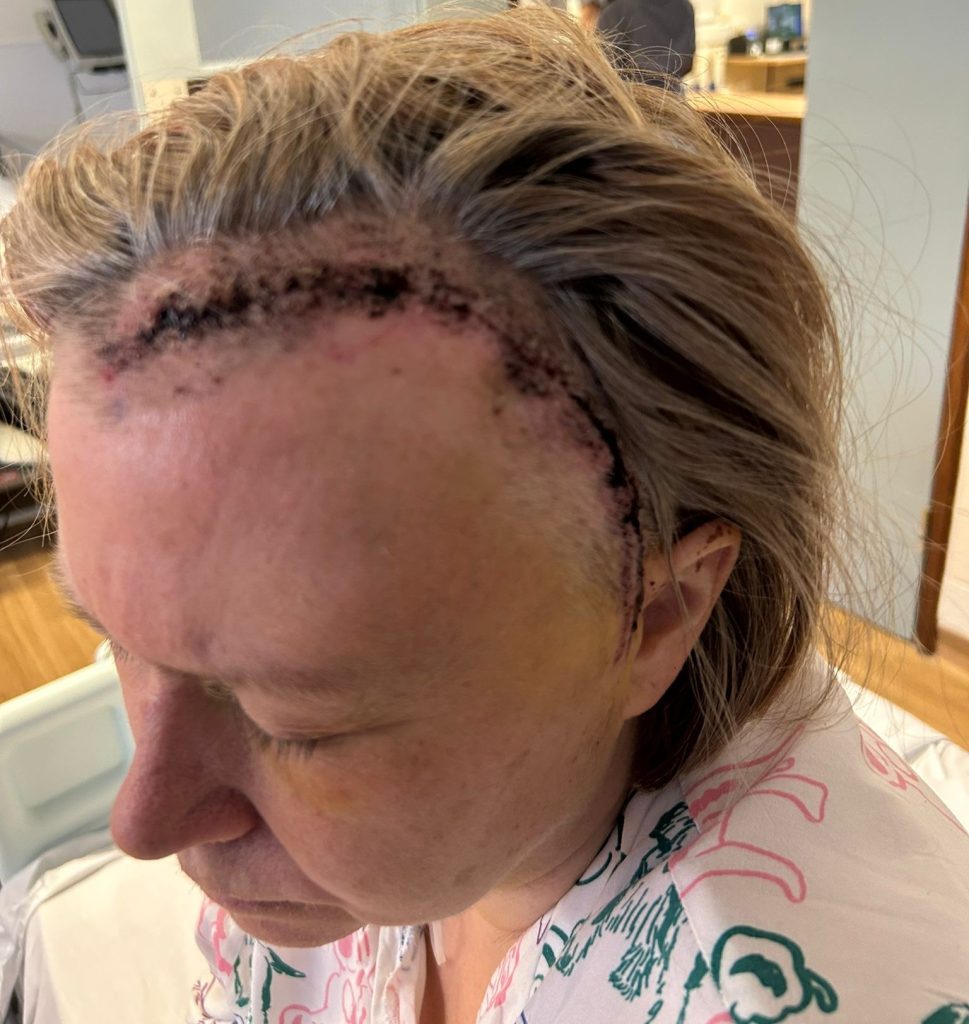
Mandy Park. (Jam Press/@livingwithabi8)
Any signs she might have noted were explained away due to her age and being perimenopausal.
Mandy said: “I’m not aware of having any symptoms [beforehand] – I was suffering headaches and the odd migraine, but had been suffering for years and they tended to be during menstruation.
“I blamed these on being in perimenopause and having a stressful job.
“Perimenopause is the biggest area that possibly masked any symptoms because they [the headaches] were worse around my period.
“Since my aneurysm, I have learned that women of my age in the late 30s-50s bracket are more prone to brain aneurysm due to depleting oestrogen levels – this is important as oestrogen keeps blood vessels elastic, so when levels drop elasticity drops.
“So really, I was at the prime age and gender for a brain aneurysm.
“I had no clue of this because it isn’t advertised at all.”
Mandy was hospitalised for nine days before coming home to steadily recover.
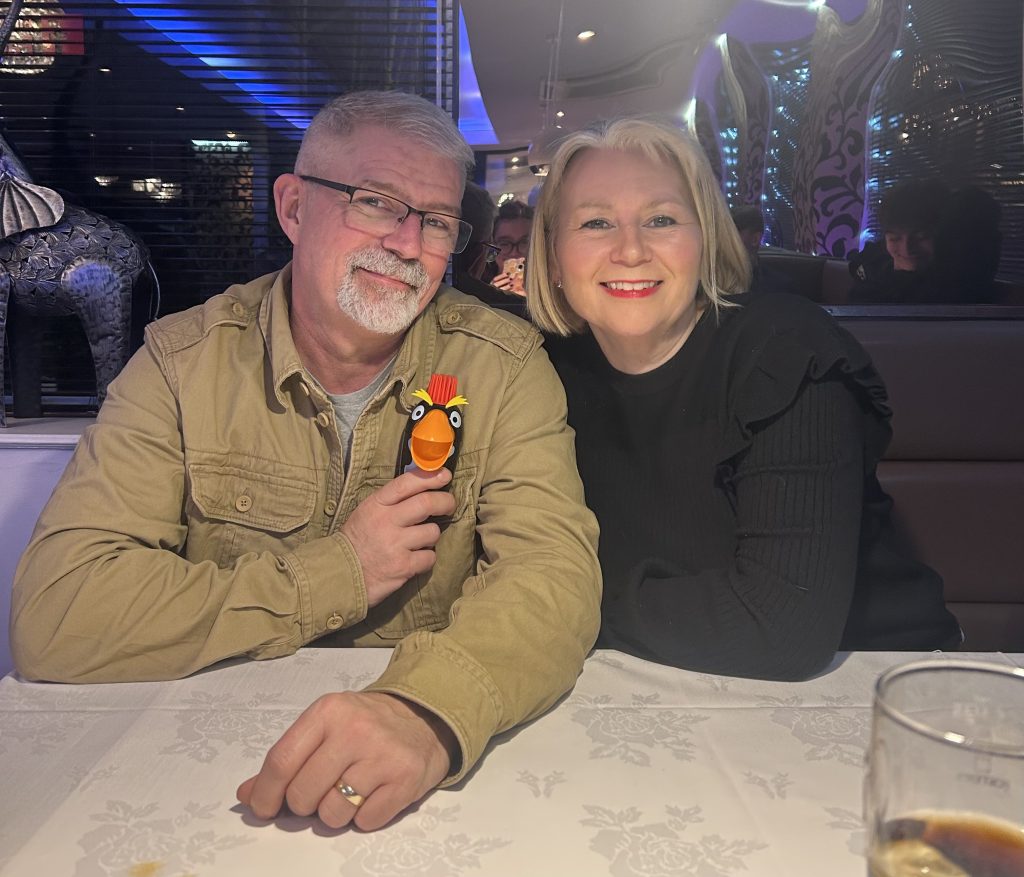
Incredibly, her health has improved to the same condition she was in before the rupture, and she no longer suffers headaches – making her wonder how long she had had the aneurysm.
She returned to work in September 2025 after six months off, and has received treatment for post-traumatic stress disorder (PTSD), finding her workplace particularly difficult to manage due to flashbacks of the incident.
Living with an acquired brain injury (ABI) has been an adjustment, with Mandy occasionally mixing up words like ‘elastic’ and ‘electric’, struggling with numbers, a less sharp memory, and becoming overwhelmed during times of high pressure.
She added: “I also find that dealing with my emotions is harder, and as is common, I have no filter, so I feel I have to be very careful in not saying something that may cause offence.”
Mandy is working to raise awareness for brain injuries and to connect with other people online undergoing a similar trauma to her.
She said: “Even though I have the most supportive friends and family, I still felt they didn’t really understand what I was going through – I felt quite down and not myself.
“So I started a TikTok page to find others like me, and I shared my story in pictures until I was brave enough to talk.
“I very soon built followers who were going through the same things as me, which made me feel better and really helped with my own recovery.
“It was helpful to use my nursing knowledge as was actually highlighting to people that they needed to go check themselves with a GP or doctor.
“I use my experience and knowledge to learn from research, hence I quickly identified the risks of perimenopause, and I could explain things in a way others would understand.
“I now feel my aneurysm has given me positiveness and I’m doing something good from something so terrible.”