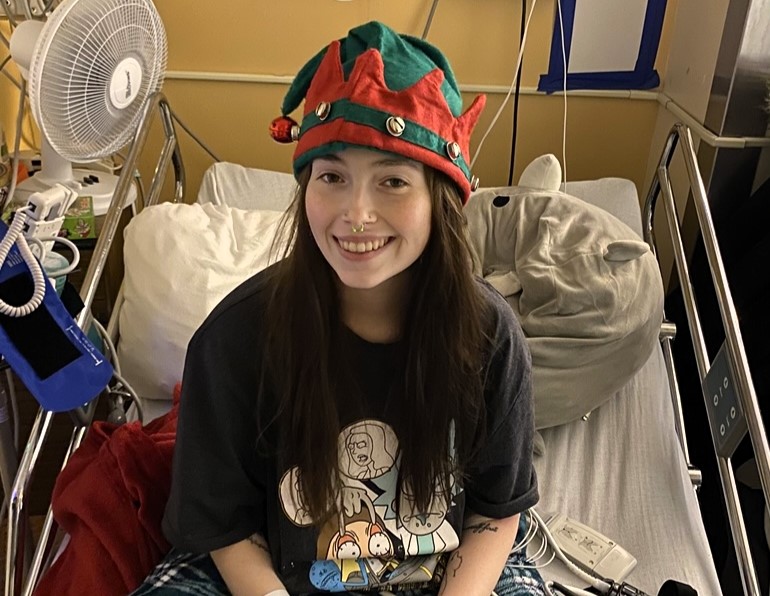

A young woman has revealed how her heat is kept pumping by a machine after a shock diagnosis.
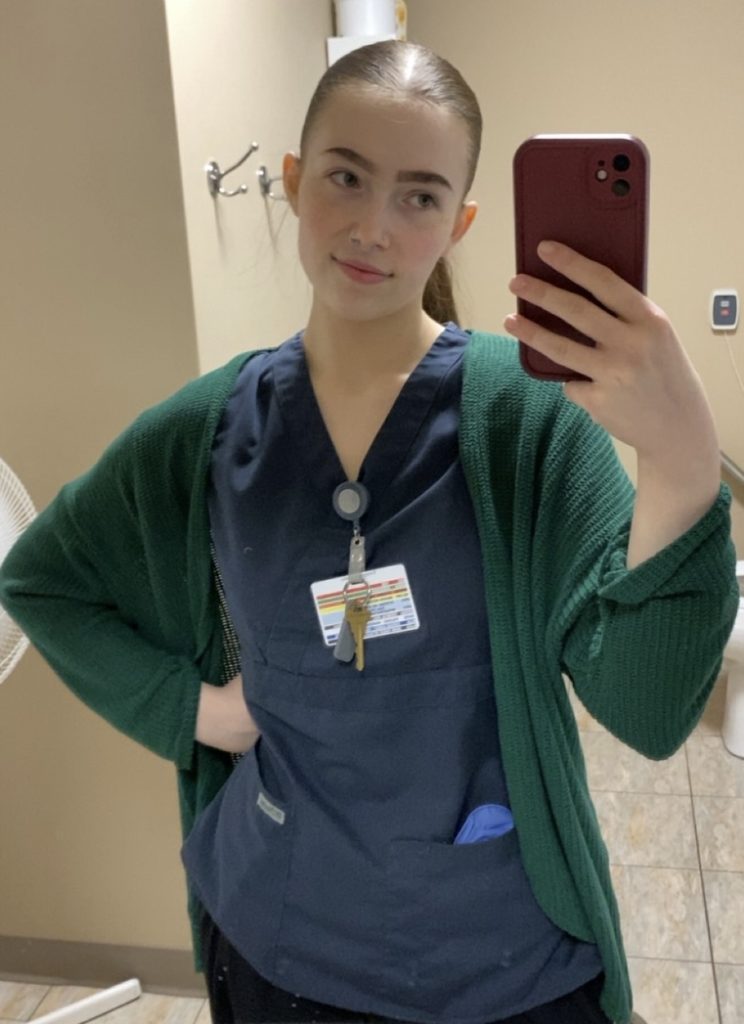
Chantal Pelletier was just 20 years old and in peak physical health, even having a black belt in Kung Fu, when she started to get easily fatigued and felt faint.
After being admitted to hospital for gallstones, doctors found the disturbing cause – her heart was functioning at just 5% and had dilated with fluid build-up to be the size of a football.
READ MORE: ‘I got my leg AMPUTATED to pass my driving test after doctors said I’d never get behind the wheel’
The student was diagnosed with dilated cardiomyopathy – a heart condition that causes the heart to enlarge and weaken, making it unable to pump blood effectively – and doctors fitted her with an LVAD (left ventricular assistance device).
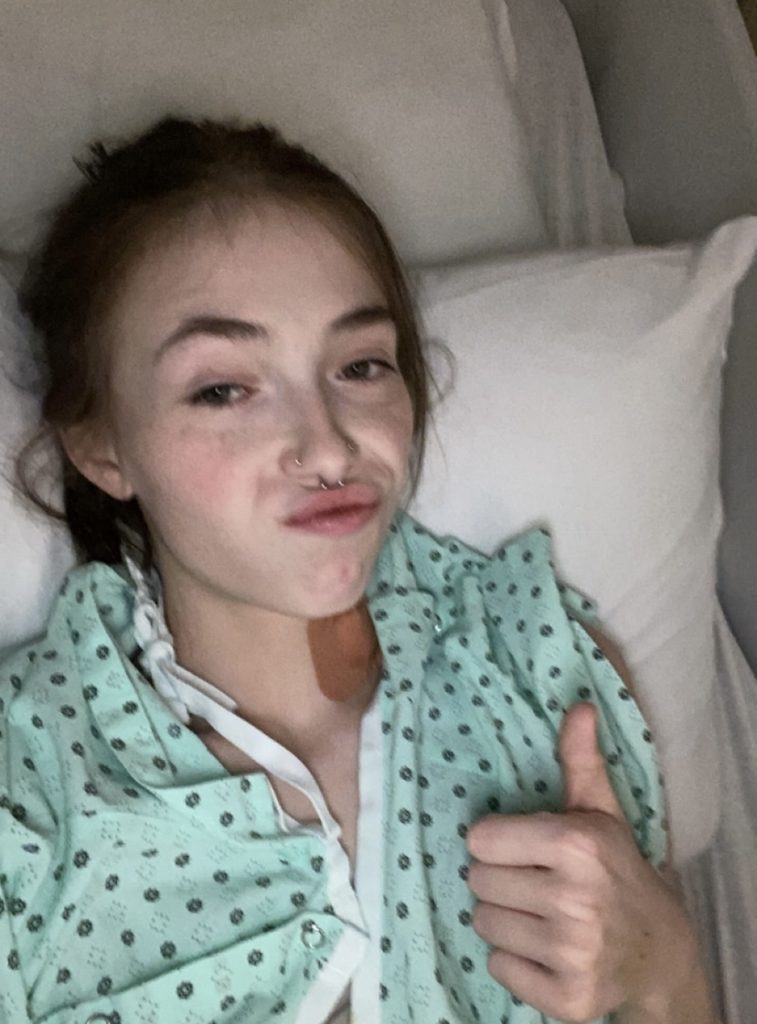
With no pulse, the machine keeps her heart going while she waits for a heart transplant – which she will one day need.
For Chantal, the adjustment has been huge having only started to feel poorly late last year.
“I never put two and two together that something was wrong with my health – but looking back I can see now that there were signs of significant heart failure,” the young woman, from New Brunswick, Canada, told Need To Know.
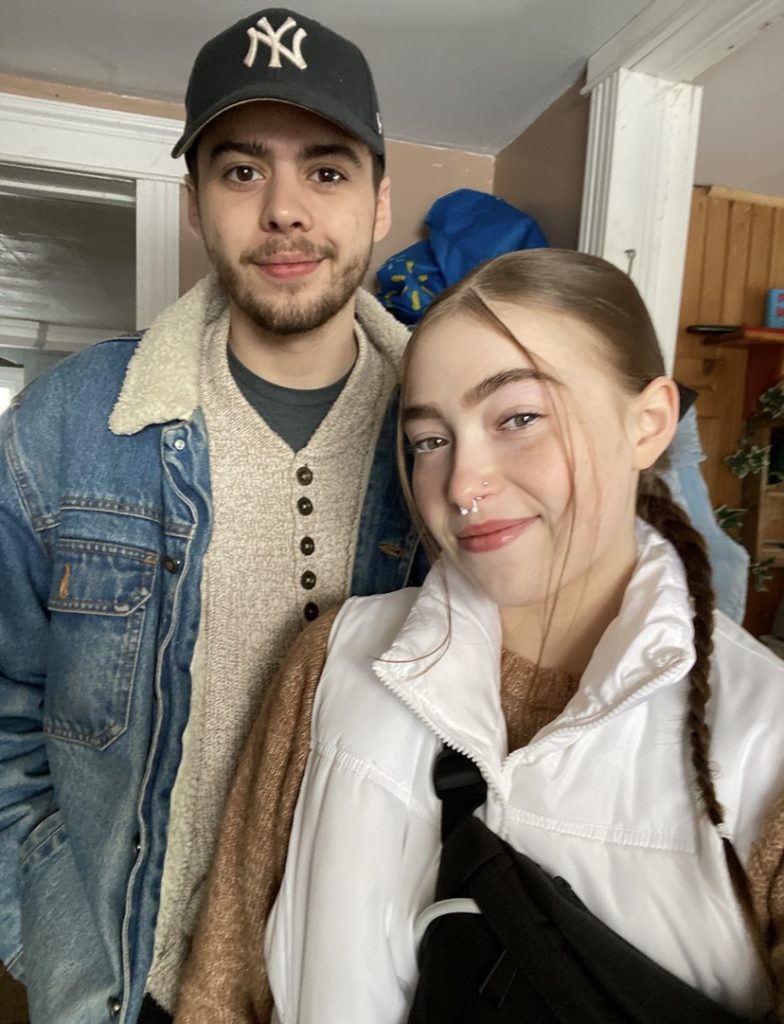
“I started having a hard time standing up for enough time to make myself my own meals without feeling exhausted, and I needed to leave my bathroom door unlocked when I took showers so my roommate and boyfriend could check up on me because I frequently felt like fainting in the shower.
“I had a very difficult time walking up the four flights of stairs to my apartment which I had always been able to do before with no problem.”
The strange symptoms baffled Chantal, who had been balancing two jobs alongside her studies, including one as a personal support worker, which required her to be on her feet all day, and had trained in martial arts since childhood.
Doctors initially suspected that she was anaemic and had hypothyroidism, but a hospital visit in October 2024 found something more sinister was at play.
While monitoring how many times her heart was beating per minute, Chantal was shocked to find her resting heart rate operating at 168 bpm – with a normal heart resting rate for adults between 60-100 bpm.
Doctors found evidence of gallstones in her gallbladder, but following the surgery Chantal responded badly and was admitted to the ICU.
She said: “I should have been feeling better but I only felt worse – I couldn’t keep any food down, I felt absolutely horrible, and I was retaining so much fluid in my face, arms, and legs that I was puffing up like a balloon.”
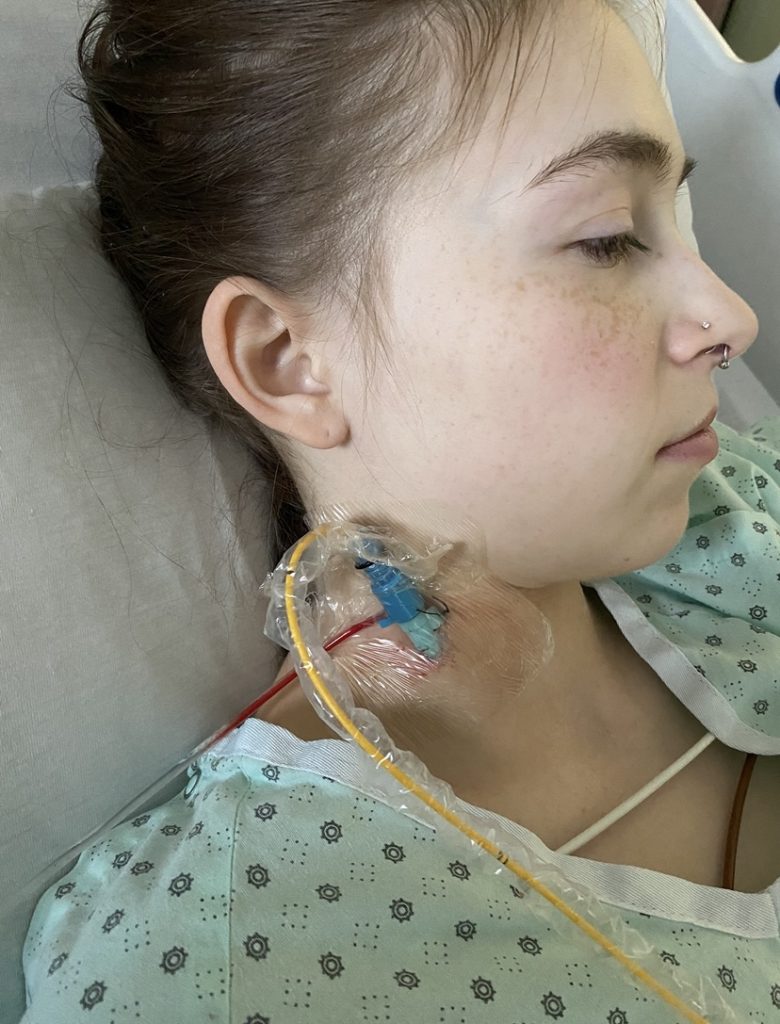
She had an echocardiogram (an ultrasound scan of the heart), which found it enlarged, and cardiology tests revealed her heart was operating at between 5-10% – with the average healthy heart ranging between 50-70%.
Chantal said: “My heart was compared to the size of a football.
“This is when my cardiology team diagnosed me with dilated cardiomyopathy.
“Just like any unexpected diagnosis, it was surprising, but my sister had been diagnosed with the same thing back in 2011 and went on to receive a heart transplant and recover.
“I knew that I could still make it out alive and live a healthy and happy life – even if it went putting my life on pause for some time to focus on my wellbeing.”
It was later discovered that her father, sister and Chantal herself were carriers of the BAG-3 genetic mutation which can lead to dilated cardiomyopathy.
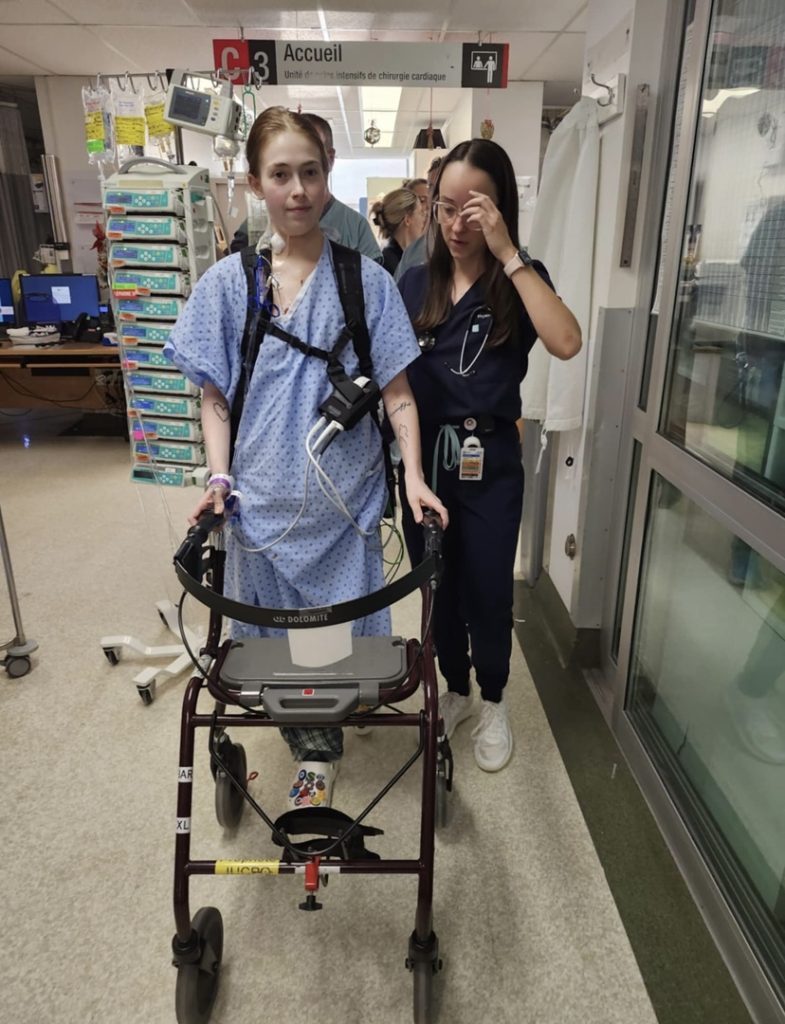
With medication, Chantal was able to lose seven litres of fluid that had built up in her body, which was making it even harder for her heart to function.
She was admitted for surgery in December to have the LVAD surgically attached to her heart.
Chantal was placed in an induced coma after the nine-hour surgery and stayed in the ICU in critical condition for a week before she was awoken.
She said: “I slowly began to remember the days I spent in the hospital, and because I was in a coma for almost a week, I had to relearn how to speak, eat, drink water, sit up on my own and walk again because I lost all ability to do so.
“Honestly, it was pretty frustrating being restricted from the basic things I was able to do before, but I kept calm in every circumstance and I was determined to get back to where I was prior to open heart surgery.”
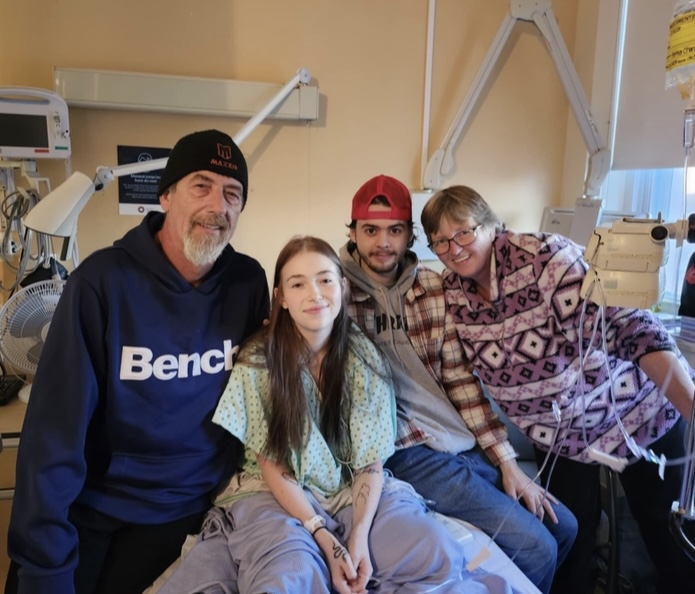
Chantal was moved to the cardiac ward later that month and spent Christmas in hospital.
She said: “My family made it easier by coming to visit, and bringing a small Christmas tree with lights because they knew it would brighten my spirit, and it did.
“I was anxious to be released from the hospital because as much as I was happy with the cardiac team, I just wanted to eat better food, knowing my mum’s cooking was right around the corner waiting for me.”
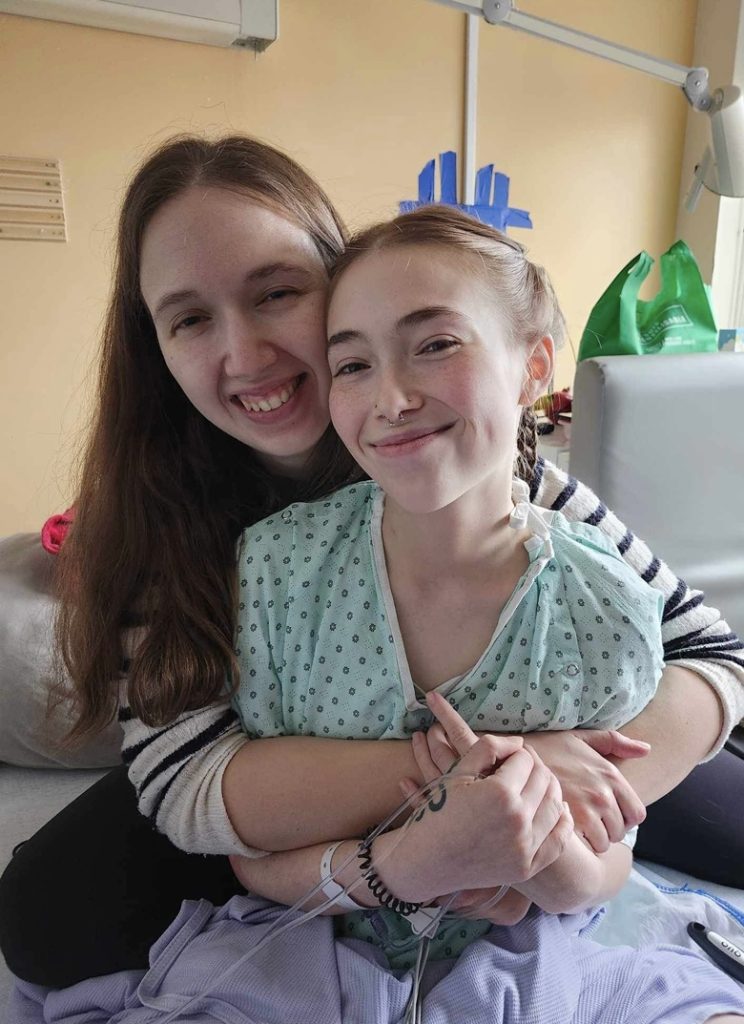
At the end of the month, she was able to move into a subsidised living residence close to the hospital for monitoring purposes, and has since been allowed back home to slowly adjust to normal life again – with a machine keeping her alive.
Chantal said: “Thankfully, while I was in the hospital, I adapted quickly to having the LVAD.
“At first I felt extremely discouraged, I was worried that I wouldn’t be able to get used to living with an LVAD, but I held my head up high and took everything day by day patiently.
“About two weeks after it was inserted and I was awake from the medically induced coma, my cardiac nurses began showing me all I needed to know about the controller, the batteries, and how to care for my device efficiently.
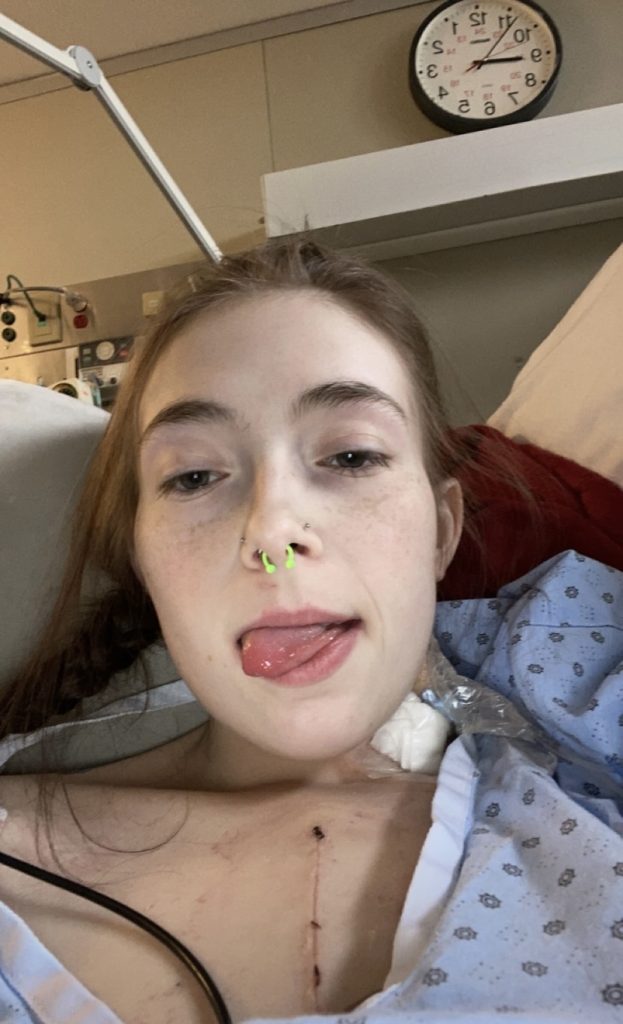
“I learned slowly how to change my batteries, and was able to explore my options for how I could carry the device and its accessories.
“In the quiet moments, I do hear my LVAD pumping which sounds like a fax machine, and it was super surreal at first.
“I hear the hum most at night when I’m lying in bed before I go to sleep, but I have gotten so used to it, it has become a very useful white noise.”
She is now waiting to be placed on the list for a transplant, building up her health as best she can to ensure she is strong enough for surgery when the time comes.
Having a LVAD means Chantal has to take her vitals every morning and night, and is hooked up to the wall at night, while in the day she must carry a spare set of chargeable batteries to keep it working.
She said: “Remembering to bring my spare bag of equipment has been one of the biggest adjustments – because I know it can be extremely fatal if I need them and forget them – but I still find myself almost walking out the door without them sometimes even three months out of the hospital.”
As Chantal is currently unable to work or attend school, her friends and family set up a GoFundMe to support her with expenses that her insurance doesn’t cover, which has raised more than $11,000 (CAD).
She said: “Some days are easier than others while waiting for that phone call for a heart transplant.
“Although I feel mixed emotions about receiving it, I know it will work best in my favour, and I look forward to continuing my life again.
“And I’m extremely thankful for the support and encouragement I’ve received both online and within the community.
“It hasn’t been easy to manage my own finances, while also adapting to a lifestyle that requires more expensive foods to support my diet, available gas money for my appointments that takes four hours to drive to, and my expensive medications that are not covered by my medical insurance.
“I am very grateful for the money raised so far because it has been a significant help – without it I can’t imagine where I would be financially right now.”
READ MORE: ‘I’m a cancer dietician – this simple budget snack can help ward off disease’