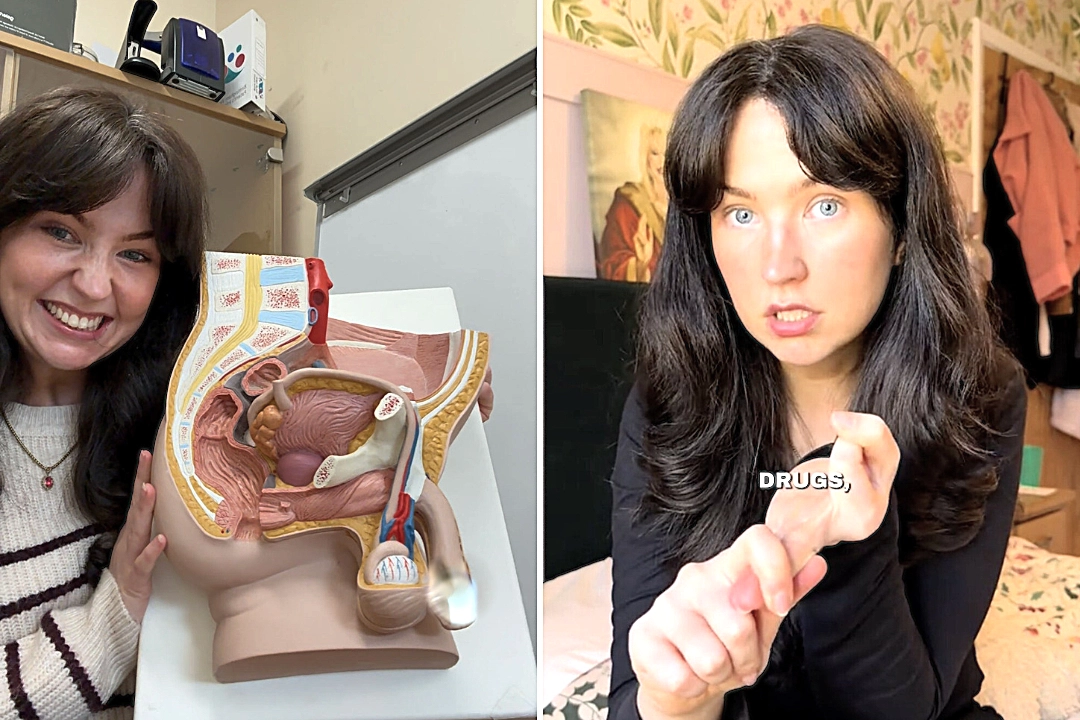

A fertility expert has revealed four little-known ways men could be damaging their sperm – and warned the impact can affect women and pregnancies too.
Dr Aileen Delaney says there is still a “distinct lack of education” around reproduction and fertility, with both men and women often unaware of how much sperm quality matters.
The 29-year-old works as a public engagement manager at the Centre for Human Reproduction at University of Birmingham, where her role involves explaining fertility science to the public.
READ MORE: How lack of sleep affects the heart: what the latest research says
“Men have an effect on women’s bodies in ways you may not think,” Aileen, who is based in Birmingham, told Need To Know.
“It may feel unfair that men get to have three minutes of fun and women have to endure nine months of pregnancy, but the quality of pregnancy, chances of miscarriage, and fertility success are all linked to the quality of sperm.
“So things a woman’s body goes through before and during pregnancy are impacted by the man.

“Recurrent miscarriage has been linked to sperm with higher levels of DNA damage; this means that even though the egg may be fertilised, the embryo may never survive – but DNA damage tests do not look at the exact successful sperm, so are often not clinically helpful, instead it is better to follow behaviours that alleviate the problem.”
According to Aileen, who also holds a PhD in physics, men are constantly producing new sperm – generating around 1,000 every second – with sperm taking roughly three months to fully mature.
She said this means men can potentially improve sperm quality within just a few months by making healthier lifestyle choices.
She said: “That means men can make simple changes to improve their sperm quality within three months.
“So while women do all the hard work during pregnancy, the work men need to do is pre-conception so their sperm are the best they can be, both for the woman’s sake and the health of their child.”
According to Aileen, sperm DNA quality, concentration, motility and morphology – the shape of the sperm head – can all be affected by poor health and unhealthy habits.
She said: “For example, a man might have a normal sperm concentration, but if the motility is low that means the sperm will struggle to swim all the way to the egg.
“We know that the tail of the sperm is what really does all the work to make it swim, so if the tail doesn’t work properly your sperm could just be going nowhere.
“Or if the head of the sperm is damaged, or there are two heads, this sperm will never fertilise an egg, thus reducing fertility chances.”
Aileen highlighted smoking, drugs, alcohol, processed foods and other unhealthy lifestyle choices as some of the biggest contributors to poor sperm health.
She said sticking to a balanced diet and avoiding ultra-processed foods is often more beneficial than relying on supplements.
The fertility communicator also explained that the development of the placenta is heavily influenced by the father’s genes, meaning male fertility can directly affect both the health of the mother and the development of the baby.

However, she stressed that age and underlying medical conditions also play a role.
Aileen also revealed that, for some couples trying to conceive, abstinence can actually reduce fertility chances.
She said daily ejaculation can mean fresher and “healthier” sperm are available for fertilisation, while longer periods without ejaculation have been linked to lower conception rates and even miscarriage.
Aileen added: “A big part of my job is education around male infertility too, and slowly I think men are waking up to realise they’ve been left behind in terms of information and understanding.
“Most people only find things out about themselves when things go wrong, which is particularly true for fertility treatments or when using home tests unsupervised, without the knowledge or support to understand what the results mean.
“Suddenly you’re bombarded with information you’re mad no one told you earlier.
“There is still stigma and shame when it comes to talking about anything related to reproduction, fertility, or sex, for whatever reason.
“It’s the most natural thing in the world that no one wants to talk about, yet suddenly you’re supposed to know everything.
“Including men in the conversation around fertility is so important and societal views are thankfully shifting away from fertility being considered a woman’s issue.
“It takes two to tango, two to make a baby, so it makes sense that the two people involved are both important in the fertility process, and this includes the success of pregnancy and the health of the child.”
READ MORE: A simple habit that can significantly improve your health