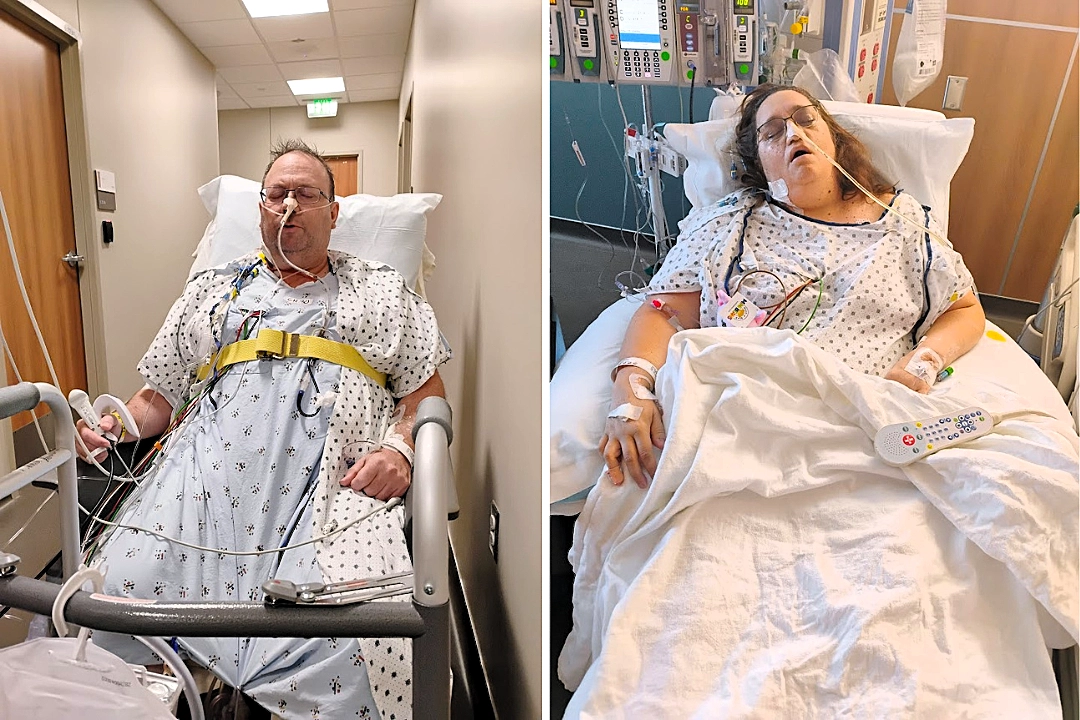

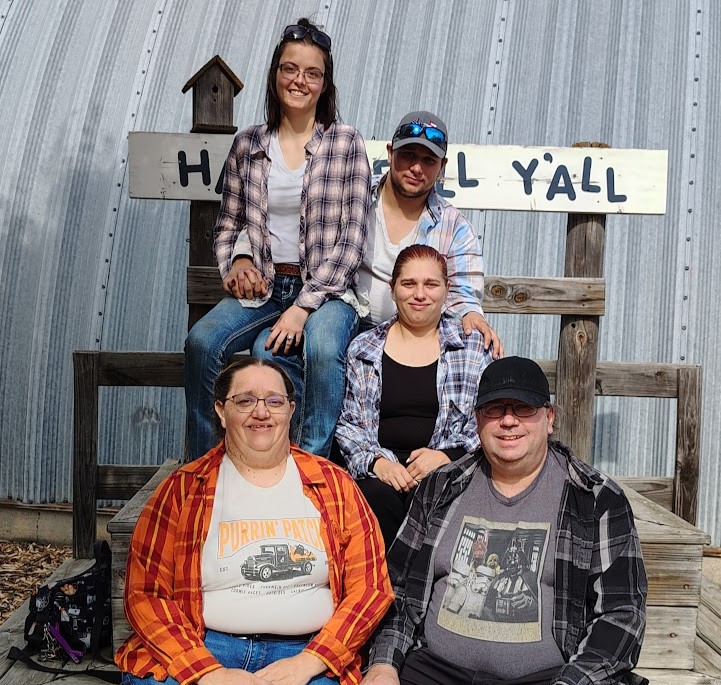
A husband and wife who have been married for almost 25 years were both diagnosed with the same rare form of cancer just four months apart.
Michele Hahn, 49, was diagnosed with stage four neuroendocrine carcinoma of the small bowel and ileum colon.
Four months later, husband Craig, 55, was diagnosed with the same cancer, which had already spread to his liver.
READ MORE: I lost 6 stone after eating dozens of chocolate bars a day – now my wedding dress is too big
The couple, who married in 2001, described the experience of battling cancer simultaneously as “surreal”.
“Statistically, the odds of two people in a marriage being diagnosed with cancer in the same year are estimated to be around 13 per cent,” Michele, from Nebraska, USA, told Need To Know.

“To have the same rare cancer, diagnosed just four months apart, feels almost impossible.
“Going through cancer at the same time has felt surreal more than anything.
“There was no emotional break between the two diagnoses.
“We went from managing my stage four cancer to sitting in another doctor’s office hearing the same words again.
“It felt like lightning striking twice in the same place.
“Practically speaking, it’s incredibly complicated.
“There are double appointments, double scans, double specialists, double recovery timelines.
“There’s the physical exhaustion of surgery and treatment and then there’s the mental exhaustion of living scan-to-scan for two people instead of one.
“Financially, it adds another layer.
“It’s overwhelming at times. But it also made us very intentional.
“We don’t waste time the way we used to.
“Stability isn’t something we take for granted anymore.”
Michele’s cancer was discovered unexpectedly following a hysterectomy in October 2024.
She underwent a gruelling 13-and-a-half-hour surgery to remove the tumours.
Surgeons removed 25 lymph nodes, 21 of which were positive for cancer, and delivered 80 minutes of heated chemotherapy directly into her abdomen.
She spent six days in intensive care and a further four in hospital, with recovery taking around six months.
Bookkeeper Michele’s prognosis, for now, is good.
But just as she was beginning to recover, lightning struck again.


Craig had suspected diverticulitis, the inflammation or infection of small pouches in the colon wall and medics ordered a biopsy of an area near his kidney.
But they discovered cancer.
Craig underwent an 11-hour surgery to remove the diseased portion of his bowel, half of his liver, his appendix, gallbladder, omentum and multiple lymph nodes.
Like his wife, he also received 80 minutes of chemotherapy.
He spent four days in ICU and another six in hospital.
His recovery, too, took around six months.
During his six-month check-up, doctors discovered multiple small tumours in his liver that were too small to remove surgically.
He now receives monthly treatment designed to slow the growth of neuroendocrine tumours.
His most recent scan showed the tumours had neither grown nor shrunk.
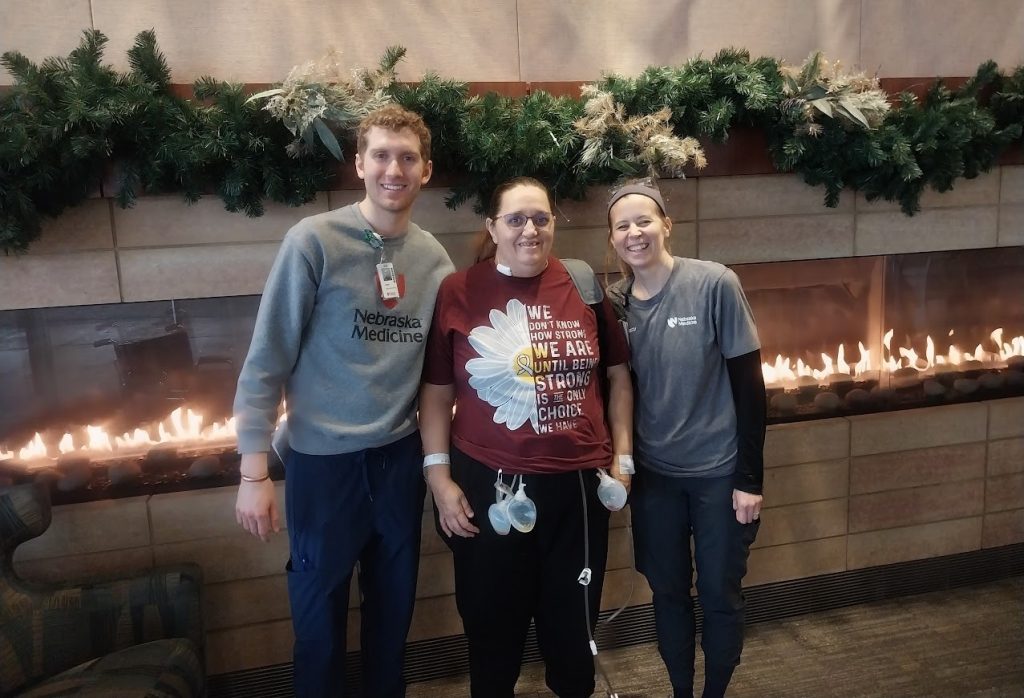
Although Michele is now considered in remission from carcinoma syndrome, the cancer is not considered curable, only manageable.
Michele said: “There are a lot of emotions that come with one of us being in remission while the other is still actively battling.
“Some days I feel guilty for being well while Craig is still fighting.
“Even though my cancer isn’t gone, I’m stable and he’s the one continuing treatment.
“That’s complicated emotionally.
“Craig, of course, wouldn’t have it any other way.
“He would rather carry the heavier load than see it fall on me.
“There are days when we’re encouraging each other through continuing side effects, fatigue, or pain, which are both physical and emotional.
“Surgery may be over, but recovery doesn’t just end.”
Practically, it has meant double appointments, double scans and double recovery timelines.
Financially, it has also taken a toll.
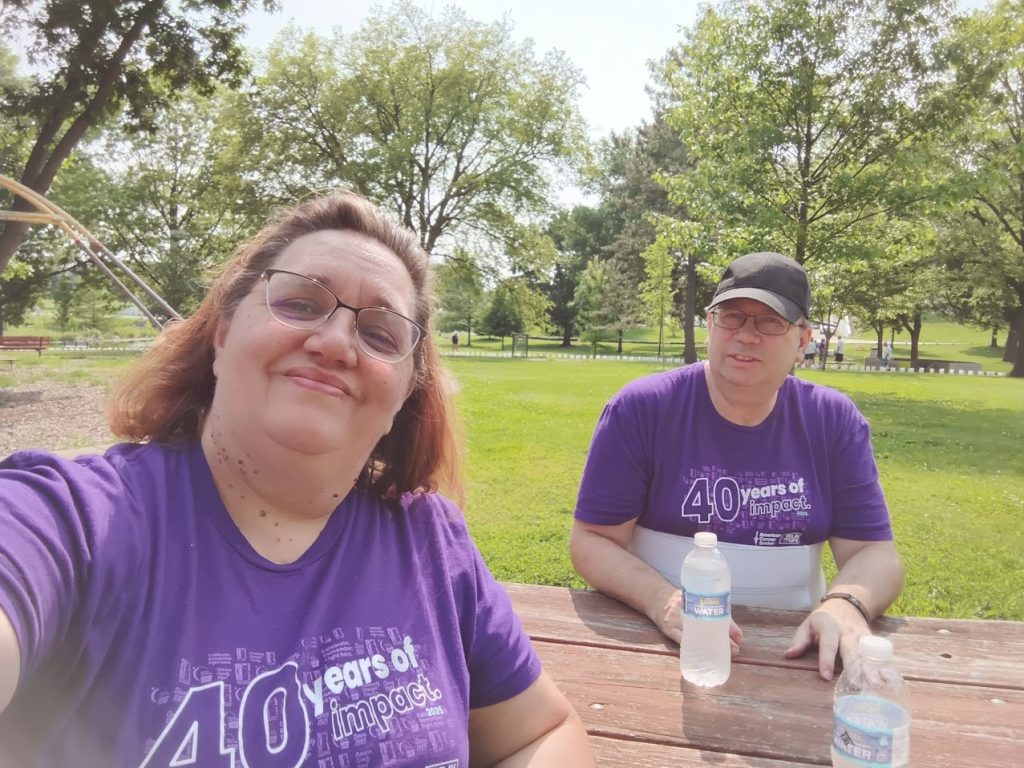
Craig previously worked long 12-hour shifts operating machinery that produces medical components.
Michele said: “There are still painful days.
“There are days when depression creeps in, especially now that Craig is unable to work while we wait for answers about his new condition.
“That loss of routine and purpose is hard on him and it’s hard for me to see him that way.
“At the same time, there’s something uniquely strengthening about both of us having walked this road.
“We understand what the other is feeling without a long explanation.
“Sometimes it’s just a look across the room or a long sigh and we know.
“We’ve held each other through tears.
“We’ve celebrated stable scans and small milestones that most people would overlook, and even in the uncertainty, we look toward the future together with hope.”
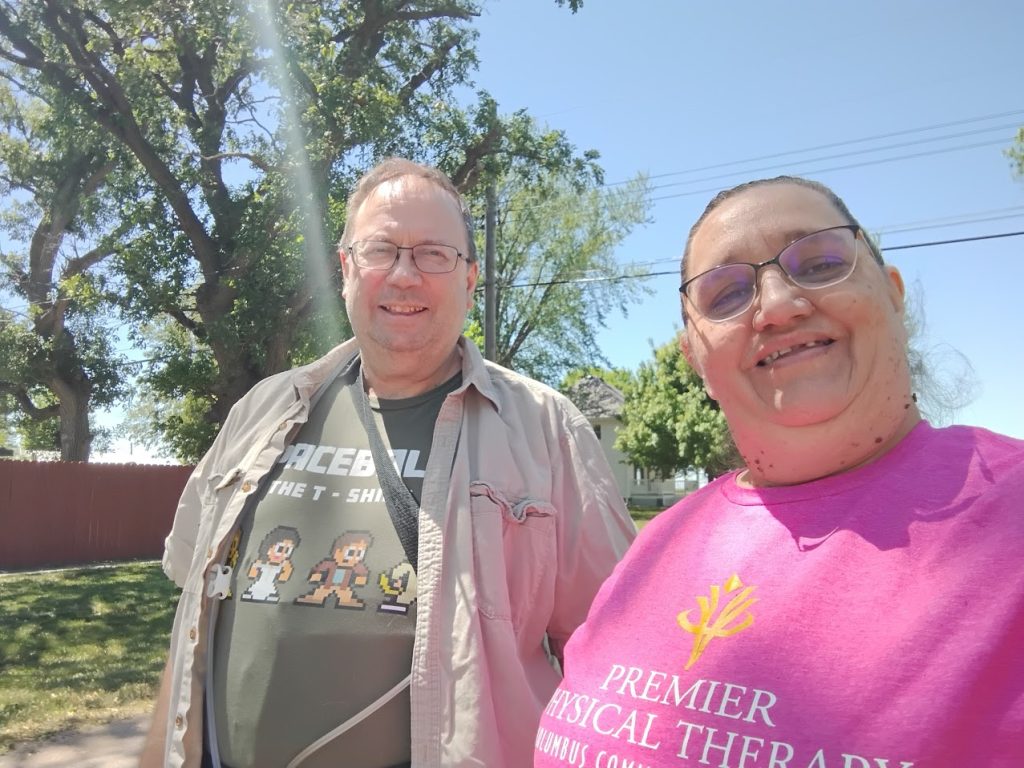
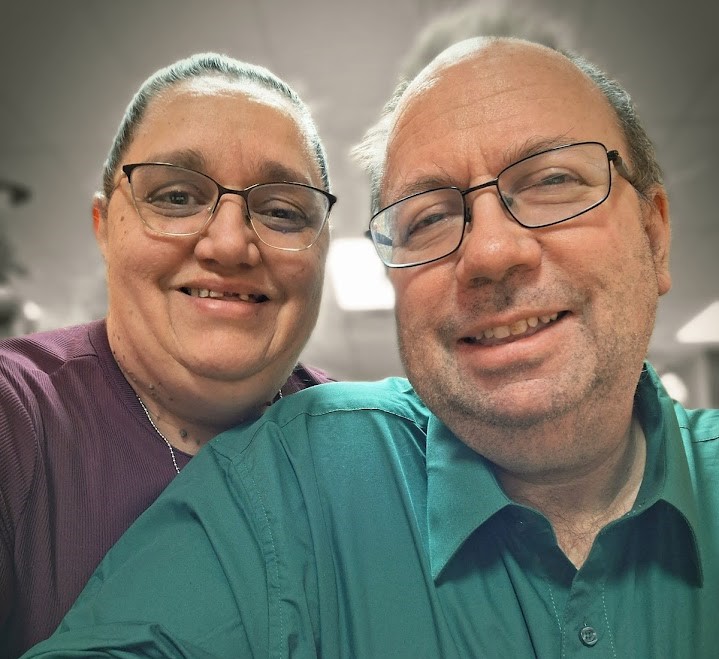
Despite the devastation, Michele says the ordeal has strengthened their marriage.
She said: “You can’t walk through something like this without it changing you, and with both of us going through cancer at the same time, we’re changing together.
“Our marriage was solid before this.
“But this experience has strengthened it in ways comfort never could.”
After her surgery, Michele struggled with a long midline scar running from just below her diaphragm to beneath her belly button until Craig had his own operation.
Michele said: “Cancer strips away pride and illusion.
“It forces hard conversations about the future, about stability, about what really matters.
“When you’re both facing your own mortality, there’s no pretending everything is fine.
“There have been moments of fear and exhaustion. But there has also been a deepening of love and connection.
“After my surgery, I struggled with my midline scar.
“It felt hideous to me. I was self-conscious and had a hard time letting Craig see me like that.
“Then Craig had his surgery and suddenly, we both had scars.
“We started calling ourselves scar buddies and something shifted.
“The self-consciousness faded because we understood each other in a way no one else could.
“Those scars stopped being something to hide and became something we survived.
She says they have also become fierce advocates for each other in medical appointments, helping one another process complicated information and ask difficult questions when exhaustion takes over.
She added: “After surgery, everything changed.
“When Craig returned to work, he quickly realised he couldn’t sustain what used to be routine.
“He couldn’t work more than three 12-hour shifts in a row without collapsing from fatigue.
“Major abdominal surgery and ongoing cancer treatment don’t just disappear because you’re determined.
“The stamina simply isn’t the same.
“Meals that used to be simple now require planning and caution and eating out requires insane planning.
“There are nights I’m too exhausted to cook a full meal.
“We eat leftovers or cereal.
“That would have felt like laziness to us before.
“Now, it’s survival and grace.
“We used to chase our grandchildren around the yard.
“Now, sometimes the trip just to go see them is almost too taxing on our bodies.
“That part is hard.
“We missed several of our grandson’s recent basketball games because we were too sick to go.
“It’s not like the flu, which will pass in time.
“Cancer didn’t just change our health, it changed our rhythm and it slowed us down in ways we didn’t choose.”
READ MORE: Binge-drinking, late nights and holidays – then my heart failed at 30