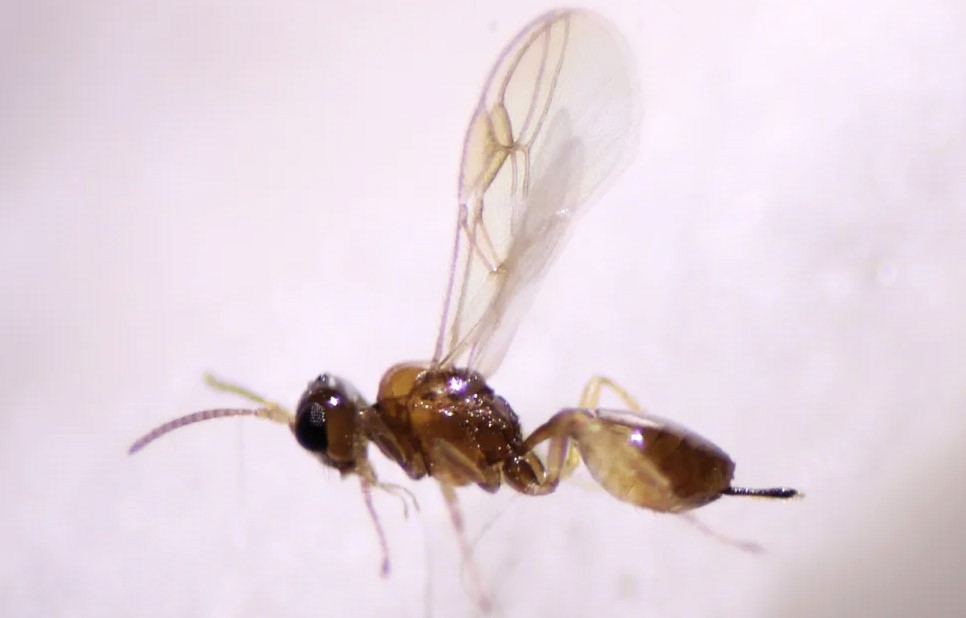

Scientists have discovered a species of parasitic wasps – and they sound as though they could be straight from a horror film.
A team of researchers at the Mississippi State University have uncovered the new species, which comes with a rather gruesome method of reproduction.
The newly-discovered insect has the ability to inject its eggs into living fruit flies, a behaviour never seen before in wasps.
The insect was found in the back garden of Logan Moore, a Ph.D. student working under Matthew Ballinger, the co-author of the study, as reported by Need To Know.

While searching for nematodes, also known as roundworms, and infected flies, they inadvertently stumbled upon the wasp.
“This is a spectacular example of undescribed biology hidden in plain sight,” Matthew Ballinger said.
“We have never come across a species that attacks the adult stage, until now.”
While it’s not unheard of for insects to parasitise other critters, Ballinger explained, it’s a difficult process.
Adult flies are highly mobile, which makes them elusive targets.
Measuring no more than 2mm in length, the newly discovered wasp had developed a unique method to overcome these challenges.
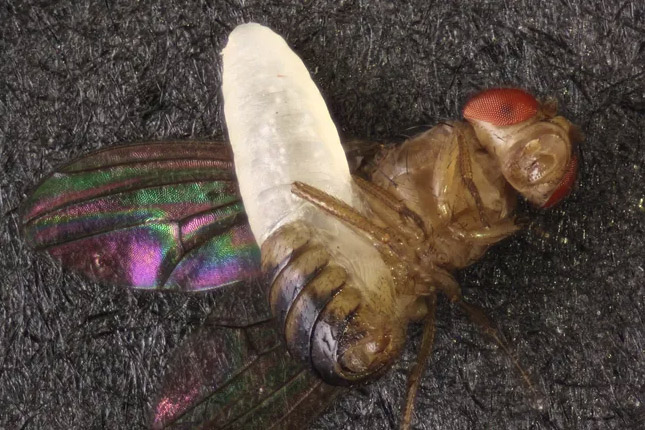
In a video shared by the university, the wasp slowly creeps up on the fly, before quickly shooting out a needle-like organ, resembling a stinger, into the fly.
It then lays its eggs before backing away.
Ballinger’s team has also collaborated with Scott Shaw, an entomologist and parasitoid wasp expert at the University of Wyoming, to formally describe the new species.
A spokesperson commented: “Studying how parasites and pathogens influence Drosophila biology and behaviour has helped researchers learn more about fundamental biological processes like immunity and reproduction.
“We’re excited to learn more about the new species, and we hope other researchers will begin their own projects to better understand its infection biology, ecology and evolution in the coming years.”
READ MORE: Lucky man miraculously survives after being attacked by shark while collecting sea snails