
A man has revealed how his leg was saved from amputation, even after doctors became convinced there was nothing else to be done.
Farshid Esmaeili recalled how panicked doctors asked to remove his left leg, because an horrific childhood accident had caused irreparable damage to it.
The 21-year-old lost all muscle tissue in his leg due to the injury and, to get where he is today, underwent an astonishing 27 surgeries.
Farshid’s childhood accident and its aftermath is the stuff of nightmares.
The lad had been on a trip with his family, who had parked their car in a nearby yard.
When he returned to grab his water bottle from the vehicle and the car began to slide towards him.
The car pushed the then-12-year-old against the wall, trapping his left leg.
Despite Farshid’s father quickly moving the car, his leg was badly injured and “completely numb”.
“I remember thinking I might be paralysed,” Farshid, who is based in Finland, told Need To Know.
“We reached a public hospital after about 30 minutes; it was a Friday, and the hospital was understaffed.
“At first, they didn’t realise that the main artery in my leg had been completely cut.
“By the time they discovered it, several hours had passed.
“The doctors told my parents that because blood flow had stopped and my leg had turned black, amputation might be the only option, as they believed it was too late to reconnect the artery and that infection and permanent damage were major risks.”
Farshid says he doesn’t remember many of the conversations around amputation.
He added: “I was dizzy, disoriented, and couldn’t really speak.
“Everything felt like it was spinning.
“What I remember most is fear – seeing many doctors around me and hearing my mother screaming made me terrified.”
The decision to amputate or not fell to his parents, in what was “an incredibly painful and overwhelming moment for them”.
He added: “The doctors warned my parents that amputation might be the safest option but they believed there was still hope.
“They decided to fight for every possible alternative before accepting such a life-changing decision.
“Their faith, courage, and determination played a huge role in saving my leg and keeping me strong throughout the process.”
Farshid’s mother was told about a specialist who might be able to help.
This medic then insisted he was transferred to a private hospital “immediately”.
The new doctor decided to attempt to save Farshid’s leg, but warned the family that the chances were 50/50.
Farshid underwent emergency surgery, an arterial vein graft to restore blood flow to his leg, and spent several days in the ICU.
His condition proved so unstable that he was taken back into surgery multiple times due to artery complications and infections.
He said: “The treatment was long and extremely painful.
“I went through several major surgeries.
“Day by day, parts of my leg were losing tissue and drying out.
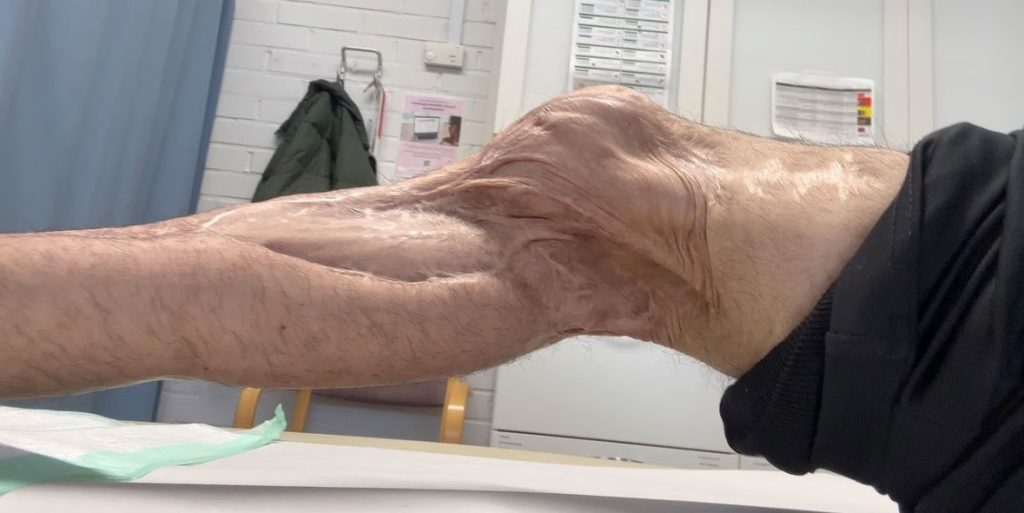
“Doctors had to cut away dead tissue regularly with surgical scissors.
“One of my toes turned black and eventually had to be amputated.”
Although the artery was eventually saved, Farshid lost all the muscle tissue in his leg.
The leg was completely open, with bone and veins visible.
Farshid says he was in “unbearable pain” and was given morphine injections almost daily for nearly a year.
Over time, doctors performed skin grafts using skin from his other leg and even from the injured leg itself.
He says one of the hardest parts of recovering in hospital was the 6pm daily changing of his surgical dressings.
He added: “I would start crying around 5pm every day because I knew what was coming.
“The pain was so intense that I was given large doses of morphine each time, but even then, I could still feel significant pain.
“It was physically and mentally exhausting.”
In total, Farshid went through 27 surgeries.
He said: “At the beginning, I was scared and confused. I didn’t fully understand everything that was happening, but I knew it was serious.
“There were moments of deep fear, frustration, and emotional pain.
“But despite everything, I held on to hope.
“I kept telling myself that one day I would walk again.
“There were moments when the pain and uncertainty felt unbearable.
“On the hardest days, I questioned how much more I could endure, but I never truly gave up.
“My family’s support gave me strength when I felt like I had none left.”
Farshid’s recovery has been a years-long journey, having to undergo crucial physical therapy in order to “re-learn how to move properly, regain balance, and eventually walk again”.
He says progress was slow, and required “patience, discipline, and persistence”, but “every small improvement felt like a major victory”.
He added: “It took almost a year for even a small amount of muscle to begin covering the bone. “That was the first time I felt that maybe my leg could survive – even if it would never be the same.
“The first time I was able to take steps again was emotional beyond words.
“It felt like getting my life back.
“After everything – the surgeries, the pain, the fear – standing and walking again felt like a miracle.
“It wasn’t just physical movement; it was hope becoming real.”
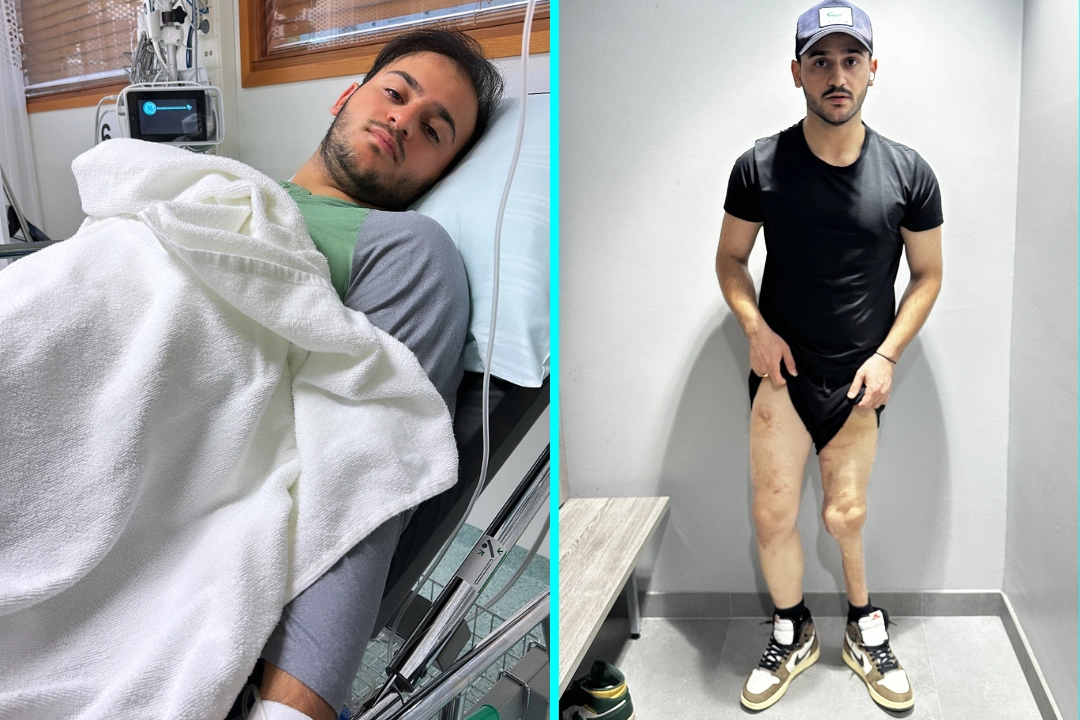
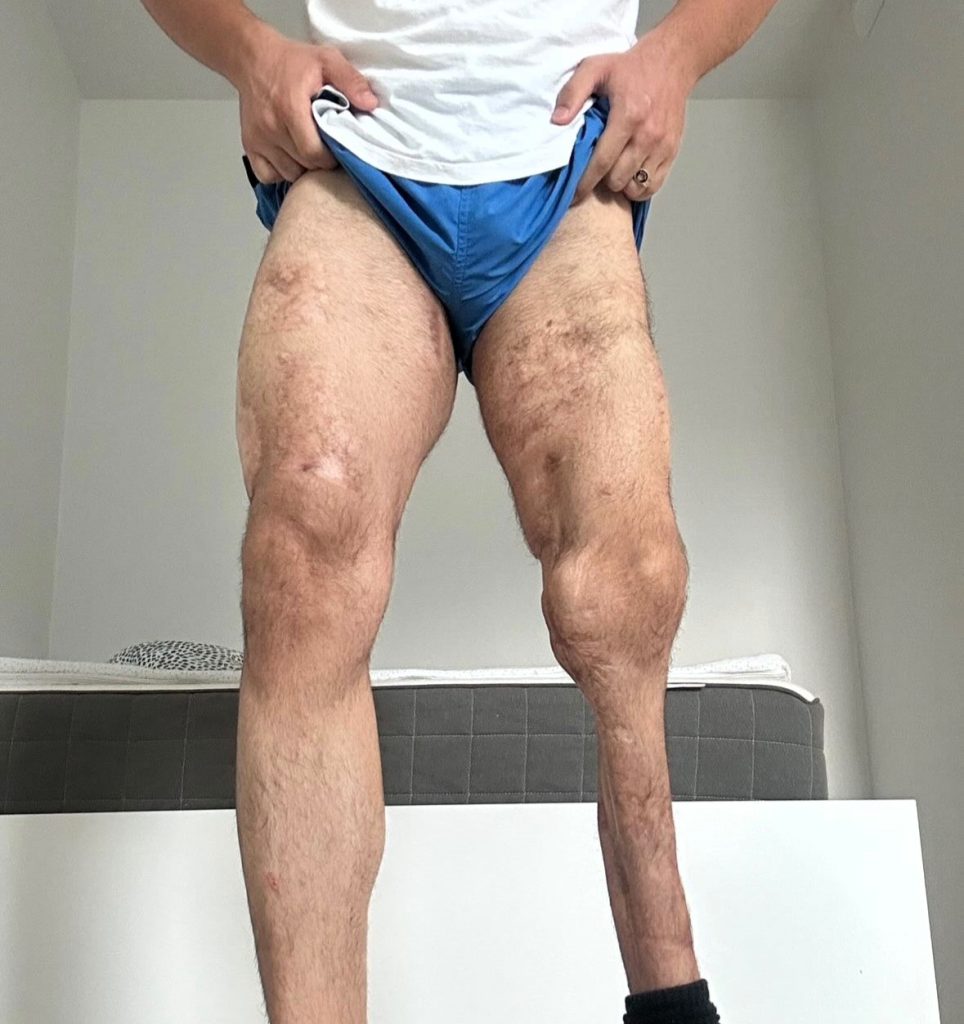
Farshid’s leg is permanently damaged, with one toe missing and others bent, while his knee is misaligned, and the leg is visibly thin and scarred.
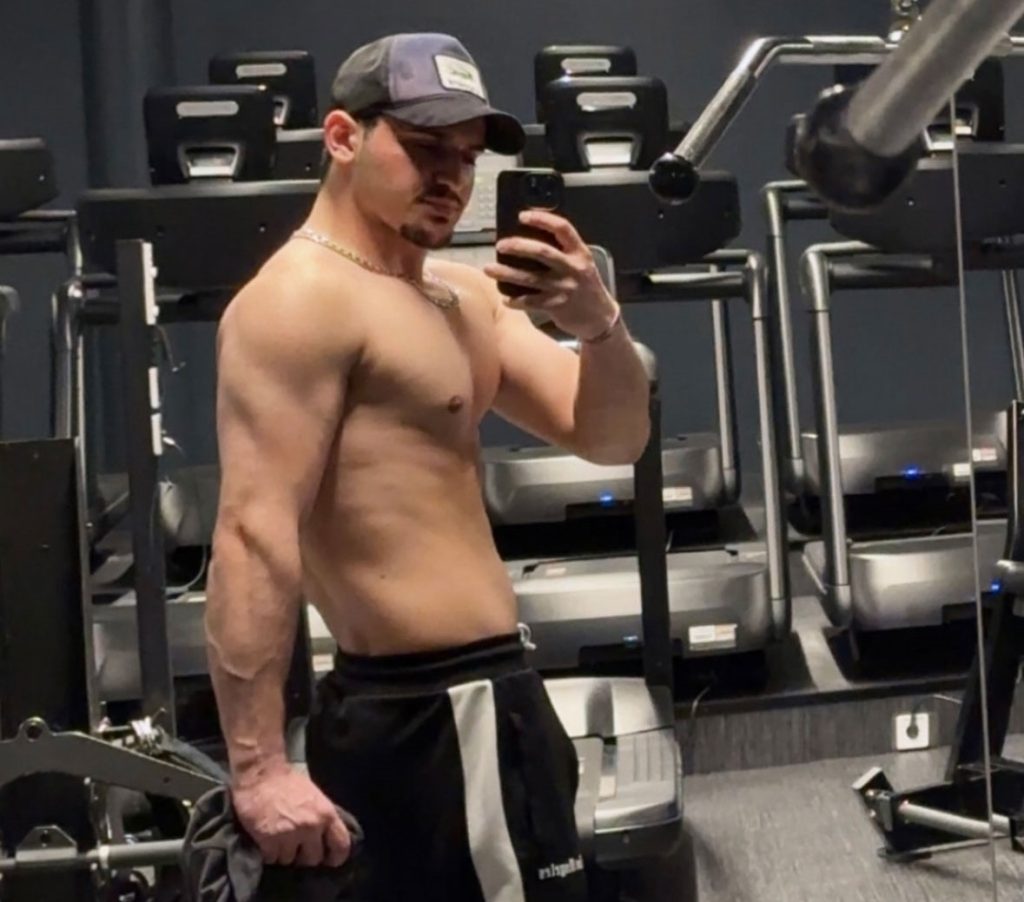
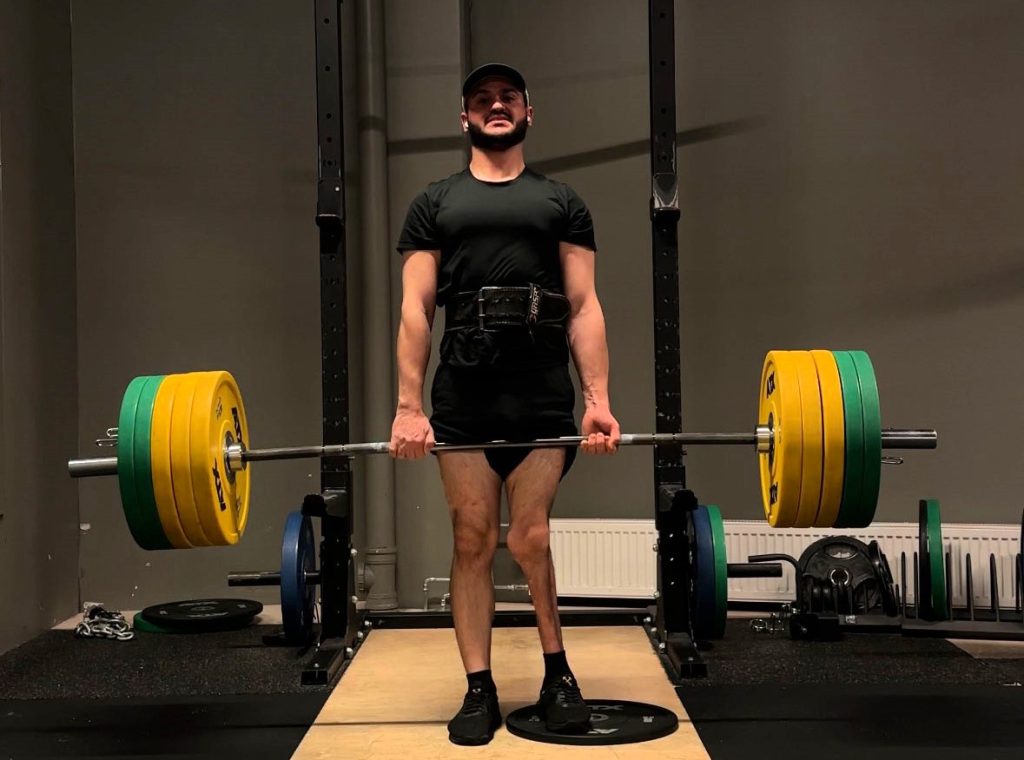
But today, he can walk, train, and lift heavy weights.
He said: “I go to the gym regularly and lift the sort of weights that many able-bodied people cannot.
“I am physically active and independent, something that once felt impossible.
“Physically, I had to accept limitations very early in life.
“Mentally, it forced me to grow up fast.
“As a child, I dreamed of becoming a football player or a karate athlete, but those dreams ended before they really began.”
Farshid says he avoided going outside “for years” after the incident because people would stare at him, leading him to feel isolated and depressed.
However, he claims the experience “reshaped” his mindset.
And to Farshid, saying “look at me now” is not about proving anything to others.
He added: “It’s about survival; it means standing on the same leg that doctors once wanted to remove and saying ‘I’m still here.’
“It represents choosing strength after fear, movement after pain, and growth after loss.
“I want people to understand that strength doesn’t always look heroic.
“Sometimes it looks like showing up to life with a damaged body and refusing to disappear.
“My leg was never fully healed but I was.
“And I hope my story reminds people that even when something can’t be fixed, it can still be lived with, built upon, and turned into purpose.”