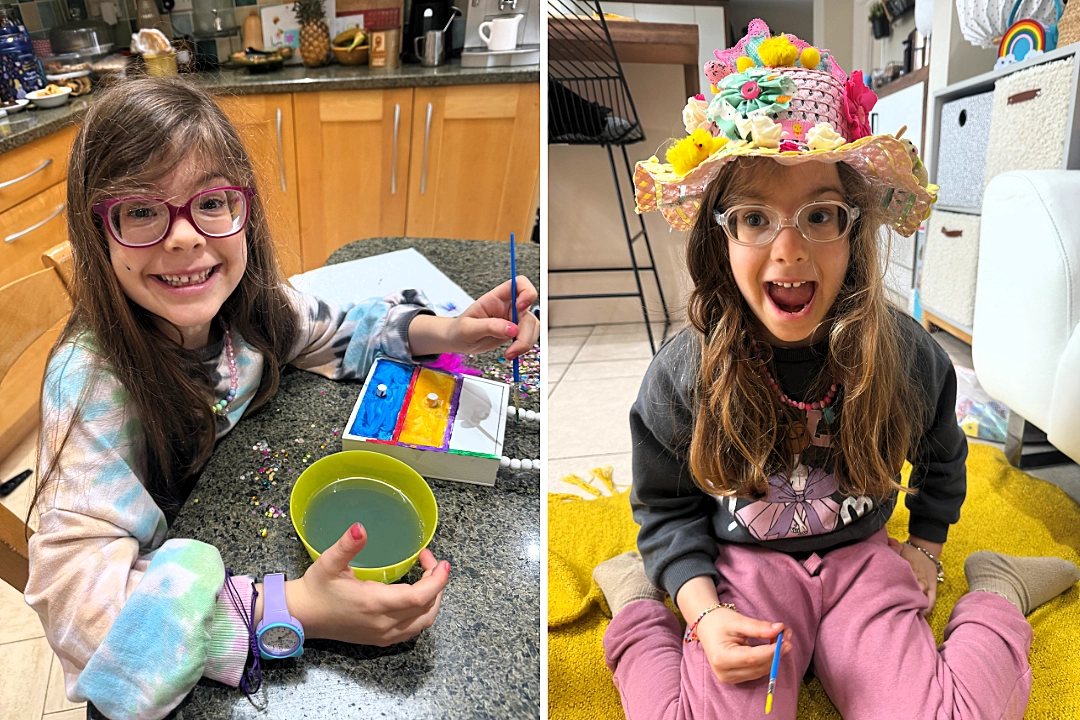

A young girl has had her vision restored after a rare condition left her struggling to see.
Saffie Sandford was diagnosed with Leber’s Congenital Amaurosis (LCA), a condition which prevents cells in the eye making a specific protein that is essential for normal vision, when she was just five and half years old.
The now six-year-old has had her sight restored thanks to life-changing eye gene therapy for rare blindness at Great Ormond Street Hospital.
READ MORE: TV presenter, 46, sheds 8.5st to become bodybuilding champion ‘without pills or injections’
“Having the treatment has been life-changing, it’s like someone waved a magic wand and restored her sight in the dark,” Saffie’s mum Lisa, from Stevenage in Hertfordshire, told Need To Know.
“We’ve been able to take her trick or treating, and out to restaurants in the evening, something that was impossible before.”
Saffie, who already wore glasses and was diagnosed as short-sighted when she was two and a half, was diagnosed after her parents noticed she was struggling to see in the dark.
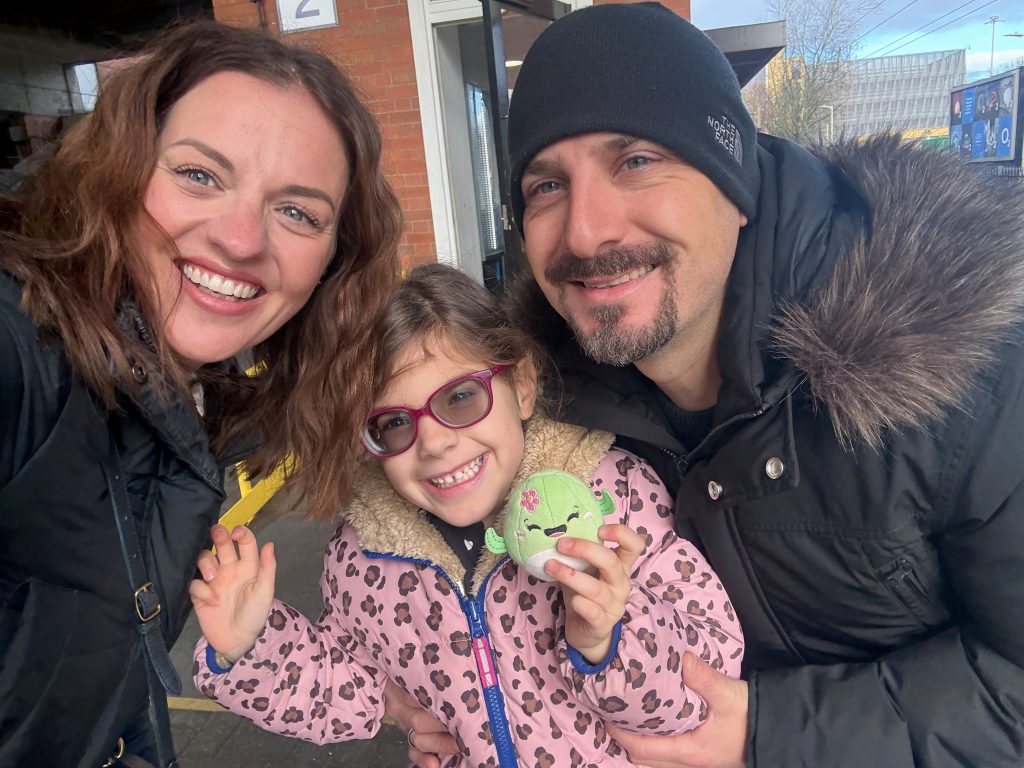
After undergoing tests at Moorfields Eye Hospital, she was transferred to Great Ormond Street Hospital to have the eye gene therapy, Luxturna, which is the first of its kind for one of the genetic causes of LCA.
Babies born with LCA have poor sight from infancy which further deteriorates, with many ultimately losing their vision completely in adulthood.
Lisa added: “Saffie’s diagnosis came as a huge shock to us, as we’d never heard of the condition or knew me and her dad Tam were carriers.
“It was such a rollercoaster of a journey, but we were so relieved and grateful when we heard there was a treatment available on the NHS for Saffie.
“We were told that without the treatment, she would be blind by the age of 30.
“Before she had the treatment, her condition was really life-limiting.
“She was blind in the dark, which made daily activities challenging.”
Saffie had the eye gene therapy in her first eye in April 2025 just before her sixth birthday, and in her second eye in September 2025.
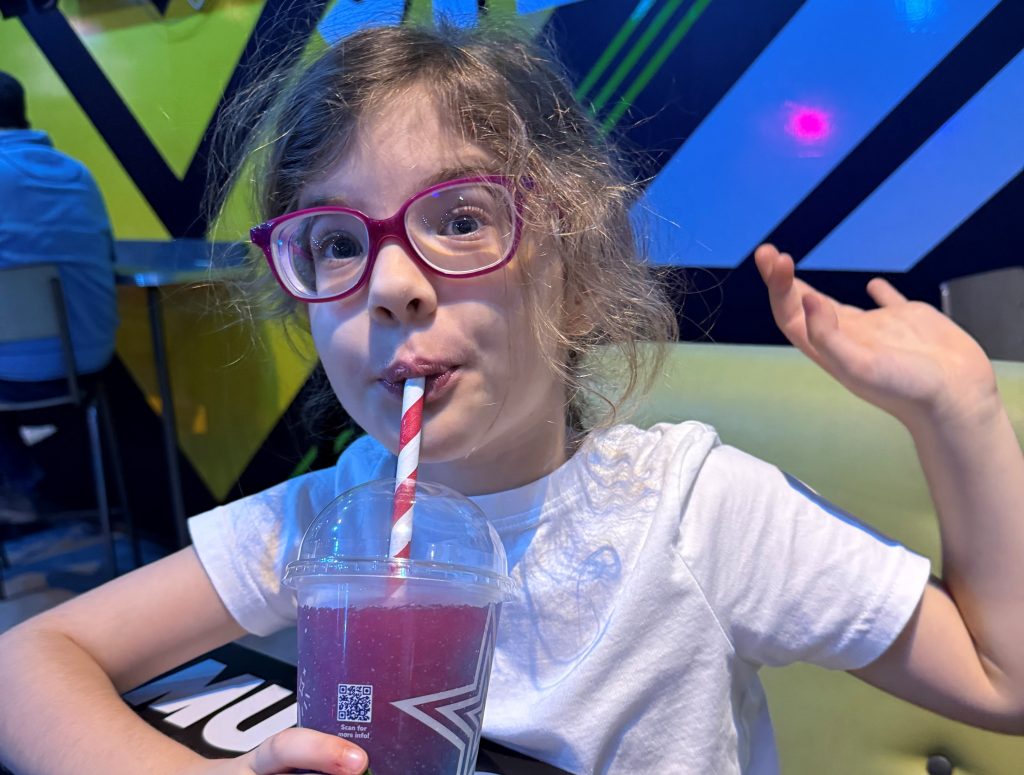
Lisa says Saffie’s peripheral sight in the daylight has improved, allowing her to see hazards she was previously unable to.
She added: “She can also take part in normal activities that a six-year-old enjoys like playing on a climbing frame.
“She’s thriving and you wouldn’t know she had the condition just by looking at her.”
Scientists at Great Ormond Street Hospital University College London (UCL) said research showed that Luxturna could improve sight and strengthen visual pathways at a critical stage of brain development – but it is not a cure.
The team of experts followed 15 children who were treated with the gene therapy at GOSH between 2020 and 2023.
The results showed that changes in the ability to see clearly and correctly were limited in older children, while the youngest children showed more improvement, as they were treated during a critical period of visual development.
Rob Henderson, consultant ophthalmologist at GOSH, said: “For the first time, we’ve been able to show objectively that gene therapy can strengthen the visual pathways in babies and young children who are living with this rare eye condition.
“For many of the families we work with, even small improvements in their child’s ability to see the world around them make a profound difference.
“This research highlights not only the potential of gene therapy to change what’s possible for children with inherited retinal disease, but also the importance of developing age-appropriate outcome measures.”

Lisa added: “We are happier than we can describe that we went ahead and put our trust in GOSH and in Rob.
“The results have been incredible, and we are eternally grateful that our little girl has been given her sight back.
“We know it might not last forever, but we feel fortunate every day that she has been given this chance.”
READ MORE: British presenter’s body ‘shut down’ after taking prescribed meds left him unable to speak or move